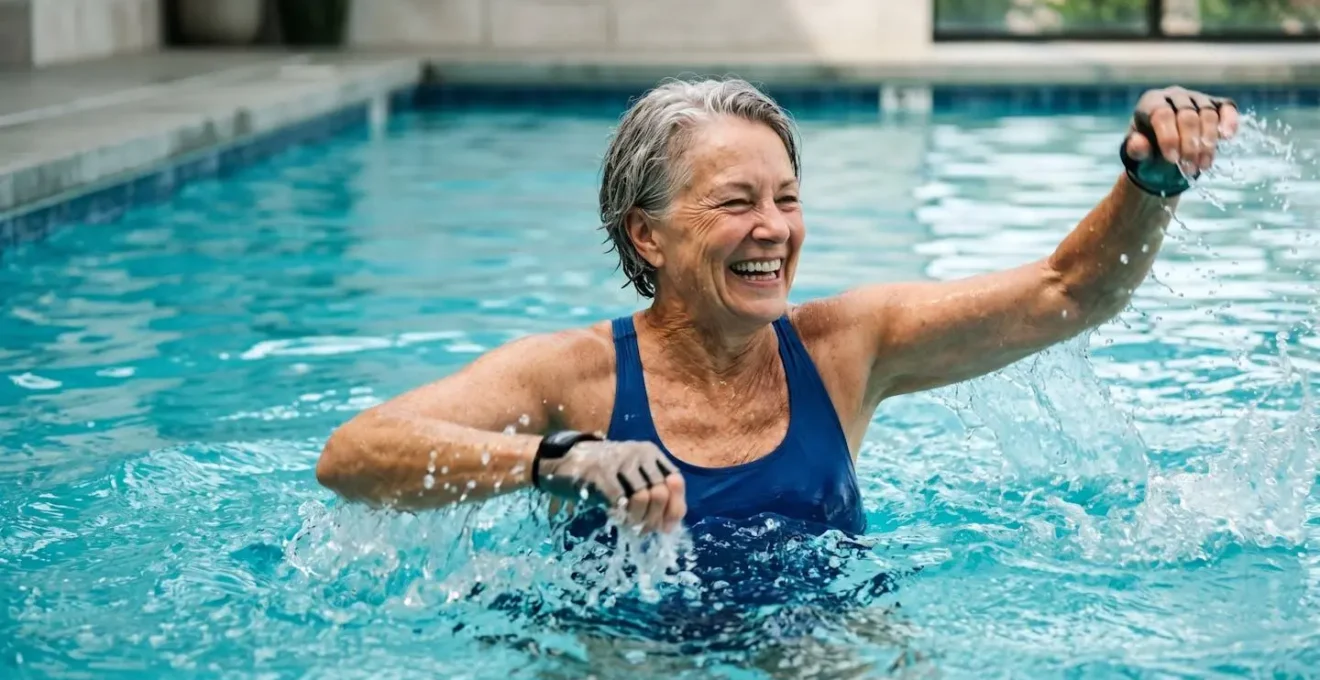
Feeling trapped in a painful cycle where your knees prevent the very exercise you need to lose weight and feel better? The solution isn’t just “low-impact” activity; it’s learning to defy gravity. This guide reveals how water’s unique properties of buoyancy and resistance can unlock vigorous, pain-free workouts, allowing you to build strength, burn calories, and reclaim your mobility without stressing your joints.
Your doctor’s advice echoes in your ears: “Lose some weight, it will help your knees.” It’s a frustrating, vicious cycle. You need to exercise to lose weight, but your knees, riddled with the sharp pains of osteoarthritis, scream in protest at the mere thought of a brisk walk, let alone a serious workout. The usual recommendations—cycling, walking on a treadmill—can still feel like a world of hurt. You feel stuck, watching your fitness and mobility decline while the pain remains a constant, unwelcome companion.
But what if the solution wasn’t just to find a “low-impact” exercise, but to find an environment where impact becomes almost irrelevant? What if you could effectively trick gravity, unloading your joints so completely that you could move with a freedom you haven’t felt in years? This isn’t science fiction; it’s the science of water. Aquatic exercise is not just about gentle movements in a pool; it’s a revolutionary way to get a vigorous, challenging workout that builds muscle, burns fat, and soothes your joints, all at the same time.
This guide will dive deep into the world of aquatic fitness, tailored specifically for you. We’ll explore the science that makes you feel weightless in water, help you choose the right pool for your goals, and bust the myth that water aerobics is just for grannies. Prepare to discover how to turn the pool into your personal, pain-free gym and finally break free from the limitations of your knee pain.
In this article, we’ll explore the transformative power of water for your fitness journey. You’ll learn the science behind its benefits and get practical advice to start your own pain-free exercise regimen.
Summary: How to Get a Vigorous, Fat-Burning Workout When Your Knees Can’t Take the Impact
- Why You Weigh 90% Less in Water and What That Means for Your Joints?
- Hydrotherapy Pool or Local Baths: What Do You Really Need?
- Aqua Aerobics: Is It Just for Grannies or a Serious Workout?
- Chlorine Itch: How to Protect Thinning Skin in Public Pools?
- Foam Dumbbells: How to Use Water Resistance to Build Biceps?
- Why Is Inflammation the Hidden Driver Behind Your Joint Pain and Fatigue?
- How Hydrostatic Pressure Reduces Swollen Ankles Instantly?
- Why Is Warm Water Hydrotherapy the Gold Standard for Arthritis Relief?
Why You Weigh 90% Less in Water and What That Means for Your Joints?
Imagine being able to float through your workout, feeling light and almost weightless. This isn’t a dream; it’s the power of buoyancy. When you step into a pool, you are actively “hacking gravity.” The water pushes up on your body, counteracting the downward pull of gravity and dramatically reducing the load on your weight-bearing joints. This is the single biggest game-changer for anyone with knee pain. You’re not just reducing impact; you are creating an environment where impact is nearly nonexistent, allowing you to move freely and without fear of pain.
The science is astounding. According to physical therapist Kimberly R. Olsen from the Mayo Clinic, when you’re submerged up to your neck, the water effectively cancels out about 90% of your body weight. This means a 200-pound person feels like they weigh only 20 pounds in the water! Even waist-deep water provides significant relief; research on water buoyancy demonstrates that you only support 50% of your body weight. At chest depth, that drops to just 25%. This “buoyancy boost” is the key to unlocking movement that would be agonizing on land.
This offloading has a profound effect on the forces grinding on your joints. For those with osteoarthritis, where cartilage is worn thin, every step on land can feel like bone on bone. In water, that pressure vanishes. A powerful study using instrumented implants to measure joint forces confirmed this, finding that joint forces were reduced by 36-55% in water compared to the same activities on land. For dynamic activities, the absolute force reduction was greater than 100% of a person’s body weight. This is the secret to being able to exercise vigorously without the painful consequences.
By offloading your joints, water doesn’t just prevent pain; it empowers you to move, build strength, and burn calories in ways that were previously impossible.
Hydrotherapy Pool or Local Baths: What Do You Really Need?
Once you’re sold on the magic of aquatic exercise, the next question is: where? You’ll hear terms like “hydrotherapy pool” and see your local community pool advertising “aqua-fit classes.” While both use water, they serve different primary purposes, and the best choice for you depends entirely on your immediate goal: therapeutic relief or a vigorous workout. Think of it as choosing between a soothing spa and an energetic gym—both are good, but for different reasons.
A hydrotherapy pool is specifically designed for therapeutic purposes. Its key feature is warmth, with water temperatures typically between 92-96°F (33-35°C). This heat is fantastic for easing chronic pain, reducing the morning stiffness associated with arthritis, and gently increasing circulation. The atmosphere is usually quiet and focused on healing. On the other hand, a community or leisure pool is kept cooler, usually 83-88°F (28-31°C). This cooler temperature is better suited for more vigorous, heart-pumping exercise, as it prevents you from overheating while you work hard.
The choice isn’t permanent. You might start in a warm hydrotherapy pool to gently introduce your body to movement and manage pain. As you get stronger and your pain decreases, you might “graduate” to a cooler community pool for more challenging aerobic and resistance workouts. The following table breaks down the key differences to help you decide where to start your journey.
| Feature | Hydrotherapy Pool | Community/Leisure Pool |
|---|---|---|
| Water Temperature | 92-96°F (33-35°C) – Therapeutic warmth | 83-88°F (28-31°C) – Cooler for active exercise |
| Best For | Arthritis relief, morning stiffness, gentle movement, pain management | Vigorous workout, cardiovascular fitness, solo training, higher intensity |
| Thermal Effect | Increases collagen elasticity, reduces chronic stiffness, promotes circulation | May have cryotherapy-like effect on acute swelling, requires body heat generation |
| Accessibility | Often requires medical referral or specialized facility access | Widely available, community centers, public pools, gyms |
| Cost | Higher ($15-30+ per session or insurance-dependent) | Lower ($5-15 per visit or membership-based) |
Ultimately, the “best” pool is the one you will use consistently. Start with what feels most comfortable and accessible, and don’t be afraid to change as your needs and fitness level evolve.
Aqua Aerobics: Is It Just for Grannies or a Serious Workout?
Let’s be honest. When you hear “aqua aerobics,” you might picture a group of seniors in floral swim caps, gently bobbing in the shallow end. It’s time to shatter that outdated image. Modern aquatic fitness has evolved into a high-intensity, muscle-building, calorie-torching workout that rivals land-based training, with one massive advantage: it’s kind to your joints. The secret lies in a concept we’ll call Liquid Resistance. Water is 800 times denser than air, meaning every single movement—every push, pull, kick, and curl—is a resistance exercise. You’re working against a dynamic, 360-degree force that challenges your muscles from every angle.
Unlike lifting weights on land, where gravity helps you on the “down” phase, water resists your movement in both directions. This builds balanced muscle strength and protects your joints from sudden, jerky motions. The intensity is completely scalable. Want an easier workout? Move slower. Want to torch calories and build serious power? Speed up your movements, increase your range of motion, or use equipment like foam dumbbells or webbed gloves to increase the surface area you’re pushing against the water. You are in complete control of the challenge.
Don’t just take our word for it. The science proves that this is a serious workout. In fact, a 2024 randomized controlled trial found that high-intensity water aerobics led to significant improvements in body composition by reducing fat mass, increasing fat-free mass (muscle!), and boosting muscular endurance. Participants didn’t just get stronger; they fundamentally changed their body’s ratio of fat to muscle. Researchers from a clinical trial on hydrotherapy note that water’s properties make it “possible to perform physical exercise with a lower risk of injury even at a high intensity.” It’s the perfect paradox: a safer workout that delivers more comprehensive results.
So, forget the stereotypes. Aqua aerobics is a powerful tool for anyone, especially seniors with knee pain, looking to achieve serious fitness goals without the wear and tear.
Chlorine Itch: How to Protect Thinning Skin in Public Pools?
You’re ready to embrace the pool, but there’s one nagging concern: the chlorine. For seniors, whose skin is naturally thinner and more delicate, the drying and irritating effects of chlorine can be a real barrier. Chlorine is excellent at keeping pool water safe, but it does its job by stripping away oils, including the protective layer on your skin called the stratum corneum. This disruption can lead to the dreaded “chlorine itch,” chronic dryness, and a weakened skin barrier, which is especially problematic if you have pre-existing conditions like eczema or psoriasis. But don’t let this stop you from reaping the benefits of aquatic exercise!
The key isn’t to avoid the pool, but to adopt a simple yet non-negotiable skin defense strategy. Think of it like a pre-flight checklist for your skin. Protecting your body’s largest organ is just as important as your warm-up. By taking a few moments before and after your swim, you can create a robust shield that keeps your skin hydrated, comfortable, and healthy, allowing you to focus on your workout, not on itching.
This isn’t just about slapping on some lotion afterwards. A truly effective protocol involves three distinct phases: protecting your skin before you get in, rinsing and neutralizing the chemicals immediately after, and deeply replenishing moisture at home. Each step plays a critical role in mitigating chlorine’s effects and preserving your skin’s delicate balance. The following checklist provides a comprehensive, step-by-step plan to make your aquatic exercise routine a pleasure for both your joints and your skin.
Your Essential Skin-Shield Checklist for Swimming
- Pre-Swim Barrier: Before leaving home, apply a protective barrier cream containing petrolatum or dimethicone to create a physical shield against chlorine.
- Pre-Rinse Saturation: Always shower with fresh water for 60 seconds *before* entering the pool. This saturates your skin and hair, reducing the amount of chlorinated water they can absorb.
- Immediate Post-Swim Rinse: As soon as you exit the pool, head straight to the shower to rinse the chlorine residue off your body before it has time to sit and cause irritation.
- Post-Swim Neutralization: Use a specialized post-swim body wash or a product containing Vitamin C. Vitamin C is excellent at neutralizing the lingering chlorine on your skin’s surface.
- At-Home Replenishment: Within 30 minutes of your post-swim shower, apply a rich, thick moisturizer containing ceramides and hyaluronic acid to lock in moisture and actively repair your skin’s barrier.
By making this routine an automatic part of your swim days, you can enjoy all the incredible benefits of water exercise without sacrificing the health and comfort of your skin.
Foam Dumbbells: How to Use Water Resistance to Build Biceps?
Welcome to the “liquid gym,” where the equipment might look light, but the workout is anything but. The most common tools you’ll encounter are foam dumbbells, which beautifully illustrate the unique principles of aquatic resistance. On land, they’re practically weightless. But in the water, their buoyancy makes them want to float to the surface with surprising force. This is where the magic happens. To build your biceps, you don’t curl them *up*; you engage your muscles by forcefully pushing them *down* under the water and controlling their ascent. You’re working against flotation, not gravity.
This creates a unique kind of muscle engagement. The primary effort is on the push-down phase, which is a powerful concentric contraction. But you also have to work to control the dumbbell as it tries to shoot back up, creating an eccentric contraction. This means you’re getting a complete, two-part workout for every single rep, all while the water supports your joints. As physical therapist Kimberly R. Olsen notes, “Water provides natural resistance. And with less joint stress and pain, people often find that they can work out longer with more repetitions in the water.” This allows you to achieve the volume needed for muscle growth without the pain.
But the liquid gym is full of versatile tools beyond just dumbbells. Each piece of equipment is designed to increase the surface area you move through the water, amplifying the liquid resistance and allowing you to target different muscle groups. Here are some of the most effective pieces of aquatic resistance equipment:
- Webbed Gloves: These are a fantastic starting point. They dramatically increase the resistance against your hands, turning your arm and shoulder movements into a serious upper-body and core workout.
- Foam Dumbbells: Available in various shapes and sizes to provide different levels of resistance. The larger the dumbbell, the more force is required to submerge it.
- Aquatic Ankle Fins/Buoyancy Cuffs: These strap to your ankles and work like dumbbells for your legs, targeting your glutes and thigh muscles as you perform kicks and leg lifts.
- Kickboards: Not just for learning to swim! Holding a kickboard vertically and pushing it through the water is an incredible core and upper-body challenge.
By learning to use these simple but effective tools, you can turn any pool into a full-body weight room, building functional strength that supports your joints and improves your daily life, all without the risk of impact.
Why Is Inflammation the Hidden Driver Behind Your Joint Pain and Fatigue?
For many with arthritis, pain isn’t the only enemy. A pervasive, bone-deep fatigue can be just as debilitating, turning simple daily tasks into monumental efforts. This exhaustion is often directly linked to a process happening deep within your body: chronic inflammation. In a healthy response, inflammation is your body’s way of fighting off infection or healing an injury. But in conditions like osteoarthritis, the inflammatory process goes haywire. It becomes a constant, low-grade fire in your joints, releasing a cascade of chemicals that not only break down cartilage and cause pain but also drain your body’s energy reserves.
Aquatic exercise, particularly in warm water, is a uniquely powerful tool to combat this inflammatory cycle. The benefits go far beyond simply being “gentle” on the joints. The combination of buoyancy, pressure, and warmth creates a potent anti-inflammatory effect. The buoyancy unloads your joints, giving them a break from constant mechanical stress. Simultaneously, the gentle pressure of the water helps improve circulation and lymphatic drainage. This acts like a pump, helping to flush out the pro-inflammatory waste products that are pooled around your painful joints and delivering fresh, oxygenated blood to the tissues to promote healing.
The evidence for water’s superiority in this area is compelling. When compared directly with land-based programs, aquatic therapy consistently comes out on top for arthritis sufferers. A systematic review of recent studies found that hydrotherapy led to better improvements in quality oflife, mobility, and pain reduction for arthritis patients compared to land-based exercises. This is because the water isn’t just providing a medium for exercise; it’s an active therapeutic agent, helping to cool the inflammatory fire that drives both your pain and your fatigue.
By incorporating aquatic exercise into your routine, you’re not just moving more; you’re actively creating an anti-inflammatory environment inside your body, leading to less pain, more energy, and a better quality of life.
How Hydrostatic Pressure Reduces Swollen Ankles Instantly?
If you live with joint pain, you’re likely all too familiar with the frustrating swelling that accompanies it, especially in your lower legs, ankles, and feet. This swelling, or edema, happens when excess fluid gets trapped in your body’s tissues. It’s uncomfortable, makes joints feel stiff, and can be a visible, daily reminder of your condition. This is where another of water’s magical properties comes into play: hydrostatic pressure. It sounds complex, but the concept is wonderfully simple. It’s the pressure that a fluid exerts on a body when it’s immersed.
The moment you step into the water, your body is enveloped by this gentle, consistent pressure from all sides. As exercise scientist Kat Smith explains it, “Hydrostatic pressure acts like a full-body compression sock.” This is the perfect analogy. The pressure is greatest on the deepest part of your body (your feet and ankles) and gradually decreases as you get closer to the surface. This natural pressure gradient helps to push the trapped fluid out of your tissues and back into the body’s circulatory and lymphatic systems, where it can be processed and eliminated.
The effect is often immediate and profound. Many people report that their swollen ankles feel noticeably less puffy and more comfortable within minutes of being in the pool. This isn’t just a feeling; it’s a physiological reality. The hydrostatic pressure physically reduces the space for fluid to accumulate and actively assists your body’s natural drainage systems. This improved circulation, a direct result of the combined effects of buoyancy and hydrostatic pressure, is crucial for healing.
Hydrostatic pressure acts like a full-body compression sock. When you’re in water, your body feels lighter—about 90% of your weight is supported by the water, depending on how deep you are. This buoyancy takes pressure off your joints.
– Kat Smith, Exercise Scientist at The Hospital Research Foundation Group – Arthritis
This natural, full-body compression not only provides instant comfort but also sets the stage for more effective exercise by reducing stiffness and improving your range of motion from the moment you get in the water.
Key Takeaways
- Water’s buoyancy supports up to 90% of your body weight, virtually eliminating impact on painful knees and allowing for vigorous, pain-free movement.
- Water provides 360-degree resistance, turning the pool into a “liquid gym” that builds balanced muscle strength without strain.
- The combination of warm water and hydrostatic pressure acts as a natural therapy, reducing inflammation, easing stiffness, and instantly relieving swelling.
Why Is Warm Water Hydrotherapy the Gold Standard for Arthritis Relief?
When it comes to managing the chronic pain and stiffness of arthritis, not all exercise is created equal. While any movement is good, warm water hydrotherapy is widely considered the gold standard for a reason. It offers a unique trifecta of therapeutic benefits—thermal, mechanical, and neurological—that land-based exercises simply cannot replicate. It’s an approach that soothes, strengthens, and supports the body in a way that feels less like a workout and more like a welcome relief, especially during those tough, stiff mornings.
The most obvious benefit is the thermal effect. Soaking in water heated to a therapeutic 92-96°F helps relax tight muscles and increases the elasticity of collagen in your joints and connective tissues, improving flexibility. This warmth also has a powerful neurological effect. It stimulates sensory nerves, which, according to the “gate control theory of pain,” helps to block or override the pain signals from your arthritic joints before they can reach your brain. The mechanical effects of buoyancy and hydrostatic pressure, as we’ve discussed, provide the joint-unloading and anti-swelling benefits that complete the therapeutic picture.
The results of this multi-pronged approach are consistently validated by scientific research. A 2024 meta-analysis of randomized controlled trials found that hydrotherapy was associated with significant pain relief in patients with knee osteoarthritis at both 4 and 8 weeks. A comprehensive review from December 2024 further solidifies this, stating that water-based therapies “effectively alleviate pain, reduce inflammation, improve joint mobility, and enhance overall physical and mental well-being.” This is why practitioners consider it the benchmark against which other therapies are measured, providing a safe, effective, and profoundly comforting way to manage arthritis.
By embracing warm water hydrotherapy, you are not just exercising; you are giving your body the most comprehensive, scientifically-backed therapeutic treatment available for arthritis relief. To start this journey, your next logical step is to find a suitable facility and begin experiencing these profound benefits for yourself.