Mind and vitality
Your brain doesn’t come with an expiry date stamped at retirement. Yet many people over 60 assume that memory lapses, slower thinking, and diminished focus are inevitable consequences of ageing. While some cognitive changes are normal, the difference between healthy brain ageing and pathological decline is far wider than most realise—and much of it lies within your control.
Mind and vitality in later life depends on a complex interplay of factors: the activities you choose, the food you eat, how well you sleep, your social connections, and your ability to recognise when something genuinely needs medical attention. This comprehensive resource brings together the essential knowledge you need to protect, maintain, and even enhance your cognitive health after 60, drawing on neuroscience research and practical strategies tailored for real-world application.
Whether you’re concerned about preventing dementia, want to sharpen your focus, or simply wish to understand what’s happening inside your ageing brain, the sections below will equip you with actionable insights across seven critical domains of mental vitality.
Understanding Cognitive Health as You Age
Before you can protect your brain, you need to understand what you’re protecting it from—and what constitutes normal ageing versus warning signs that warrant attention.
What Is Cognitive Fitness?
Cognitive fitness refers to your brain’s ability to perform mental tasks efficiently: remembering where you put your keys, following a recipe, managing your finances, or holding a conversation in a noisy room. Unlike physical fitness, which you can measure with a treadmill test, cognitive fitness operates across multiple domains including memory, attention, processing speed, and executive function (your ability to plan, organise, and solve problems).
Think of your brain as having different muscle groups. A daily crossword might exercise your vocabulary and pattern recognition, but it leaves your spatial reasoning, social cognition, and motor planning untouched. True cognitive fitness requires a varied training regimen that challenges multiple brain systems simultaneously.
The Difference Between Normal Ageing and Cognitive Decline
Everyone experiences some cognitive slowing with age. You might take longer to recall a name or need to read instructions twice. These “senior moments” are normal and don’t predict dementia. What’s not normal is forgetting entire conversations, getting lost in familiar places, or struggling with tasks you’ve done for decades.
The critical distinction lies in Mild Cognitive Impairment (MCI)—a measurable decline beyond normal ageing but not severe enough to be dementia. Roughly half of people with MCI progress to dementia within five years, but the other half remain stable or even improve. Early identification matters because some causes of cognitive decline (depression, vitamin deficiencies, medication side effects, sleep disorders) are entirely treatable.
Building Cognitive Reserve Throughout Life
Why do some people have Alzheimer’s pathology in their brains at autopsy yet showed no symptoms during life? The answer is cognitive reserve—the brain’s resilience built through a lifetime of learning, complex work, and mentally stimulating activities. Your brain develops alternative neural pathways that can compensate when disease damages the primary routes.
The encouraging news: it’s never too late to build reserve. Someone who left school at 15 can still strengthen their brain through learning “holiday Spanish,” taking up a musical instrument, or engaging in strategic games like bridge or chess. The key is sustained challenge—activities that feel slightly difficult and require concentration, not passive entertainment or tasks you’ve already mastered.
Brain-Boosting Activities That Actually Work
Not all mental activities are created equal when it comes to protecting your brain. Understanding which activities provide genuine cognitive benefit—and why—helps you invest your time wisely.
Why Crosswords Alone Aren’t Enough
Daily crossword puzzles are better than staring at the television, but they primarily train one skill: retrieving vocabulary you already know. Once you’ve mastered the setter’s style, you’re operating in your comfort zone. Neuroplasticity—the brain’s ability to form new connections—requires novelty and struggle, not effortless repetition.
Research comparing different cognitive activities consistently shows that learning something genuinely new produces broader benefits than practising familiar skills. The frustration you feel when learning piano fingering with arthritic hands or conjugating French verbs at 70 isn’t a sign you should quit—it’s evidence your brain is being remodelled.
Learning New Skills: Language, Music, and More
When you learn a new language, even at a basic “holiday conversation” level, you engage multiple brain systems simultaneously: auditory processing, motor control (pronunciation), memory, and executive function (grammar rules). Studies show that bilingualism, even acquired late in life, protects the hippocampus—the brain structure critical for forming new memories and typically hit hard by Alzheimer’s disease.
Similarly, learning a musical instrument after 60 demands coordination between auditory, visual, and motor systems, plus the memorisation of sequences (musical pieces). Even with physical limitations like arthritis, modified techniques and appropriate instrument choices (keyboard over guitar, for instance) make music accessible and cognitively beneficial.
Strategic Games That Challenge Your Brain
Not all games provide equal cognitive workout. Bridge trumps bingo because it requires memory (tracking played cards), probability calculation, strategy, and social cognition (reading your partner and opponents). Chess beats Ludo because it demands forward planning and constant re-evaluation of complex positions.
The pattern is clear: games involving strategy, memory, and decision-making under uncertainty provide superior cognitive benefits. Online word games like Words with Friends offer convenience, but attending a physical Scrabble club adds the crucial social dimension—conversation, emotional regulation when facing difficult opponents, and the cognitive demands of face-to-face interaction.
Research suggests you need roughly three months of consistent practice before structural brain changes become measurable. The optimal “dose” appears to be regular exposure (several times weekly) rather than marathon sessions, with greatest benefit when the activity remains challenging rather than becoming automatic.
Physical Movement for Mental Sharpness
The separation between body and mind is artificial—what benefits your cardiovascular system typically benefits your brain, and specific movement practices offer unique cognitive advantages.
How Tai Chi Benefits Both Body and Brain
Tai Chi, recommended by the NHS for arthritis management, provides a remarkable dual benefit: gentle joint movement coupled with serious cognitive challenge. Learning and memorising the “form”—the sequence of flowing movements—engages spatial memory and motor planning regions of your brain.
The slow, controlled movements of Sun or Yang style Tai Chi (most suitable for senior beginners) require intense concentration and proprioception (awareness of body position in space). This retrains your brain’s balance systems, which explains the striking statistic that regular Tai Chi practice can reduce fall risk by approximately 50% in older adults.
Practising outdoors adds additional benefits: exposure to natural light regulates circadian rhythms (improving sleep), while the varied terrain of a park (versus a flat hall floor) provides extra balance challenges. The meditative aspect of Tai Chi can induce “flow state”—deep absorption that reduces the perception of chronic pain and lowers stress hormones harmful to brain health.
The Connection Between Exercise and Neuroplasticity
Aerobic exercise increases blood flow to the brain and stimulates the release of brain-derived neurotrophic factor (BDNF)—essentially fertiliser for neurons that promotes the growth of new brain cells and connections. Even moderate activities like brisk walking produce measurable increases in hippocampal volume within months.
However, the cognitive benefits multiply when physical movement is combined with learning (as in Tai Chi or dance) rather than repetitive exercise like jogging the same route daily. The brain changes most when challenged by novelty: walking a new route, learning dance steps, or navigating unfamiliar terrain while hiking.
Lifestyle Factors That Protect Your Mind
Daily habits—what you eat, how you sleep, and who you interact with—create the biological environment in which your brain either thrives or deteriorates.
Nutrition for Memory and Cognition
The debate between omega-3 supplements versus oily fish illustrates an important principle: whole foods typically outperform isolated nutrients. While fish oil capsules provide EPA and DHA (omega-3 fatty acids crucial for brain cell membranes), eating salmon or mackerel also delivers protein, vitamin D, selenium, and other compounds that work synergistically.
For memory retention specifically, the evidence favours consuming oily fish 2-3 times weekly over supplementation, unless you genuinely cannot tolerate fish. The broader dietary pattern matters too—the Mediterranean diet, rich in vegetables, olive oil, nuts, and fish, consistently shows protective effects against cognitive decline in large studies.
Blood sugar stability also profoundly affects concentration. That afternoon biscuit causes a rapid glucose spike followed by a crash that destroys your ability to focus for the next 1-2 hours. Replacing refined carbohydrates with protein, healthy fats, and fibre stabilises energy and sustains mental clarity throughout the day.
Sleep Architecture and Memory Consolidation
Sleep isn’t merely rest—it’s when your brain consolidates memories, clearing toxic waste products that accumulate during waking hours. Deep sleep (slow-wave sleep) is particularly critical for transferring information from short-term to long-term storage, while REM sleep (when you dream) processes emotional experiences and creative connections.
Many older adults experience disrupted sleep architecture: less deep sleep, more frequent wakings, and early morning awakening. This creates a vicious cycle—poor sleep impairs concentration and memory, while anxiety about memory problems further disrupts sleep. Structuring your sleep routine (consistent bedtimes, cool dark room, avoiding screens before bed, limiting afternoon caffeine) can maximise the precious deep sleep phases when memory storage occurs.
If you consistently can’t focus or remember things despite adequate sleep hours, the quality (not just quantity) of your sleep may need investigation. Conditions like sleep apnoea, common but underdiagnosed in seniors, fragment sleep architecture and starve the brain of oxygen, accelerating cognitive decline.
The Hidden Danger of Social Isolation
Loneliness isn’t just emotionally painful—it’s neurotoxic. Studies using brain imaging have documented measurable shrinkage in brain volume after just six months of social isolation. The mechanisms involve chronic stress hormones, reduced cognitive stimulation, and probably reduced physical activity and self-care.
The antidote isn’t necessarily having dozens of friends; it’s having meaningful social roles and interactions. Volunteering at a charity shop, where you handle money, assist customers, and chat with colleagues, provides cognitive stimulation (mental arithmetic, social problem-solving) alongside social connection. Even politely arguing politics exercises your ability to construct logical arguments, consider opposing viewpoints, and regulate emotions—all frontal lobe functions vulnerable to ageing.
Recognising and Addressing Early Warning Signs
The difference between successful intervention and missed opportunity often lies in recognising when changes warrant professional assessment rather than dismissal as “just old age.”
When to Seek Professional Assessment
Establishing a cognitive baseline before problems arise is ideal—simple testing in your 60s provides a comparison point if concerns emerge later. However, most people only seek assessment after noticing changes. Red flags that warrant GP consultation include:
- Forgetting important events entirely (not just details)
- Repeating questions within the same conversation
- Difficulty managing previously routine tasks (cooking, finances, medications)
- Getting lost in familiar locations
- Personality changes or new apathy about previously enjoyed activities
- Family members expressing concern about your memory or judgement
Unfortunately, early dementia is missed in approximately 50% of highly intelligent patients during routine GP appointments. Educated individuals often compensate brilliantly, using social skills and general knowledge to mask specific memory deficits. If you’re concerned, explicitly request formal cognitive testing rather than accepting reassurance based on a casual conversation.
Don’t accept “you’re just getting older” as an explanation for significant functional decline. Age alone shouldn’t prevent you managing your own affairs, maintaining relationships, or enjoying life. Demand a referral to a memory clinic if your GP dismisses legitimate concerns.
Depression vs Dementia: Critical Differences
Depression in older adults often masquerades as cognitive decline—and vice versa. The distinguishing features require careful assessment. Depression typically involves apathy (not caring about memory problems), physical symptoms (back pain, digestive issues with no clear cause), and onset that can be traced to a specific period. Dementia more often involves genuine memory loss (not just poor concentration), preserved motivation to do well on tests, and gradual insidious onset.
Complicating matters, some medications commonly prescribed to seniors affect mood and cognition. Beta-blockers (for heart conditions or blood pressure) can cause fatigue and low mood. Recognising medication side effects as reversible causes of apparent cognitive decline can prevent unnecessary escalation to dementia diagnosis.
Cognitive Behavioural Therapy (CBT) works effectively for late-life depression, even if you consider yourself “set in your ways.” The evidence base is robust, and the skills (identifying negative thought patterns, behavioural activation) are learnable at any age. Seasonal Affective Disorder (SAD) hits harder in older adults due to spending more time indoors and age-related changes in circadian rhythm regulation—bright light therapy and increased daytime outdoor exposure can produce dramatic improvements.
Self-Testing and Medical Evaluation Options
Tools like the SAGE test (Self-Administered Gerocognitive Examination) allow home screening for cognitive problems. While convenient, self-testing has limitations: scoring your own test introduces bias, you may lack proper comparative context, and abnormal results still require professional follow-up.
A GP memory clinic offers structured assessment by trained staff, typically including standardised tests, informant history (from family), and consideration of depression, medications, and physical health factors that affect cognition. The critical difference between MCI and normal “senior moments” requires this comprehensive evaluation—not just a single test score but assessment of whether cognitive changes impair your daily functioning compared to your own previous level.
Concentration, Focus, and Mental Clarity
Many seniors struggle with attention and concentration before any memory problems emerge. Understanding the factors that destroy focus—and practices that restore it—can dramatically improve daily mental clarity.
Why Modern Life Destroys Deep Focus
“Pottering about”—flitting from task to task without sustained focus—feels productive but actually impairs your brain’s ability to concentrate deeply. Each task switch incurs a cognitive cost: your brain must disengage from one context, shift attention, and reload the new context. Frequent switching throughout the day degrades the neural networks responsible for sustained attention.
Similarly, notification overload from tablets and smartphones fragments attention into useless shards. Every ping trains your brain to expect interruption, making sustained focus feel uncomfortable. Setting up your iPad for peace (disabling non-essential notifications, using Do Not Disturb scheduling, removing distracting apps from the home screen) isn’t about avoiding technology—it’s about controlling it rather than letting it control your attention.
Even passive activities differ dramatically in their cognitive demands. Reading actively engages your visual cortex, language networks, and imagination (constructing mental imagery of described scenes). Television is largely passive—images and sounds are provided, requiring minimal cognitive effort. While watching “Countdown” is better than staring at a wall, it’s no substitute for reading, which builds and maintains the neural infrastructure for sustained concentration.
Meditation Styles for Different Cognitive Goals
Not all meditation is the same. Mindfulness meditation (observing thoughts without judgment) and concentration meditation (focusing attention on a single object, like breath) train different cognitive skills. For brain fog and scattered attention, concentration meditation typically produces faster results—it’s literally attention training.
Start modestly: reading a book for 30 minutes without your mind wandering is actually advanced concentration practice. If you can’t sustain attention for five minutes, begin there. Set a timer, notice when your mind drifts, and gently return to the page. The act of noticing distraction and returning attention is the exercise—like a bicep curl for your attention muscle.
Achieving “flow state” (complete absorption in an activity) provides both cognitive benefits and pain relief. When deeply engaged in painting, playing music, or gardening, your brain’s pain perception centres quiet down. This isn’t distraction—it’s a fundamental shift in neural activity with measurable effects on chronic pain conditions common in older adults.
Creating an Environment for Sustained Attention
Your physical and mental environment profoundly affects concentration. Beyond managing technology, consider:
- Working in blocks of focused time (20-30 minutes initially) followed by brief breaks
- Tackling cognitively demanding tasks when your energy peaks (morning for most people)
- Ensuring adequate lighting (age-related vision changes require more light for reading)
- Managing blood sugar with balanced meals (avoiding the concentration-killing sugar crash)
- Addressing sleep deficits (you cannot focus adequately on chronic sleep deprivation)
The “3-month rule” applies to concentration practices too. Your brain’s attention networks will strengthen measurably with consistent practice, but you must persist through the initial frustration phase when focus feels impossible. Neuroplasticity is real, but it’s not instantaneous.
Mental vitality after 60 isn’t about preventing every age-related change—it’s about maximising your cognitive potential through informed choices about activities, lifestyle, and medical care. Your brain remains capable of growth, learning, and adaptation far longer than previous generations believed. The strategies outlined across these sections provide multiple entry points: start with the areas most relevant to your current concerns, persist through the initial challenge phase, and treat your cognitive health with the same proactive attention you’d give your heart or bones. Your mind is worth the investment.

Bridge or Bingo: Which Game Actually Prevents Cognitive Decline?
Playing ‘brain games’ isn’t enough; the key to preventing cognitive decline lies in choosing games that create specific, challenging cognitive loads, not just occupying time. Strategy games like Chess and Bridge actively build executive functions in the brain’s frontal lobe,…
Read more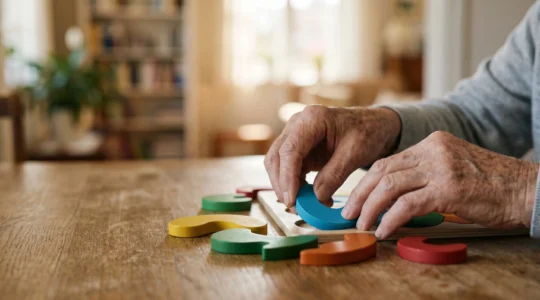
Why Watching “Countdown” Is Not Enough to Keep Your Brain Sharp?
The belief that passively watching quiz shows like “Countdown” keeps your brain sharp is a dangerous misconception; true cognitive health requires active, effortful mental engagement. Passive consumption (like watching TV) allows the brain to be a spectator, which can correlate…
Read more
Is It Dementia, Just “Old Age,” or Actually Treatable Depression?
The withdrawal and apathy you’re observing may not be inevitable signs of aging or dementia, but rather treatable symptoms of depression manifesting through physiological cascades. Physical ailments like chronic pain and gut issues are often direct, inflammatory expressions of depression…
Read more
Why Do Some People Have Alzheimer’s Pathology but No Symptoms?
The presence of Alzheimer’s plaques does not automatically lead to dementia; a concept called “cognitive reserve” acts as a functional buffer, allowing the brain to operate normally despite underlying pathology. This resilience isn’t just about “staying busy” but about building…
Read more
How to Read a Book for 30 Minutes Without Your Mind Wandering?
In summary: Your wandering attention is not a personal failing, but a series of physiological signals related to aging. Focus can be rebuilt by managing your ‘cognitive fuel’ (nutrition), improving sleep quality, and creating ‘attention hygiene’. Start by training ‘monotasking’—doing…
Read more
Why Is Tai Chi Recommended by the NHS for Arthritis Management?
Tai Chi is more than just gentle exercise for seniors; it’s a powerful form of ‘neural re-education’ that rewires the brain to improve balance and reduce the perception of pain. It directly trains proprioception—your body’s internal sense of position—which is…
Read more
How to Establish a Cognitive Baseline Before Memory Issues Arise?
For high-functioning individuals, “normal” cognitive test results are dangerously misleading because they fail to account for your personal peak performance. The healthcare system often misses early cognitive decline due to your “cognitive reserve,” misinterpreting significant personal changes as still being…
Read more
How to Boost Cognitive Fitness After 60 Without Relying on Crosswords?
Contrary to popular belief, passively solving puzzles is not the most effective way to maintain brain health; true cognitive enhancement after 60 comes from actively building new, complex neural pathways. Learning complex new skills, like a language or musical instrument,…
Read more