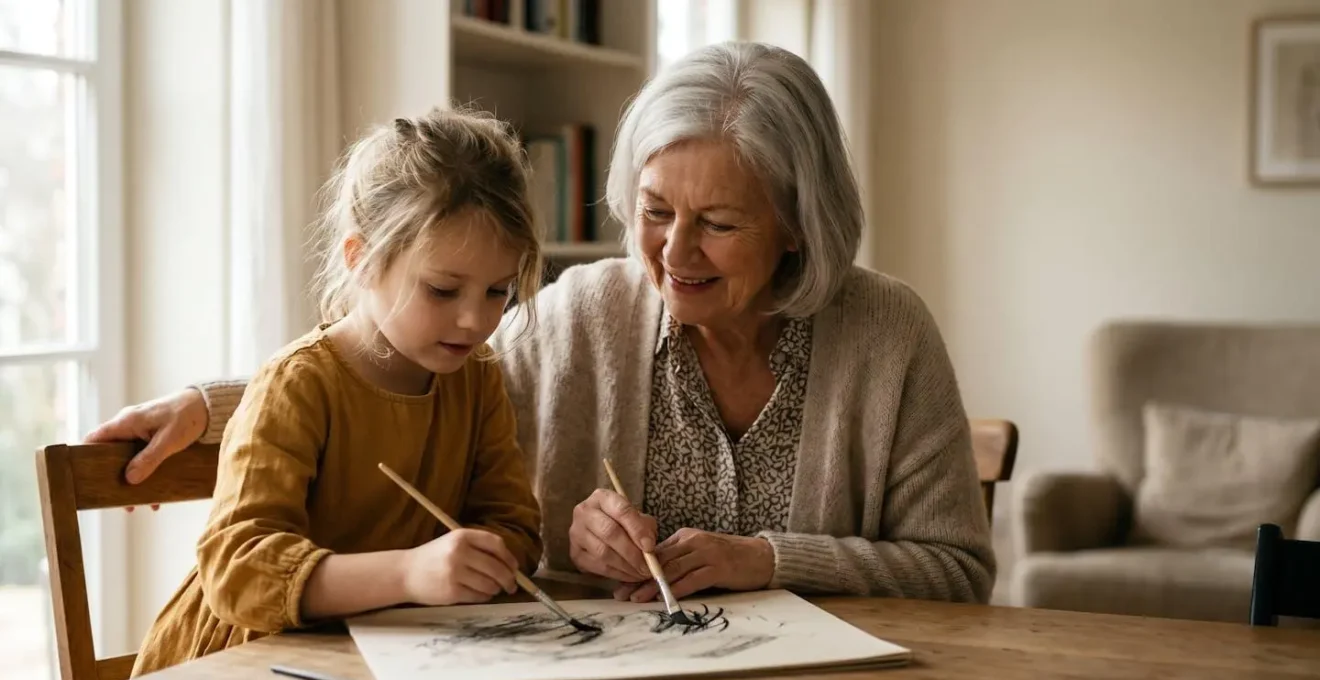
The modern grandparent’s dilemma isn’t just about staying relevant; it’s about navigating the fine line between being a friend and a figure of wisdom. The solution isn’t to learn TikTok dances but to intentionally shift the family dynamic. This guide offers a therapeutic framework for moving from a one-way dispenser of advice to a co-creator of shared experiences, where respect is earned through mutual learning and genuine connection, not just demanded by tradition.
The label “cool grandparent” can feel like a moving target in a world of rapidly changing technology and culture. You see your grandchildren absorbed in their screens, speaking a language of memes and video games you don’t understand, and a quiet fear of disconnection begins to creep in. You have a lifetime of stories, wisdom, and love to share, but how do you offer it in a way that’s received as a gift, not a lecture? It’s a question that many grandparents grapple with, often feeling caught between the desire to be involved and the fear of overstepping or appearing out of touch.
Conventional advice often suggests you should simply “learn their interests” or “share your hobbies.” While well-intentioned, this advice misses the core of the challenge. It’s not just about what you do, but about the underlying dynamic of your relationship. The old model of a grandparent as a distant, authoritative figure who occasionally imparts wisdom no longer fits. At the same time, becoming a permissive friend who relinquishes all authority isn’t the answer either. This can lead to feeling like a free babysitter, your role reduced to pure service without the deep, meaningful connection you crave.
But what if the true key to being “cool” isn’t about adopting trends, but about transforming the very structure of your relationship? The secret lies in creating a two-way exchange of value. It’s about building a space where you can be both a teacher and a student, where your life experience is honored, and their modern expertise is celebrated. This isn’t about losing your authority; it’s about evolving it into a form of mutual respect that is far more powerful and resilient.
This article will guide you through a therapist-approved framework for building that bridge. We will explore how to engage with their world, share your own in a way they’ll want to hear, set healthy boundaries, and offer guidance that empowers rather than annoys. It’s time to curate a new kind of legacy—one built on connection, not just command.
This guide offers practical strategies for navigating the modern grandparenting landscape. The following sections break down key areas where you can foster a relationship built on mutual respect and genuine fun, transforming your role for the better.
Summary: A Guide to Modern Grandparenting
- Minecraft and Roblox: Why You Should Let Your Grandkids Teach You?
- Recording Your History: How to Tell Stories They Actually Want to Hear?
- The Free Babysitter Trap: How to Say No Without Guilt?
- Zoom Bedtime Stories: How to Bond with Grandkids in Australia?
- Wisdom vs Lectures: How to Advise Teens Without Annoying Them?
- How to Integrate into a Golf Club If You Are a Solo Senior?
- Lunch Club or History Group: How to Match Your Personality to a Club?
- Why You Need a “Third Place” That Isn’t Home or the Doctor’s?
Minecraft and Roblox: Why You Should Let Your Grandkids Teach You?
The digital worlds of games like Minecraft and Roblox may seem like impenetrable fortresses of youthful obsession. But rather than seeing them as a barrier, consider them a bridge. These games are not just mindless distractions; they are complex “shared sandboxes” where creativity, problem-solving, and social skills flourish. By inviting your grandchild to be your teacher in this domain, you initiate a powerful dynamic of reverse mentorship. You are showing them that you value their expertise and are willing to be a novice in their world, which instantly builds respect and rapport.
Entering their world on their terms breaks down the traditional hierarchy. In this space, they are the expert. This simple role reversal can do more for your bond than a dozen lectures on life. A six-week university study on the subject revealed a fascinating outcome: intergenerational gameplay yielded significant social interaction and connectedness. Both grandparents and grandchildren found video games to be an effective tool for building stronger family bonds, proving that these digital environments are fertile ground for connection.
As the image above so beautifully illustrates, this is a collaborative act. Letting them guide your hands on the controller is a physical manifestation of trust and openness. You’re not just learning a game; you’re learning their language. You’re creating a shared memory that is unique to the two of you, centered on fun and mutual discovery rather than obligation. This is the foundation of genuine “coolness”—a willingness to learn and connect on any playground, even a digital one.
Recording Your History: How to Tell Stories They Actually Want to Hear?
Every grandparent has a treasure trove of stories, but the fear is that they will be met with polite nods or the glazed-over eyes of a distracted teenager. The urgency to share this legacy is real; research reveals that an alarming 90% of family stories are lost within just three generations. The key to preventing this isn’t just to talk more, but to reframe storytelling as a modern, engaging project—a curated legacy rather than a random collection of anecdotes.
Instead of waiting for the perfect moment that may never come, take a proactive approach by using the tools your grandchildren already understand. Think of yourself as the director of your own documentary. Your life isn’t a linear textbook; it’s a series of pivotal moments, challenges overcome, and funny mishaps. By packaging these moments in a digital format, you make them accessible and shareable for generations to come. The goal is to transform your memories from oral history into a lasting digital artifact.
To do this effectively, you need a strategy. It’s not about having expensive equipment, but about having a clear plan to turn your memories into compelling content. The following steps provide a roadmap to get started on creating stories they will actually want to engage with.
Your Action Plan for Crafting Stories They’ll Love
- Choose a Platform: Start with a user-friendly tool or app designed for seniors that allows you to easily record video, upload photos, and add your voice, all in one place.
- Structure Your Narrative: Don’t just list dates. Build stories around turning points: a tough decision, a lesson from failure, or a moment of pure joy. These emotional anchors are what make stories memorable.
- Find Your Artifacts: Connect every story to a tangible item. An old photograph, a war medal, a worn-out recipe card—these objects make the past feel immediate and real, providing a visual anchor for your tale.
- Make It Collaborative: Turn storytelling into a team sport. Suggest creating a family podcast where your grandchild interviews you, or a private social media account where old photos are paired with your story-driven captions.
- Build a Rhythm: Consistency is more important than perfection. Commit to recording or sharing one story a week. This steady stream builds a rich library over time and makes “story time” a regular, anticipated event.
The Free Babysitter Trap: How to Say No Without Guilt?
You love your grandchildren, and you love helping your children. But slowly, an expectation can build until you feel less like a grandparent and more like an on-call, unpaid daycare service. This “free babysitter trap” is incredibly common; a 2023 Harris Poll found that 42% of working parents rely on grandparents for childcare. While born from love and necessity, an open-ended commitment can lead to burnout, resentment, and the erosion of the special grandparent-grandchild bond you’re trying to build.
The solution is not to stop helping, but to establish clear, loving boundaries. This isn’t selfish; it’s an act of self-preservation that protects your health and the quality of the time you spend with your family. Research is clear on this point. One comprehensive English study found that while all grandparents may help, those from disadvantaged backgrounds often provide more intensive, necessity-driven care. The study highlights that heavy, open-ended care can lead to significant physical and emotional strain, underscoring the critical need for sustainable arrangements. Setting boundaries ensures you can give your best self to your family, not your leftover self.
The key to saying no without guilt is to be proactive, not reactive. Sit down with your adult children during a calm moment—not when they’re calling in a last-minute panic—and define your availability. Use a calendar to block out your personal time and pre-schedule “Grandparent Days.” This reframes your involvement from an unlimited resource to a cherished, scheduled event. It replaces the anxiety of “Can you?” with the joyful anticipation of “It’s our day!” This structure gives you control over your life and makes the time you do spend together more intentional and special.
Zoom Bedtime Stories: How to Bond with Grandkids in Australia?
When thousands of miles and multiple time zones separate you from your grandchildren, the ache of distance can feel immense. Video calls are a lifeline, but they can easily fall into a pattern of passive viewing, with stilted conversations that don’t bridge the emotional gap. To forge a real bond, you must transform screen time from a passive activity into an interactive co-creation. The goal is to create shared experiences that feel tangible, even across a digital divide.
This means moving beyond simply asking “How was school?” and into the realm of doing things *together*. Modern technology offers simple ways to do this. Instead of just reading a book, you can use a platform’s whiteboard feature to draw the characters as you tell the story. You can solve a digital jigsaw puzzle together by sharing your screen. These activities create a sense of teamwork and shared purpose, making the distance melt away. It’s not about the technology itself, but how you use it to facilitate a shared experience.
Here are some practical techniques to make your long-distance connections more meaningful and interactive:
- The “Twin Object” Method: Before a call, mail your grandchild a small, specific object—a toy car, a particular seashell, or a copy of a book. During the video call, you both hold up your identical objects. This creates a powerful, tactile link that makes the connection feel more real and present.
- Asynchronous Story Chains: You don’t always have to connect in real-time. Start a shared document or email chain where you write the first paragraph of a brand-new, fantastical story. They then write the next paragraph, and you alternate. This builds anticipation and creates an ongoing creative project.
- Create a Multimedia Diary: Use a simple app to record short videos of yourself telling stories behind old family photos. You can explain who is in the picture, where it was taken, and what was happening. This preserves your voice and your memories in a rich format that they can watch anytime.
- Digital Show-and-Tell: Dedicate part of your call to a “show-and-tell” theme. One week, you both share your favorite-colored object. The next, you share something you made. This encourages active participation and reveals more about each other’s lives and personalities.
Wisdom vs Lectures: How to Advise Teens Without Annoying Them?
The teenage years present a unique challenge. Your grandchild is navigating a complex world of social pressures, academic stress, and personal identity formation. You have a lifetime of experience that could help, but unsolicited advice is often the fastest way to get an eye-roll and a shut-down conversation. The shift required here is from delivering lectures to offering perspective. Your role is not to be a second set of parents, but a trusted, neutral advisor—a safe harbor outside the immediate emotional storm of their daily life.
The most effective way to do this is to create an environment where conversation can emerge naturally. A pilot project that brought students and older adults together for game sessions found something remarkable: the shared activity created a comfortable space for difficult topics to surface. As one student noted, the experience was often “more about the conversation, and less about the games.” This proves that a shared, level playing field allows wisdom to be transferred through dialogue, not monologue. By focusing on a shared activity—baking, fishing, or even a video game—you create the conditions for them to open up to you.
When they do come to you for advice, using a gentle, questioning approach is far more effective than providing direct answers. This Socratic method empowers them to find their own solutions, with you acting as a guide. It shows respect for their intelligence and their growing autonomy.
- Ask Clarifying Questions: Instead of jumping to a solution, start with, “That sounds really tough. What’s the hardest part about this for you?” This helps them articulate the problem for themselves.
- Explore Possibilities: Use powerful, open-ended questions like, “If there were no obstacles, what would you want to happen?” This guides them toward envisioning their own ideal outcome.
- Ask for Permission: A simple, “Are you looking for advice, or do you just need to vent?” shows immense respect. Sometimes, they just need a listening ear, not a five-point plan.
- Establish a ‘Consent for Advice’ System: Create a lighthearted code word or phrase your teen can use when they genuinely want your unfiltered opinion. This makes advice-giving a consensual act, not an intrusion.
How to Integrate into a Golf Club If You Are a Solo Senior?
Joining a new social group as a solo senior, whether it’s a golf club, a book circle, or a walking group, can be intimidating. The initial awkwardness of not knowing anyone can feel like a significant barrier. However, stepping into these environments is a crucial step towards building an identity outside of your family role. The key is to shift your mindset from “fitting in” to “finding connection.” You aren’t there to impress anyone; you’re there to find shared interests and build new, independent relationships.
Start by focusing on the activity itself. Your initial purpose is to play golf, discuss the book, or enjoy the walk. Take the pressure off yourself to make friends immediately. Participate consistently in club events, tournaments, or meetings. Be a reliable presence. People are naturally drawn to those who are genuinely engaged and passionate about the shared interest. Arrive a little early, stay a little late, and be open to casual conversations at the clubhouse or after the activity.
These specialized venues are powerful tools against social isolation. A 2023 analysis of intergenerational contact found that such activities provide immense benefits. The research showed that positive intergenerational contact, even in specialized venues, reduced loneliness and fostered a greater sense of purpose. While a golf club may not be explicitly intergenerational, it provides a community and a purpose that enriches your life, making you a more fulfilled and interesting person. This personal fulfillment is the secret ingredient to being a “cool” grandparent—you have your own stories to tell from your own adventures.
Lunch Club or History Group: How to Match Your Personality to a Club?
The decision to join a club is the first step. The next, more crucial step, is choosing the *right* club. The goal isn’t just to fill your calendar, but to find a group that energizes you and aligns with the grandparent you want to be. This is an act of strategic identity-building. Instead of just asking, “What sounds fun?” ask, “What kind of club will give me new skills, stories, and energy to bring back to my family?”
Think of your club as a content engine for your relationship with your grandkids. A history group doesn’t just teach you about the past; it gives you fascinating tidbits to share that are far more interesting than a lecture. A woodworking club doesn’t just teach you a craft; it gives you a project you can build with your grandchild. The club becomes a source of “story material” that enriches your conversations and creates opportunities for shared activities.
To find the perfect match, consider your personality and your grandparenting style. Your choice should feel authentic to you.
- For the Skill-Builder: If you love learning and creating, choose a club that teaches a tangible skill. Consider a coding-for-seniors class, a pottery workshop, or a drone photography group. Becoming an expert in an unexpected field is a powerful way to impress your grandkids and find a new passion.
- For the Storyteller: If you are more introverted and enjoy deep conversation, a book club or a local history society might be a perfect fit. These groups provide rich material for one-on-one conversations with a grandchild who loves to learn.
- For the Performer: If you are extroverted and love being active, consider joining a community theatre, a local choir, or a band. This gives you performances and events to which you can invite your family, sharing your passion in a tangible way.
- For the Adventurer: If you thrive on new experiences, look for unconventional groups. Urban foraging walks, retro video game collecting clubs, or volunteer groups for environmental cleanup can provide unique adventures and stories.
Key Takeaways
- Being a “cool” grandparent is about fostering a two-way relationship of mutual respect and learning, not just adopting youth trends.
- Setting clear, loving boundaries around your time and energy is crucial for preventing burnout and making shared moments more special.
- Your personal fulfillment matters; having your own interests and social life makes you a more interesting person and a better grandparent.
Why You Need a “Third Place” That Isn’t Home or the Doctor’s?
In sociology, a “third place” refers to a location outside of the two usual social environments of home (the “first place”) and work (the “second place”). For many seniors, the “second place” of work is gone, and life can shrink to a rotation between home and necessary appointments. This is where a personal, chosen “third place”—a club, a volunteer group, a workshop—becomes absolutely essential for your well-being. It is your space for social connection, personal growth, and identity outside of your family role.
This space is your shield against becoming overly dependent on your family for your social and emotional life. When your entire world revolves around your children and grandchildren, it puts immense pressure on those relationships to fulfill all your needs. A third place diversifies your emotional portfolio. It gives you your own friends, your own challenges, and your own successes. It provides you with fresh stories and energy, so when you do see your family, you are bringing a full and vibrant self to the interaction, not an empty cup waiting to be filled.
An interesting person is an interesting grandparent. This personal fulfillment is the foundation of authentic ‘coolness’ and prevents you from becoming overly dependent on your family for social life.
– Neil Taft, Caring Grandparents
This philosophy is the bedrock of modern, healthy grandparenting. Your authority and wisdom are not diminished by having your own life; they are enhanced. It shows your grandchildren that life is about continuous growth, passion, and community engagement at any age. It models a life well-lived. This personal fulfillment is the ultimate source of “cool”—it’s an authentic, self-generated confidence that is magnetic and inspiring, and it cannot be faked.
By shifting your perspective from service to shared experience and by investing in your own fulfillment, you lay the groundwork for a relationship with your grandchildren that is not only “cool,” but also deep, resilient, and truly joyful. To put these ideas into practice, the next logical step is to explore what kind of “third place” would most enrich your life and, by extension, your family connections.