Body in motion
The human body operates on a simple principle: use it or lose it. After the age of 60, this biological truth becomes more pronounced. Muscles shrink, joints stiffen, bones weaken, and cardiovascular capacity declines—but none of these changes are inevitable. The difference between seniors who thrive independently and those who require daily assistance often comes down to one factor: consistent, intelligent movement.
Staying active after 60 isn’t about running marathons or lifting heavy barbells in a gym. It’s about understanding how your aging body responds to different types of exercise, and building a sustainable movement practice that preserves strength, mobility, balance, and endurance. This article explores the key pillars of senior fitness, offering practical insights into how movement can be your most powerful tool for maintaining independence, preventing falls, and enjoying life to its fullest.
Why Movement Matters More After 60
As we age, our bodies undergo profound changes that directly impact our quality of life. Sarcopenia—the age-related loss of muscle mass—can begin as early as our 30s, but accelerates dramatically after 60. Without intervention, you can lose up to 3-5% of your muscle mass per decade, leading to weakness that makes everyday tasks like opening jars, carrying shopping bags, or getting up from a low chair increasingly difficult.
But muscle loss is just one piece of the puzzle. Bone density decreases, particularly in women after menopause, raising the risk of fractures. Joint cartilage wears thin, making movements painful. The cardiovascular system becomes less efficient, leaving you breathless after climbing a single flight of stairs. Perhaps most critically, balance and proprioception decline, turning a simple trip over a rug into a potentially life-altering fall.
The good news? Regular physical activity addresses all of these concerns simultaneously. Studies consistently show that even people in their 80s and 90s can build muscle, improve bone density, enhance cardiovascular function, and dramatically reduce fall risk through appropriate exercise. The question isn’t whether you’re too old to start—it’s which types of movement will serve you best.
Building and Preserving Muscle Strength
Muscle tissue is metabolically active, meaning it burns calories even at rest and supports glucose regulation. When you lose muscle, you don’t just lose strength—you lose a crucial component of metabolic health. The phenomenon sometimes called “marbling” occurs when muscle tissue is gradually replaced by fat, similar to what you see in certain cuts of meat.
The most effective way to combat muscle loss is through resistance training—exercises that make your muscles work against a force. This doesn’t necessarily mean lifting heavy weights in a gym. Resistance can come from:
- Elastic resistance bands (safer for arthritic joints than dumbbells)
- Your own body weight (chair squats, wall push-ups)
- Water resistance (aqua aerobics, foam dumbbells in a pool)
- Household objects (tins of soup for bicep curls)
The principle of progressive overload is key: gradually increasing the challenge over time. This might mean moving from a yellow resistance band to a black one, adding one more repetition each week, or holding a stretch for five seconds longer. Your muscles adapt to stress by growing stronger, but only if the stress incrementally increases.
For seniors, the focus should be on high repetitions with moderate resistance rather than maximal loads. Performing 12-15 repetitions of an exercise builds both strength and muscular endurance, while placing less stress on joints and connective tissues. Even three sessions per week of 20-30 minutes can produce measurable improvements within weeks.
Cardiovascular Fitness for Senior Hearts
Your heart is a muscle, and like all muscles, it requires regular exercise to stay strong. Cardiovascular fitness determines how efficiently your body delivers oxygen to working tissues—whether you’re walking to the shops, playing with grandchildren, or climbing stairs.
Many seniors make the “weekend warrior” mistake: being sedentary all week, then overdoing physical activity on Saturday. This pattern is dangerous, particularly for those with underlying heart conditions. The sudden spike in heart rate and blood pressure can trigger cardiac events. Instead, aim for consistent, moderate activity spread throughout the week.
Guidelines typically recommend at least 150 minutes of moderate-intensity cardio per week. Moderate intensity means you can talk but not sing during the activity—the “talk test” is a simple, effective way to gauge effort without needing a heart rate monitor. This might look like:
- 30 minutes of brisk walking, five days per week
- 25 minutes of swimming or water aerobics, six days per week
- Three 20-minute sessions of Nordic walking plus two 15-minute sessions of gardening
Nordic walking deserves special mention. By engaging upper body muscles alongside the legs, it can burn up to 46% more calories than regular walking while reducing impact on knee and hip joints. The poles also provide stability, making it safer for those with balance concerns.
Don’t discount incidental activity, either. Hoovering, gardening, and even vigorous housework can count toward your cardiovascular target if they elevate your heart rate into the moderate zone. The key is accumulation—ten minutes here, fifteen minutes there—it all contributes to your weekly total.
Flexibility and Mobility for Daily Independence
Flexibility is the range of motion available in your joints, while mobility is your ability to move freely and easily through space. Both tend to decline with age, but the consequences go far beyond not being able to touch your toes. Poor flexibility affects your ability to perform essential daily tasks: putting on socks while standing, reaching items on high shelves, getting in and out of the car, or even turning your head to check blind spots while driving.
Many seniors notice they feel stiffer in cold or damp weather. This isn’t just in your head—barometric pressure changes can cause joint tissues to expand slightly, increasing stiffness and discomfort. The solution is consistent mobility work, ideally first thing in the morning when joints are at their stiffest.
A simple five-minute bed routine before rising can make a remarkable difference. Gentle movements like:
- Ankle pumps and circles to encourage fluid movement
- Knee hugs to release tight hips
- Gentle spinal twists to lubricate vertebral joints
- Shoulder rolls and arm reaches to prepare upper body
Static stretching—holding a stretch for 30-60 seconds—is beneficial, but only after muscles are warm. Stretching cold muscles can cause injury. Instead, begin with dynamic movements that take joints through their full range of motion: arm circles, leg swings, gentle torso twists.
Both yoga and Pilates offer excellent flexibility and core strength benefits. For those with arthritic spines, Pilates may be preferable due to its emphasis on neutral spine positions, while yoga offers more variety in stretching. Chair yoga makes these practices accessible even to those with significant mobility limitations, allowing you to experience benefits without getting down on the floor.
Low-Impact Exercise Options
Not everyone can tolerate high-impact activities like running or jumping. Arthritic knees, hip replacements, osteoporosis, or simply decades of wear and tear on joints make impact exercises painful or dangerous. Fortunately, low-impact alternatives can deliver comparable fitness benefits without the joint stress.
Water-based exercise is particularly valuable because water’s buoyancy reduces your effective body weight by about 90%. This means you can perform movements in a pool that would be impossible or painful on land. Aqua aerobics isn’t just “for grannies”—when performed vigorously, it provides genuine cardiovascular and strength training benefits while being exceptionally kind to joints.
Swimming engages nearly every muscle group without impact stress. Even if you’re not a confident swimmer, walking laps in chest-deep water, performing leg kicks while holding the pool edge, or using foam dumbbells for resistance all provide excellent workouts. For those with severe joint problems, hydrotherapy pools (heated to around 33-36°C) offer additional pain relief and improved range of motion.
On land, cycling (whether outdoor or stationary) provides cardiovascular benefits without the impact of walking or running. The seated position also makes it suitable for those with balance issues. Elliptical machines offer another low-impact option, though these are typically only available in gyms or fitness centers.
The principle of cross-training—varying your exercise modalities—is particularly important for seniors. If you walk every day, your body adapts specifically to walking, but you may be neglecting other movement patterns. Someone who only swims may have excellent cardiovascular fitness but limited bone density (because swimming doesn’t involve weight-bearing stress). Ideally, combine activities: walk three days, swim twice, and do resistance training twice weekly.
Strength Training Safely
While resistance training is crucial, poor form or inappropriate exercise selection can cause injury. The “rounded back” error during lifting—whether picking up shopping bags or attempting a deadlift in the gym—is particularly dangerous for seniors, as it places enormous compressive force on spinal discs.
For those new to strength training, hiring a qualified personal trainer for even just three sessions can be transformative. A good trainer will assess your movement patterns, identify imbalances or limitations, teach proper form, and design a program tailored to your goals and constraints. This investment pays dividends in injury prevention and effectiveness.
The debate between machines and free weights has merit for seniors. Machines provide guidance and stability, making them safer for those with balance issues or who are learning movements. Free weights (dumbbells, kettlebells) require more stabilization, engaging core and balance systems, but they also increase fall risk. Resistance bands offer a middle ground: they’re portable, affordable, and gentler on joints than weights, while still providing progressive resistance.
When using resistance bands, always inspect them for micro-tears before use—hold the band up to light and stretch it gently. A snapping band can cause injury. Colour-coding typically indicates resistance level (yellow/light often being the lightest, black/heavy being the strongest), allowing you to progress systematically.
Key strength training principles for seniors include:
- Always warm up for 10 minutes before resistance work
- Focus on controlled movements (2 seconds to lift, 3 seconds to lower)
- Breathe continuously—never hold your breath during exertion
- Stop if you feel sharp pain (muscle fatigue is normal; joint pain is a warning)
- Allow at least 48 hours between training the same muscle group
Core Stability and Balance
Your “core” isn’t just your abdominal muscles—it encompasses all the muscles that stabilize your spine and pelvis, including deep muscles like the transverse abdominis, multifidus, and pelvic floor. These muscles work constantly to keep you upright and stable, and their weakness contributes significantly to fall risk.
Traditional abdominal exercises like crunches target superficial muscles while neglecting the deep stabilizers. More effective approaches include:
- Plank variations (even a 10-second wall plank is beneficial)
- Bird-dog exercises (opposite arm and leg extensions from all-fours position)
- Seated marching with good posture
- Single-leg standing (even holding onto a counter for balance)
The one-leg stand test is both an assessment and an exercise. Can you stand on one leg for 10 seconds without holding on? If not, this is a significant fall risk indicator. Practicing this daily—initially with fingertip support on a countertop—can dramatically improve balance over time.
Balance training has specificity: balancing on one leg doesn’t necessarily improve your ability to recover from a trip or stumble. That’s why “prehab” exercises that mimic real-world challenges are valuable—controlled stepping in all directions, heel-to-toe walking, or gentle perturbations (small pushes) while standing can train your reactive balance systems.
Weak side glutes (gluteus medius) cause your knee to collapse inward during single-leg activities like stair climbing or getting out of a car. This places enormous stress on knee joints and increases osteoarthritis risk. Side-lying leg raises, clamshells, or resistance band lateral walks all target these critical stabilizers.
Preventing Injuries and Supporting Recovery
After 60, injuries heal more slowly. A hamstring strain that might sideline a 30-year-old for two weeks can take six weeks or longer to fully heal in a 60-year-old. This makes injury prevention paramount.
The concept of “prehab”—preventive exercises that strengthen common weak points before injury occurs—is essential. This includes rotator cuff exercises for shoulder health, ankle stability work to prevent sprains, and flexibility training to maintain full range of motion.
When injuries do occur, the question of active recovery versus complete rest arises. Modern rehabilitation science favors active recovery for most injuries: gentle movement within pain-free ranges promotes blood flow, prevents stiffness, and maintains conditioning in unaffected areas. If you’ve strained your hamstring, you can’t run, but you might swim using only your arms, or perform upper body strength training while seated.
Warming up becomes non-negotiable after 50. A proper warm-up gradually elevates your heart rate, increases blood flow to muscles, lubricates joints with synovial fluid, and mentally prepares you for exercise. Ten minutes of gradually increasing activity—starting with gentle movements and building to your planned intensity—can prevent many common injuries.
Overuse injuries like tennis elbow occur when repetitive movements overwhelm tissue capacity to repair. The solution is varied movement patterns, adequate recovery between sessions, and addressing technique errors early. If a hobby is causing persistent pain, consult a physiotherapist before it becomes chronic.
Staying active after 60 requires a shift in mindset: from performance and aesthetics to function and longevity. The goal isn’t to lift the heaviest weight or run the fastest mile—it’s to maintain the strength to carry your shopping, the flexibility to tie your shoes, the balance to prevent falls, and the endurance to enjoy time with loved ones. Movement is medicine, and the prescription is simple: a balanced combination of strength, cardiovascular exercise, flexibility work, and balance training, performed consistently, safely, and joyfully. Your body in motion is your body maintaining independence.
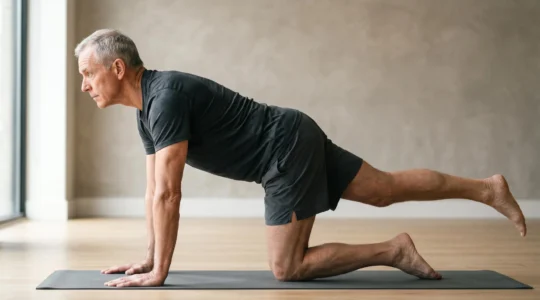
Why Crunching Abs Is Useless If Your Transverse Abdominis Is Weak?
Endless crunches fail to improve posture because they target superficial muscles, ignoring the deep “inner corset” essential for true stability. Functional strength comes from activating deep stabilizing muscles like the Transverse Abdominis (TVA), multifidus, and side-glutes. Weakness in this deep…
Read more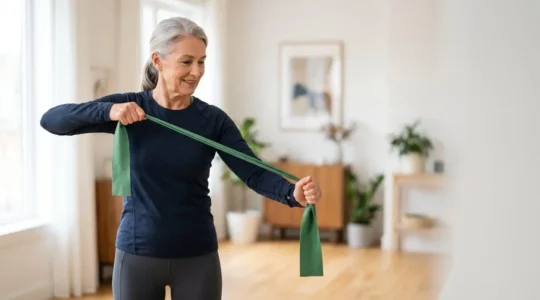
Why Are Elastic Bands a Safer Choice Than Dumbbells for Your Joints?
Many seniors want to build strength but rightly fear the joint strain associated with traditional dumbbells. The solution isn’t to avoid resistance, but to choose a smarter type. Unlike the jarring, constant force of weights, elastic bands provide accommodating resistance…
Read more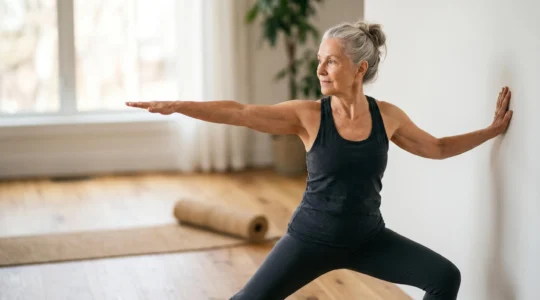
Warrior II with a Wall: How to Build Leg Strength Without Losing Balance?
The common belief that props are for “beginners” or the “weak” is the single biggest barrier to rebuilding functional strength; the truth is they are biofeedback tools for intelligent practice. Using a wall provides the nervous system with clear stability…
Read more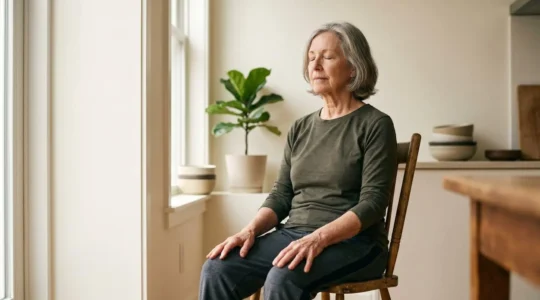
How to Get the Benefits of a Sun Salutation Without Leaving Your Chair?
Chair yoga is not a compromise; it’s a sophisticated practice that uses the chair as a tool to unlock strength, stability, and deeper body awareness. Objective data shows chair yoga provides a light-to-moderate intensity workout, challenging the myth that it’s…
Read more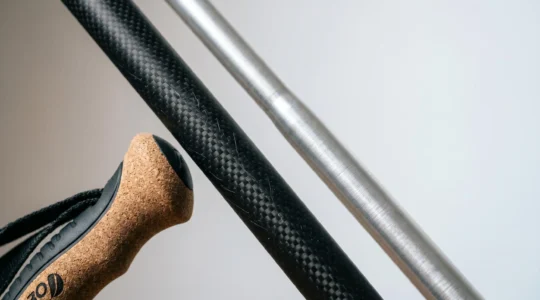
Carbon or Aluminium: Which Walking Pole Protects Arthritic Wrists Best?
For arthritic wrists, the debate isn’t carbon vs. aluminium, but how the entire pole system minimises vibration and grip force. Handle ergonomics and shape are often more critical for pain relief than the pole’s shaft material. An effective strap system…
Read more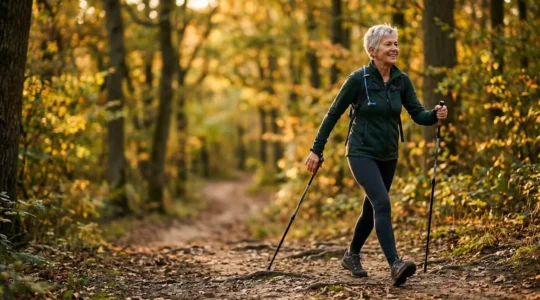
Why Is Nordic Walking More Effective Than Regular Walking for Senior Hearts?
Nordic walking’s true cardiovascular benefit isn’t from the poles themselves, but from mastering the propulsion technique that transforms a stroll into a full-body engine. Engaging the upper body correctly can increase calorie burn by up to 46% compared to regular…
Read more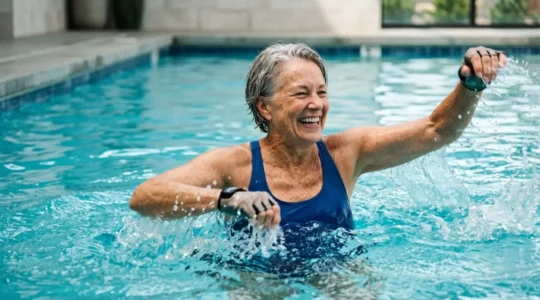
How to Get a Vigorous, Fat-Burning Workout When Your Knees Can’t Take the Impact
Feeling trapped in a painful cycle where your knees prevent the very exercise you need to lose weight and feel better? The solution isn’t just “low-impact” activity; it’s learning to defy gravity. This guide reveals how water’s unique properties of…
Read more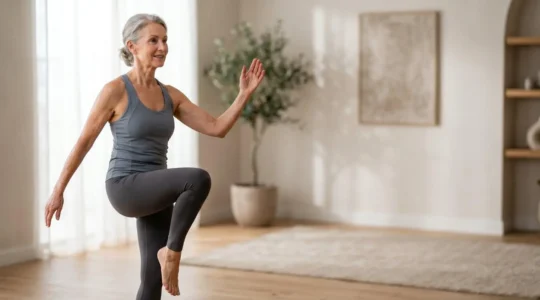
How to “Prehab” Your Body to Survive a Fall Without Breaking
Contrary to popular belief, surviving a fall isn’t about avoiding it; it’s about training your body to withstand the impact. Your true defense is not grab bars, but your body’s “internal armor”—a powerful core, rapid reflexes, and an efficient recovery…
Read more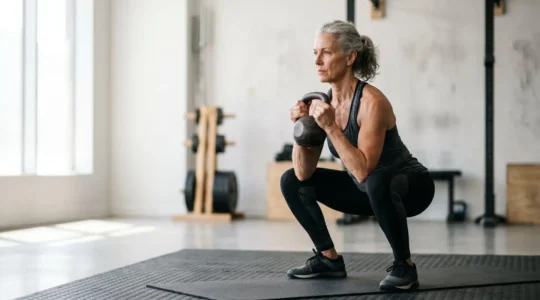
Why Women Over 60 Must Lift Heavy Things to Stay Young
Contrary to the myth that women over 60 should stick to ‘gentle’ exercise, lifting heavy is the single most effective way to command your body to rebuild bone and reverse muscle aging. Lifting weights triggers a biological process called mechanotransduction,…
Read more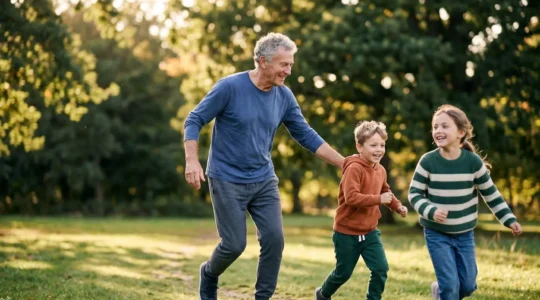
How to Build Enough Stamina to Keep Up with Grandchildren in the Park?
In summary: Stamina loss is often due to age-related muscle decline (sarcopenia), not just a lack of fitness. Use the simple “Talk Test” to find your ideal exercise intensity—the “Fun Grandparent Zone”—where you can build heart health without gasping for…
Read more