Independence and prevention
Independence in later life isn’t simply about doing things for yourself—it’s about having the physical capability, medical foresight and support systems to make genuine choices about how you live. Prevention, meanwhile, isn’t about paranoia or endless appointments; it’s about catching the small things before they become big things, and building resilience before you need to draw on it.
These two concepts—independence and prevention—are inseparable. A DEXA scan that identifies bone thinning before a fracture can mean the difference between walking to the shops and waiting six months for a hip to heal. A smartwatch that catches atrial fibrillation early could prevent the stroke that ends driving. This article connects the dots between preventive strategies, daily capability markers, and practical safety systems that together protect your autonomy.
We’ll explore how to build a preventive health approach beyond standard NHS provision, understand which tests genuinely matter, monitor the systems most critical to independence, preserve sensory and physical function, and plan for emergencies without losing control.
Preventive Health Screening: Catching Problems Before They Catch You
The NHS provides an excellent foundation for preventive care, but it’s designed for populations, not individuals. If you have a family history of bowel cancer, the standard screening age of 60 might be too late. If you’re a man over 65, an abdominal aortic aneurysm screening could literally save your life, yet many never receive the invitation.
The key question isn’t NHS versus private—it’s understanding where gaps exist in your personal risk profile. Private GPs often recommend three screenings the NHS typically misses: advanced lipid panels that go beyond basic cholesterol, coronary calcium scoring for hidden heart disease, and comprehensive thyroid function tests that explain stubborn fatigue. These aren’t expensive vanity tests; they’re targeted investigations when symptoms don’t fit standard patterns.
Equally important is learning to summarise your symptoms effectively for a 10-minute GP appointment. Write down three things: when it started, what makes it better or worse, and how it affects your daily life. This simple structure turns vague complaints into actionable information and prevents the “stiff upper lip” error—dismissing symptoms as “just getting older” until they become emergencies.
Full body MRI scans sit at the controversial end of prevention. While they can detect early cancers, they also risk over-diagnosis, leading to biopsies and procedures for findings that might never have caused harm. The decision hinges on your personal anxiety tolerance and medical history, not marketing promises.
Cardiac Health: Monitoring the Engine That Powers Independence
Your heart doesn’t just keep you alive—it powers every walk to the corner shop, every climb up the stairs, every moment of independent living. Cardiac problems have a unique feature: they often give warnings before catastrophe strikes.
Understanding Atrial Fibrillation Risk
Atrial fibrillation is the leading cause of severe strokes in over-75s, yet many people live with it unknowingly for months. The irregular heartbeat creates conditions where blood clots can form and travel to the brain. The cruel irony is that AFib itself might cause nothing more than occasional palpitations or a vague sense of breathlessness—easy to dismiss as age or fitness.
This is why cardiac monitoring has moved from hospitals to wrists. Modern smartwatches use either ECG sensors (which require you to touch the watch) or PPG sensors (which monitor continuously through light). ECG sensors provide more diagnostic detail, but PPG sensors catch irregular rhythms during normal activity, including sleep.
Smartwatches and Practical Cardiac Monitoring
The question isn’t whether smartwatches can detect AFib—clinical studies confirm they can—but whether you’ll actually use one consistently. For seniors with no tech skills, setup is the barrier. Most watches now offer simplified modes, but you need someone patient to configure notifications, adjust text size, and test the fall detection.
If you’re already on statins, you might assume cholesterol monitoring is sorted. Not quite. Statin doses need adjusting, and checking levels annually ensures the medication is working without causing muscle problems. More importantly, if you develop new symptoms—persistent fatigue, muscle aches—a cholesterol check rules out over-treatment.
When to Worry About Palpitations
Palpitations fall into two categories: “sit down and breathe” versus “call 999 now.” If your heart races but settles within minutes when you rest, and you feel otherwise well, it’s rarely an emergency. If palpitations come with chest pain, severe breathlessness, or feeling faint, that’s a 999 call. The middle ground—frequent episodes that disrupt your life—needs a GP appointment and possibly a wearable monitor to catch the rhythm during an episode.
Vision Preservation: Seeing Clearly to Stay Safe
Vision loss steals independence in layers. First goes the ability to drive at night. Then reading small print becomes exhausting. Eventually, judging distances and spotting trip hazards fails, and suddenly the home you’ve lived in for 40 years feels treacherous.
Silent Sight Stealers
Glaucoma earns its nickname—the “thief of sight”—because it damages peripheral vision so gradually you adapt without noticing. By the time you realise something’s wrong, irreversible damage has occurred. This is why eye pressure checks after 60 aren’t optional vanity; they’re essential defence.
For driving, the DVLA requires you to read a number plate at 20 metres. Can you pass that test today, in the rain, at dusk? If you’re squinting or uncertain, it’s time for an eye test, not “just being careful.” After 70, you must declare medical conditions, including vision changes, to keep your licence legally.
Practical Adaptations for Changing Vision
The varifocals versus separate pairs debate matters more than many opticians admit. Varifocals create a distortion zone at ground level that can cause trips on stairs or pavements—the “bifocal mistake” that leads to A&E visits. Many people find separate reading glasses and distance glasses safer for navigation, reserving varifocals for seated tasks.
If you have macular degeneration, kitchen lighting transforms from preference to safety issue. Under-cabinet LED strips eliminate shadows on chopping boards. Adjustable colour temperature helps contrast—warmer light for general tasks, cooler white light for reading labels.
Bone Health and Fracture Prevention
Bones are living tissue that constantly rebuild themselves—until the rebuilding slows and density drops. A T-score from a DEXA scan tells you how your bone density compares to a healthy 30-year-old. A T-score below -2.5 means osteoporosis; between -1 and -2.5 indicates osteopenia.
Here’s the confusion: osteopenia sounds like a disease, but it’s often just normal ageing bones. What matters is your fracture risk—the combination of bone density, age, previous fractures, family history and lifestyle factors. A 70-year-old with a T-score of -1.5 who does weight-bearing exercise and has never broken a bone faces different risks than someone with the same score who fell twice last year.
Getting a DEXA scan on the NHS without a fracture history requires demonstrating risk factors: family history of hip fracture, early menopause, long-term steroid use, or conditions like rheumatoid arthritis. If you don’t meet NHS criteria but have concerns, private DEXA scans cost between £80-150 and provide the same information.
The radiation from a DEXA scan is negligible—roughly equivalent to a day’s background radiation. Scanning every year is wasteful because bone density changes slowly; every two to three years provides adequate monitoring once you have a baseline.
Balance, Proprioception and Spatial Confidence
Balance isn’t one system—it’s three working in concert: your inner ear sensing motion, your eyes tracking your position, and proprioception (your body’s sense of where your limbs are in space). After 60, all three degrade, but proprioception often weakens fastest and most invisibly.
Understanding Balance Disorders
When the room spins, distinguishing vertigo from lightheadedness matters. True vertigo—where you or the room rotates—usually stems from inner ear problems. Lightheadedness—feeling woozy or about to faint—often indicates blood pressure issues, dehydration, or medication effects. Many blood pressure pills cause positional dizziness, especially when standing quickly.
BPPV (benign paroxysmal positional vertigo) is remarkably common and fixable. Tiny crystals in your inner ear become dislodged and trigger severe spinning when you move your head certain ways. The Epley manoeuvre—a specific sequence of head positions—can genuinely resolve BPPV at home in minutes, though having someone guide you through it the first time prevents mistakes.
If balance problems persist, your GP faces a choice: refer to ENT for inner ear investigation, or a falls clinic for comprehensive balance assessment. Falls clinics often provide faster, more practical help—testing vision, proprioception, medication effects and muscle strength in one visit.
Retraining Your Spatial Sense
Proprioception fades partly from disuse. Walking on flat, predictable pavements every day teaches your brain to expect uniformity—then uneven grass or a unexpected kerb triggers a stumble. The fix is controlled challenge: deliberately walking on varied surfaces, practising the “toothbrush balance” (standing on one leg while brushing teeth), and feeling surfaces through thinner soles.
If you keep bumping doorframes, your proprioception is failing to accurately map your body’s width in space. Doorframe training sounds silly but works: practice walking through doorways while looking straight ahead (not down), consciously feeling where your shoulders are. Your brain relearns the mapping within weeks.
Thick-soled shoes cushion impact but “blind” your proprioception by blocking ground feel. Barefoot walking isn’t safe for everyone, especially with neuropathy or diabetes, but thinner, flexible soles with good grip provide a middle ground—protection with feedback.
Daily Independence Markers That Matter
Occupational therapists use deceptively simple tests to assess independence. These aren’t just clinical curiosities—they’re early warning systems you can monitor yourself.
The toenail test is brutally honest: can you still cut your own toenails comfortably? This requires hip flexibility, balance, vision, and hand strength. Losing this ability doesn’t mean you’re failing; it means booking a podiatrist before overgrown nails cause gait problems or infections.
The “Get Up and Go” test times how long it takes to stand from a chair, walk three metres, turn, return and sit down. Under 10 seconds is excellent; 10-20 seconds is normal; over 20 seconds suggests increased frailty risk and merits a GP discussion about physiotherapy.
The jar opener question divides people: is using one admitting weakness or choosing ease? Here’s the reframe: tools exist to conserve energy for things that matter. Opening a jar with a gadget in 5 seconds instead of struggling for 2 minutes means you have more energy for cooking, gardening, or whatever brings joy. Assistive devices don’t make you weaker—they make you wiser.
Regaining independence after hospital stays requires active effort. Pneumonia or surgery can decondition muscles in days. Occupational therapy and physiotherapy aren’t luxuries for severe cases—they’re essential for anyone who’s spent a week in bed. Private OT assessments often happen within days versus weeks through social services if you need home modifications quickly.
Health Technology as Your Safety Companion
Wearable health trackers generate two reactions: liberation or anxiety. The difference often lies in understanding what the data means and who controls it.
Data ownership is murky. You own the information, but the platform (Apple, Fitbit, Garmin) owns the infrastructure. Most allow data export to share with doctors—look for “export health data” in settings. Bringing three months of heart rate trends to a cardiology appointment transforms vague symptoms into diagnostic patterns.
The “worried well” phenomenon is real: some people find that tracking sleep makes it worse, creating performance anxiety about HRV scores or REM percentages. If checking your stats increases stress rather than providing reassurance, that’s a sign to step back or disable certain metrics.
Charging routines determine whether a watch helps during an actual emergency. If it dies every afternoon, it won’t detect a fall at 3pm. Most seniors find charging while bathing or reading in the evening works—the watch is on during active hours and overnight when falls or cardiac events often occur.
False alarms happen. Vigorous vegetable chopping can trigger fall detection; rapid movements might flag as irregular heart rhythm. The key is understanding how to cancel false alerts quickly (usually holding a button) so you’re not embarrassed when emergency services call back, and they don’t become desensitised to your device.
Emergency Preparedness: Planning for the Unexpected
True independence includes accepting you might one day need help quickly and planning for that eventuality while you still have full capacity.
Legal and Medical Planning
A Health and Welfare Lasting Power of Attorney must be signed while you have mental capacity. Waiting until “it’s needed” means it’s too late. This document lets someone you trust make medical decisions if you cannot. It’s not about giving up control—it’s about choosing who speaks for you if you’re unconscious or confused.
The Lions Club “Message in a Bottle” scheme places a small container with your medical information, medications, allergies, and emergency contacts in your fridge—a standardised location paramedics check. The accompanying sticker on your door alerts them to look. It’s free, simple, and has saved lives when patients couldn’t communicate.
Lock screen medical information on smartphones lets paramedics access critical details without unlocking your phone. Both iPhone and Android allow “Medical ID” or “Emergency Information” visible from the lock screen—include blood type, allergies, medications, and emergency contacts.
Neighbourhood Safety Systems
Police-approved key safes eliminate the dangerous habit of hiding keys under mats. A secure combination box mounted discretely near your door lets trusted people (carers, family, paramedics) access your home in emergencies without breaking down doors. Choose ones meeting British Standard security ratings.
The curtains system is beautifully low-tech: agree with a neighbour that opening your curtains by a certain time each morning signals you’re okay. Closed curtains past noon prompt a knock or phone call. It requires no technology, costs nothing, and builds community connection alongside safety.
“In Case of Emergency” plans only work if people can find them. A laminated card on your fridge with emergency contacts, your GP, current medications, and any critical conditions (pacemaker, diabetes, allergies) helps paramedics and reduces hospital errors. Update it whenever medications change.
Maintaining independence isn’t about refusing help—it’s about staying in control of when, how and from whom you receive it. Prevention gives you options; preparedness protects your choices. Together, they form the foundation of autonomous living at any age.
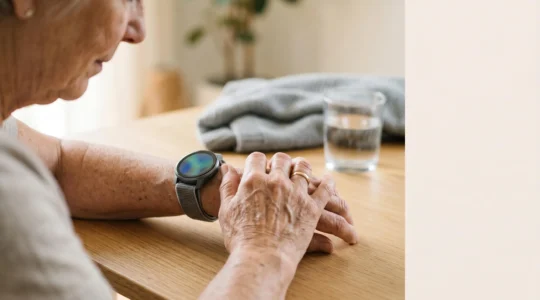
Fitbit or Apple Watch: Which Health Tracker Is Best for Senior Safety?
The best smartwatch for a senior isn’t the one with the most features, but the one that seamlessly integrates into their life without causing new anxieties. Fall detection and ECG are critical, but a consistent charging routine and understanding data…
Read more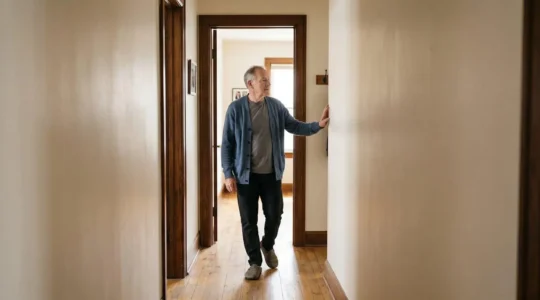
Why Do You Keep Bumping Into Doorframes and How to Stop It?
That recurring bump into the doorframe isn’t just ‘clumsiness’; it’s a sign your brain’s internal ‘GPS’ for your body—proprioception—is failing, but it can be retrained. Your body’s sense of position fades with age due to neurological changes, not just muscle…
Read more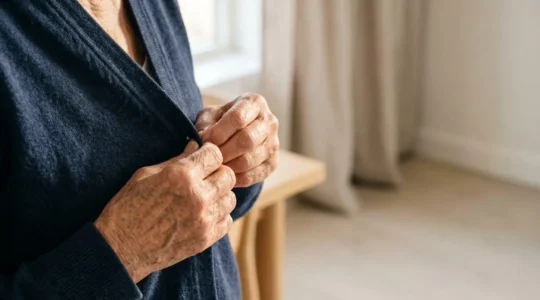
Can You Still Cut Your Own Toenails: The Litmus Test for Independence?
Maintaining independence is not a matter of all-or-nothing, but a skill of strategic self-management and adaptation. Small, everyday tasks like cutting toenails or opening jars serve as vital “functional litmus tests” for your well-being. Using assistive tools or hiring help…
Read more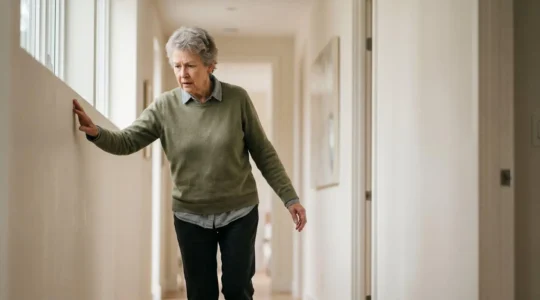
Vertigo or Lightheadedness: How to Identify Why the Room Is Spinning?
The sudden fear that comes with a dizzy spell can be overwhelming, often leading to worries about a stroke or a serious fall. This guide demystifies your symptoms, showing you how to become a ‘symptom detective’ to understand whether the…
Read more
Why Is Warm Water Hydrotherapy the Gold Standard for Arthritis Relief?
Warm water hydrotherapy is a clinical intervention, not a luxury, that provides quantifiable relief from arthritic pain by directly targeting its physiological drivers: joint loading, inflammation, and swelling. Buoyancy offloads up to 90% of your body weight, creating a safe…
Read more
What Does Your T-Score Actually Mean for Your Fracture Risk?
Your T-score is not a final diagnosis, but a critical piece of a larger puzzle about your bone health and fracture risk. The T-score is the most important number for seniors, comparing your bone density to a healthy 30-year-old. Factors…
Read more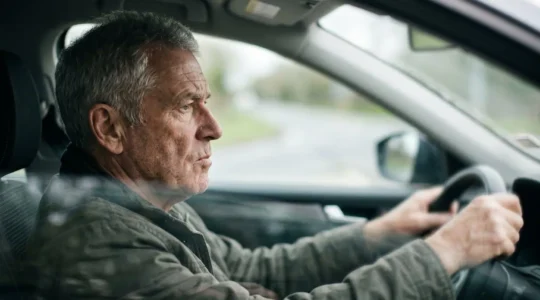
How Can I Keep My Driving Licence After 70 with Changing Vision?
Keeping your driving licence after 70 is less about passing a single, flawed test and more about proactively managing your entire visual world to demonstrate holistic fitness. The DVLA’s number plate test is an inconsistent measure of real-world driving ability;…
Read more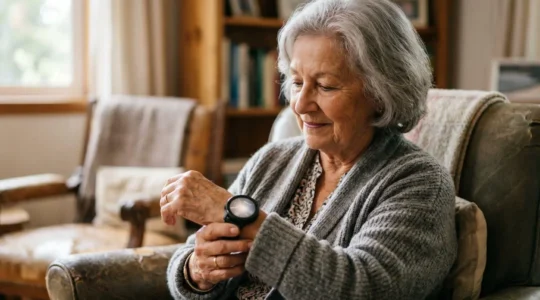
Which Smartwatch Can Accurately Detect Atrial Fibrillation in Seniors?
The Apple Watch (Series 4+) is the superior choice for high-stakes senior safety monitoring due to its FDA-cleared ECG, fall detection, and robust caregiver ecosystem (Family Setup). The core difference lies in sensor technology: Apple’s on-demand ECG provides clinical-grade data…
Read more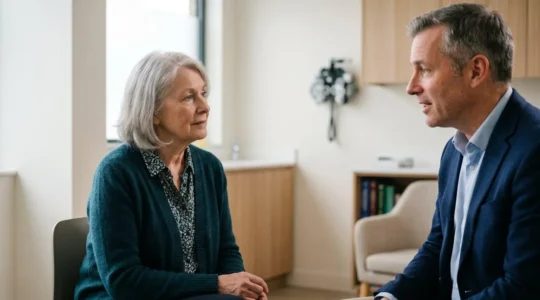
Which 3 Health Screenings Do Private GPs Recommend That the NHS Misses?
For those of us over 65, the NHS is a cornerstone of our health security—a robust, population-level safety net designed to catch common conditions. However, its one-size-fits-all screening programme is, by design, conservative and reactive. It is not built for…
Read more
How to Build a Preventive Health Strategy Beyond the Standard NHS Offer?
Proactive health for UK seniors isn’t about choosing between the NHS and private care; it’s about strategically using private data to unlock the full power of the free NHS system. Standard NHS checks provide a vital baseline, but targeted private…
Read more