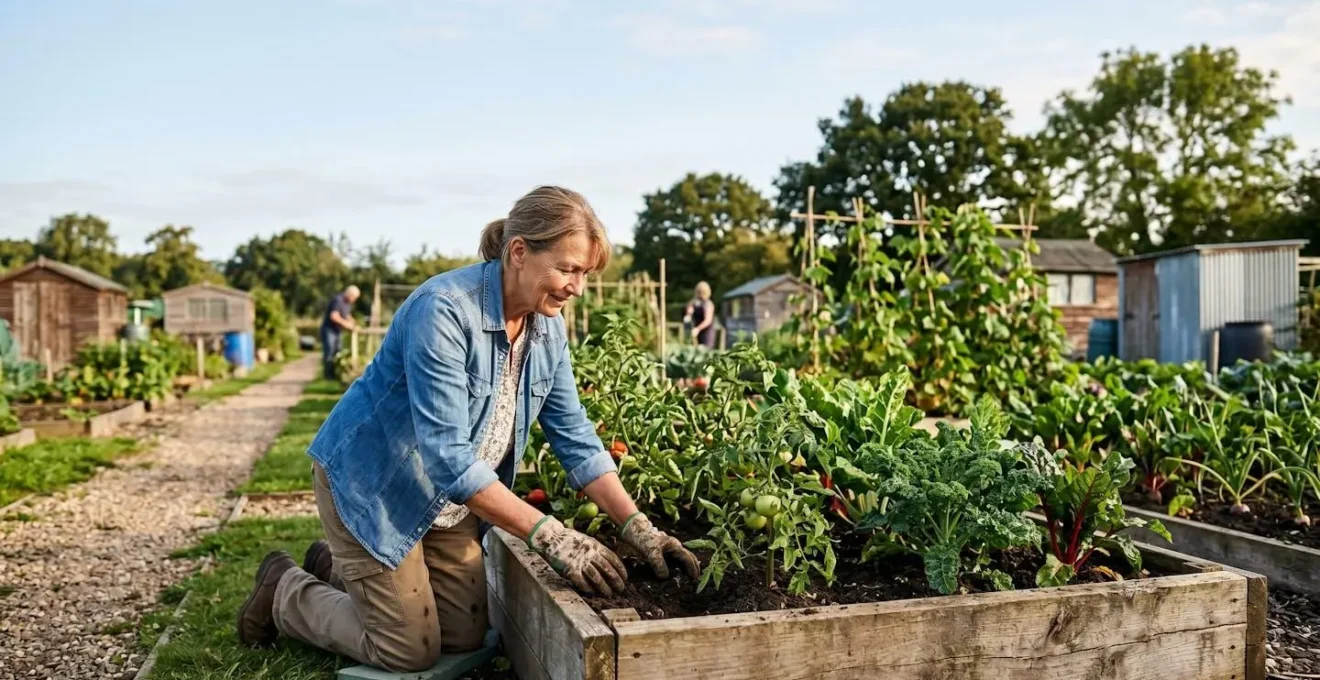
The secret to anti-ageing isn’t found in a sterile gym or a separate social club—it’s in the one place that combines the best of both: the community allotment.
- It provides ‘functional fitness’ that strengthens the body for everyday life far better than isolated gym machines.
- It creates a ‘neuro-social matrix’ by exposing you to mood-boosting soil bacteria and the cognitive challenges of social interaction and competition.
- It offers ‘purposeful productivity’ and a profound sense of community, tackling loneliness and sharpening the mind.
Recommendation: Swap the solitary backyard for a plot and discover a holistic regimen for a sharper mind and a stronger, more resilient body.
For many, the image of senior gardening is one of quiet solitude: a few hours spent tending to roses in the backyard, a peaceful but lonely pursuit. It’s seen as a gentle hobby, a way to pass the time. We’re often told that to stay healthy, we need a gym membership for physical strength and to join clubs or classes for social connection. These are treated as separate, distinct activities to be scheduled into our week.
But what if this entire model is flawed? What if the most powerful, holistic, and enjoyable anti-ageing strategy isn’t found in a sterile fitness centre or a weekly coffee morning, but down a muddy track, behind a rusty gate? This article argues that the community allotment is not just a place to grow vegetables; it is a sophisticated, integrated system for health and well-being. It is the ultimate anti-ageing gym and social club rolled into one.
We will dig deep into the science, exploring how the physical act of gardening provides a superior form of ‘functional fitness’. We’ll uncover the incredible neurological benefits of getting your hands dirty and engaging with the ‘neuro-social matrix’ of the allotment community. And we’ll see how the structure, challenges, and purpose of an allotment plot provide a mental workout that keeps the mind as sharp as the body is strong, moving far beyond the simple act of pottering in a private garden.
This exploration will guide you through the multifaceted benefits of the allotment lifestyle. The following sections break down exactly how this humble patch of earth outperforms conventional approaches to health, offering a roadmap to vibrant, active, and connected later years.
Contents: The Allotment as a Holistic Health System
- Digging vs Gym: How Gardening Squats Protect Your Back?
- Soil Bacteria and Serotonin: Why Getting Dirty Makes You Happy?
- The Committee Spat: How to Navigate Politics in the Gardening Club?
- Growing for the Show: How Competition Sharpens Focus?
- Winter Planning: How to Stay Engaged When the Ground Is Frozen?
- Gardening or Hoovering: Which Housework Counts as Moderate Cardio?
- Green Space Effect: Why 4 Hours on the Course Lowers Cortisol?
- How to Burn 300 Calories a Day Without Ever Going to a Gym?
Digging vs Gym: How Gardening Squats Protect Your Back?
Forget the leg press machine. The real secret to a strong back and resilient joints lies in the natural, varied movements of gardening. This is the essence of functional fitness: training your body for the demands of real life, not just for isolated movements in a gym. Every time you bend to pull a weed, squat to plant a seedling, or lift a watering can, you are performing a full-body exercise that builds strength, balance, and flexibility in a coordinated way.
Unlike repetitive gym exercises that target single muscle groups, gardening forces your body to work as an integrated system. A proper gardening squat—keeping your back straight and using your powerful leg muscles—is one of the best exercises for protecting your lower back from injury. It strengthens your glutes, quads, and core in unison. Similarly, tasks like turning compost, pushing a wheelbarrow, and raking soil engage multiple muscle groups, improving coordination and stability, which are crucial for preventing falls.
The science backs this up. Not only does a study by The American Society for Horticulture Science show that older gardeners have significantly better hand strength and dexterity, but the activity itself is a perfect match for public health guidelines. It’s an accessible way to meet the recommended 30 minutes of moderate-intensity physical activity on most days, building a foundation of real-world strength that lasts.
Soil Bacteria and Serotonin: Why Getting Dirty Makes You Happy?
The profound sense of well-being that comes from gardening is not just “in your head”—it’s in the soil itself. The earth beneath your fingernails is teeming with a microscopic ecosystem, and one of its key inhabitants is a bacterium called Mycobacterium vaccae. This friendly microbe has a remarkable effect on our brains, acting as a natural antidepressant. When we inhale it or get it on our skin, it triggers a powerful neurological response.
This isn’t folk wisdom; it’s established science. Groundbreaking research from the University of Colorado, Boulder, found that M. vaccae directly stimulates a group of neurons responsible for producing serotonin. Serotonin is a vital neurotransmitter that regulates mood, anxiety, and feelings of happiness. By literally getting your hands dirty, you are promoting a healthy, balanced brain chemistry. This direct link between the soil and your mental state is a core component of the “environmental biome” connection.
This biochemical boost is something you simply cannot get from a treadmill or an exercise bike. It explains why gardening feels less like a chore and more like a restorative act. It forms a crucial part of the allotment’s holistic benefits, connecting our physical activity directly to our mental and emotional health. As pioneering researcher Dr. Chris Lowry commented on the findings:
These studies help us understand how the body communicates with the brain and why a healthy immune system is important for maintaining mental health. They also leave us wondering if we shouldn’t all be spending more time playing in the dirt.
– Dr Chris Lowry, Bristol University research on Mycobacterium vaccae
The Committee Spat: How to Navigate Politics in the Gardening Club?
An allotment is more than a collection of individual plots; it’s a living, breathing community—a “club” with all the accompanying social richness and complexity. This neuro-social matrix is where the allotment truly distinguishes itself from solitary backyard gardening. While navigating committee disagreements or a neighbour’s encroaching raspberry canes can seem daunting, these social interactions are a powerful form of cognitive exercise, forcing us to negotiate, compromise, and collaborate.
This social dimension is directly linked to profound health benefits. It’s not just about chatting over the fence. It’s about shared purpose, mutual support, and a sense of belonging. This is powerfully demonstrated in a study comparing allotment gardeners to their non-gardening neighbours, which found the gardeners had significantly better overall health and well-being. The community itself is a health-promoting factor.
Case Study: The Social Capital of Gardening Groups
A comprehensive survey of 331 older gardeners in Australia revealed that those who were members of gardening groups—like an allotment community—reported far greater social and physical benefits than solitary gardeners. The study highlighted that these groups build “social capital” by creating a physical space to meet people with shared goals. This leads to an increased sense of achievement through collaborative projects and provides a powerful antidote to social isolation, significantly enhancing community well-being.
Instead of viewing social friction as a negative, it can be seen as part of the mental workout. Learning to navigate these dynamics keeps the mind flexible and socially agile. The key is to approach it with a clear strategy and a positive mindset, turning potential conflict into an opportunity for community building.
Your Action Plan for Peaceful Allotment Politics
- Know the Rules: Before you plant a single seed, read the allotment’s constitution and by-laws. Understanding the official rules on things like bonfires, water usage, and plot maintenance is your first line of defence.
- Attend the AGM: The Annual General Meeting is your chance to listen, learn who’s who, and have your say. Make an effort to attend even if you don’t plan to speak. Presence builds community credibility.
- Choose Your Battles: Not every issue is worth a fight. Is your neighbour’s sunflower casting a bit of shade? Let it go. Are they diverting the main water supply? That’s a conversation worth having, calmly and politely.
- Offer, Don’t Criticise: Instead of complaining about the state of the communal path, say “I’ve got a spare hour this Saturday, I was thinking of weeding the main path, would anyone like to join me?” Proactive offers of help are more effective than reactive criticism.
- Bring Tea and Cake: Never underestimate the power of informal diplomacy. Sharing a flask of tea or a slice of cake over the fence can solve more problems than a hundred emails to the committee. It builds goodwill, the most valuable currency on any allotment.
Growing for the Show: How Competition Sharpens Focus?
The allotment environment introduces a powerful cognitive enhancer often absent from solitary gardening: purposeful productivity. This isn’t just about aimlessly pottering; it’s about working towards a tangible goal. One of the most effective forms of this is the gentle, good-natured competition of the annual allotment show. The goal of growing the straightest carrot, the heaviest marrow, or the most beautiful rose provides structure, focus, and a profound sense of purpose.
This structured goal-setting is a fantastic workout for the brain. It requires long-term planning, problem-solving, and attention to detail. You must research the best varieties, meticulously prepare the soil, protect your prized specimens from pests, and time their harvest to perfection. This complex cognitive activity—planning, executing, and adapting—is incredibly beneficial for maintaining brain health and cognitive function in later life.
The process itself provides a series of small, rewarding tasks that can be immensely gratifying. As the UK’s Alzheimer’s Society notes, even simple, structured activities like planting seeds or watering can support memory and provide a vital sense of purpose. When you’re “growing for the show,” every action has meaning. You aren’t just watering a plant; you are nurturing a potential prize-winner. This elevates the daily tasks from simple chores to meaningful steps in a larger project.
This sense of achievement, whether you win a rosette or simply produce a vegetable you are proud of, delivers a significant boost to self-esteem and mental well-being. It’s a clear demonstration of your skill, patience, and dedication—a tangible reward for your efforts that reinforces the value of your work and keeps you engaged and motivated season after season.
Winter Planning: How to Stay Engaged When the Ground Is Frozen?
A common misconception is that the allotment’s benefits cease when the frost arrives. In reality, the “off-season” is when a different, equally important kind of work begins. While the physical “gym” may be less active, the mental “club” is buzzing. Winter is the season of planning, a period of intense cognitive engagement that keeps the mind sharp and the sense of purpose alive, even when the ground is frozen solid.
This is the time for poring over seed catalogues, dreaming of the season to come. It’s for drawing up new plot layouts, strategizing crop rotation to keep the soil healthy, and researching new varieties to try. This process of planning and anticipation is not idle daydreaming; it’s a complex cognitive task involving memory, forward-thinking, and problem-solving. It provides the same kind of anticipatory pleasure and mental stimulation that planning a holiday does, keeping the brain actively engaged.
The seasonal rhythm of the allotment provides a natural structure to the year. Allotment societies often hold talks, seed swaps, or social events during the winter, keeping the community connected. This cyclical nature is reflected in gardeners’ activity levels; research on seasonal gardening patterns shows a peak of intense physical activity in late spring, followed by a steadier pace, with the winter months dedicated to this vital planning phase. The allotment is a year-round commitment that provides continuous, albeit varied, engagement.
Gardening or Hoovering: Which Housework Counts as Moderate Cardio?
While many household chores involve movement, not all are created equal when it comes to cardiovascular health. Pushing a vacuum cleaner is one thing, but the sustained, varied activity of gardening puts it in a different league. Health bodies like The King’s Fund confirm that regular gardening qualifies as moderate-intensity physical activity, placing it in the same beneficial category as brisk walking or cycling. This means it’s an activity that raises your heart rate, makes you breathe more deeply, and improves the health of your heart, lungs, and circulatory system.
The key is the variety and duration of the work. An hour on the allotment can involve a mix of digging (vigorous), weeding (moderate), and planting (lighter), creating a natural form of interval training. This sustained effort elevates your heart rate in a way that short bursts of housework often don’t, contributing significantly to your cardiovascular fitness. It’s a workout that doesn’t feel like a workout, seamlessly integrated into a purposeful and enjoyable activity.
The knock-on effects on overall health are profound and measurable. One of the most surprising and significant benefits is its impact on sleep. A huge 2024 cross-sectional study analyzing data from over 62,000 adults found that gardeners had dramatically better sleep quality. They showed significantly lower odds of suffering from common sleep complaints compared not only to non-exercisers but also to people who engaged in other forms of exercise. This suggests the unique combination of physical activity, daylight exposure, and stress reduction in gardening creates a powerful recipe for a restful night.
Green Space Effect: Why 4 Hours on the Course Lowers Cortisol?
The simple act of being in a green, natural environment has a direct and measurable effect on your body’s stress response. This is known as the “green space effect.” Your allotment plot is more than just a piece of land; it’s a personal oasis that actively works to lower your stress levels. The restorative power of nature is a key reason why time spent gardening feels so calming and centering.
Scientifically, this is linked to the stress hormone, cortisol. Chronic stress leads to elevated cortisol levels, which can be damaging to health over time. However, exposure to green spaces helps to regulate this. A landmark study measuring salivary cortisol levels found that people living with more neighbourhood green space had lower perceived stress and healthier cortisol patterns. Your allotment is a concentrated dose of this beneficial environment, a place where your body can switch off its ‘fight or flight’ response and enter a state of ‘rest and digest’.
Case Study: Allotments vs. Indoor Exercise for Stress Reduction
A comparative study directly pitted allotment gardening against indoor exercise classes to see which was more effective at reducing stress. The results were clear. Through interviews and stress measurements, researchers found that the allotment gardeners reported significantly less perceived stress. Participants valued not only the physical activity but also the immense psychological benefits of being outdoors. The study concluded that the social interactions and the natural setting of the allotment contribute significantly to stress reduction and healthy aging, outperforming a purely physical indoor workout.
This powerful, stress-reducing effect is a cornerstone of the allotment’s role as a “club” for well-being. It provides a sanctuary from the pressures of modern life, a place where the simple sights, sounds, and smells of nature work their quiet magic on your nervous system.
Key Takeaways
- It’s a Gym and a Club: An allotment is a unique environment that combines functional physical exercise with the social and cognitive benefits of a community club.
- Mind and Body Connection: The benefits are holistic, from building real-world strength and burning calories to improving mental health through soil microbes, stress reduction, and purposeful activity.
- Better Than a Backyard: The community aspect, shared goals, and gentle competition of an allotment provide a level of engagement and purpose that a solitary backyard garden cannot match.
How to Burn 300 Calories a Day Without Ever Going to a Gym?
For those looking for a tangible measure of the allotment’s power as a “gym,” the numbers speak for themselves. The idea of burning a significant number of calories doesn’t have to involve pounding a treadmill or attending a high-intensity class. A dedicated session on your plot can be an incredibly effective and enjoyable way to manage weight and improve metabolic health.
The exact number of calories burned depends on the intensity of the tasks you’re performing, but the figures are consistently impressive. Health experts and researchers agree that gardening is a formidable calorie-burner. According to WebMD, general gardening activities can burn between 200 and 400 calories per hour. More strenuous tasks like digging, turning compost, or landscaping can push that number even higher.
To put it in perspective, a single hour of dedicated work on your plot is considered moderate cardiovascular exercise that can burn up to 300 calories. Achieving this a few times a week is a sustainable and highly effective way to create a calorie deficit for weight management, without the monotony or expense of a traditional gym. It’s a workout that produces tangible, delicious results in the form of fresh produce, making the effort doubly rewarding.
This transforms the concept of “exercise” from a dedicated, often tedious, chore into a byproduct of a fulfilling hobby. You are not “working out”; you are cultivating your garden. The physical benefits—the calories burned, the muscles strengthened, the heart-health improved—are simply the happy result of your purposeful productivity.
The evidence is clear: the community allotment is a powerhouse for healthy ageing. It offers a sophisticated, integrated approach that addresses physical strength, cardiovascular health, mental well-being, cognitive sharpness, and social connection in a single, enjoyable activity. To truly reap these rewards, the next logical step is to move from theory to practice and find your own patch of earth. Begin by researching local allotment societies and community gardens in your area today.