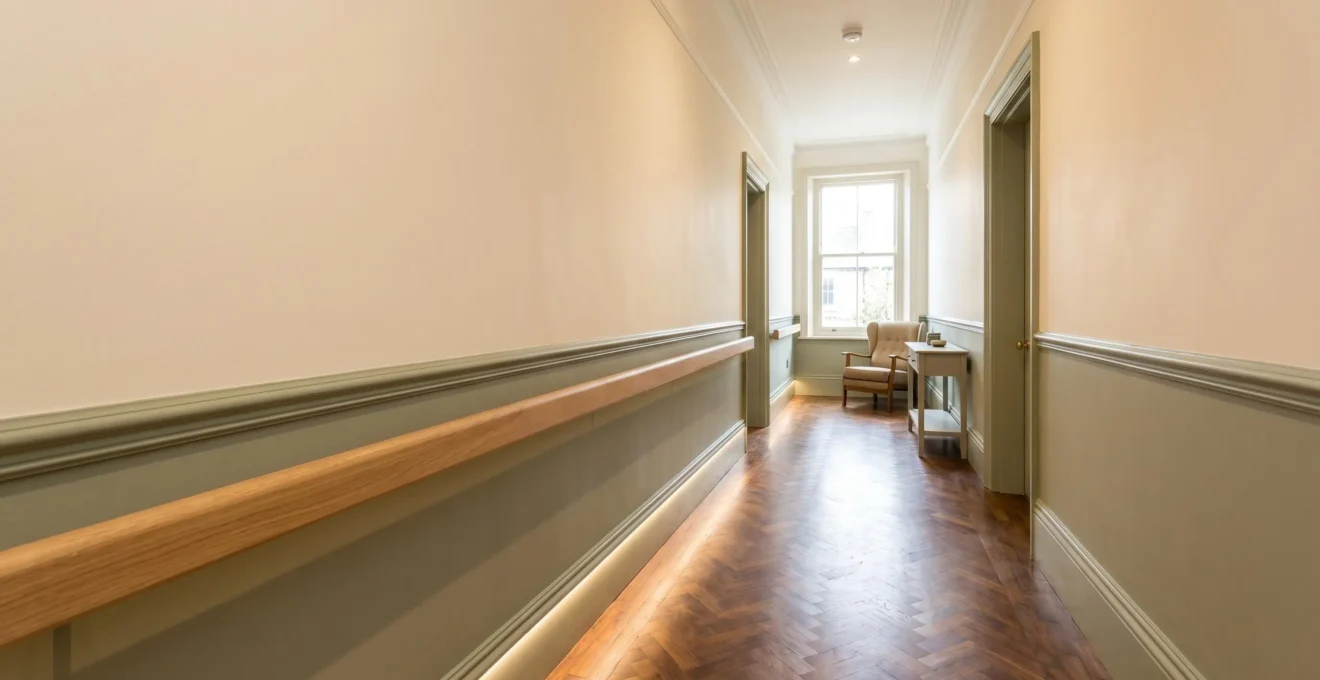
Adapting a period home for safe ageing is not about surrendering its character to clinical equipment; it’s about a strategic retrofit focused on preserving your personal energy and biomechanical health.
- Small, targeted changes like removing trip hazards and upgrading handles offer a greater return on safety than many large-scale, costly interventions.
- Understanding the official criteria for a Disabled Facilities Grant (DFG) is the key to securing funding without automatic rejection.
Recommendation: Begin not with a catalogue of stairlifts, but with a simple audit of your daily energy expenditure within the home to identify the most impactful changes first.
The desire to remain in one’s own home, particularly a characterful Victorian terrace filled with memories, is a powerful one. Yet, for many elderly homeowners, this dream is often overshadowed by a growing anxiety. The steep stairs, narrow hallways, and traditional fixtures that once gave the house its charm can begin to feel like insurmountable obstacles. The common response is to consider major, often intrusive, installations like stairlifts or to begin the reluctant process of looking at care homes. These are seen as the only solutions to a complex problem.
But what if this perspective is fundamentally flawed? From a surveyor’s standpoint, successfully retrofitting a period property for safe, independent living is rarely about a single, expensive piece of equipment. The true key lies in a more subtle, strategic philosophy: the proactive management of your personal energy budget and the optimisation of your home for biomechanical advantage. It’s about making a series of intelligent, often small, modifications that reduce the physical toll of daily life, thereby preserving your energy for the things that matter.
This guide moves beyond the obvious to provide a practical framework for adapting your Victorian home. We will analyse the profound benefits of staying put, navigate the practicalities of securing funding, and detail specific, high-impact changes that enhance safety without sacrificing the aesthetic integrity of your property. This is your blueprint for transforming your house from a source of worry into a safe, supportive, and sustainable home for the years to come.
To help you navigate these crucial considerations, this article provides a detailed roadmap. Explore the sections below to build a comprehensive understanding of how to create a truly safe and autonomous living environment.
Summary: A Surveyor’s Guide to Retrofitting a Victorian Terrace
- Why Staying in Your Own Home Extends Cognitive Function by 3 Years?
- How to Apply for a Disabled Facilities Grant Without Getting Rejected?
- Live-in Care vs Care Homes: Which Option Preserves More Autonomy?
- The Rug Mistake That Causes 40% of Falls in British Living Rooms
- When to Hire a Cleaner: The First Step to Preserving Energy for Living?
- The Throw Rug: Why Is It the Number One Enemy of Senior Safety?
- Grip vs Push: Why Levers Save Your Thumb Joints from Grinding?
- How to Fall-Proof Your Hallway Without Making It Look Like a Hospital?
Why Staying in Your Own Home Extends Cognitive Function by 3 Years?
The decision to adapt your home is not merely about physical safety; it’s a significant investment in your long-term cognitive health. The concept of “ageing in place” is backed by compelling evidence that links remaining in a familiar environment with slower cognitive decline. This isn’t just about comfort; it’s about the complex daily mental stimulation your home and neighbourhood provide. Navigating your kitchen, tending to a garden, or interacting with local shopkeepers are all small but vital cognitive exercises that institutional settings often remove.
Indeed, extensive research from the Cardiovascular Health Study demonstrates that ageing in place is associated with higher cognitive function and predicts longer dementia-free survival. The familiar routes, social networks, and personal routines create a supportive framework that keeps the mind active and engaged. This environment fosters a sense of control and purpose, which are crucial psychological buffers against cognitive decline. The effort of maintaining a home, when managed correctly, becomes a form of beneficial, low-level mental and physical activity.
As researchers from the Health and Retirement Study noted in their work on neighbourhood environments, this connection is profound:
Older adults spend more time in their residential neighborhoods, and thus the importance of neighborhood environments increases with age. Neighborhoods are primary settings for social interaction, physical activity, and access to resources, thereby potentially facilitating or impeding health-promoting behaviors that can delay or accelerate cognitive aging.
– Research team from Health and Retirement Study, Thriving in Place
Therefore, the financial and physical effort of a retrofit should be viewed through this lens. It is a proactive measure to secure not just your physical independence, but also to preserve the very environment that helps maintain your cognitive resilience for years longer than a care setting might allow.
How to Apply for a Disabled Facilities Grant Without Getting Rejected?
A major barrier to retrofitting is perceived cost, yet significant financial support is available in the UK through the Disabled Facilities Grant (DFG). This is a council-run, means-tested grant designed to help with the costs of making essential adaptations. However, many applications are rejected due to simple, avoidable procedural errors. Understanding the process from a surveyor’s perspective is key to approval. The council needs to see that the proposed work is necessary, appropriate, and cost-effective, a case best made by a professional.
The grant is substantial; the maximum DFG is £30,000 in England, £36,000 in Wales, and £25,000 in Northern Ireland. To access this, your application must be robust. A self-assessment describing difficulty is not enough. The cornerstone of a successful DFG application is an independent Occupational Therapist (OT) assessment. This professional report provides the medical evidence and specific recommendations (e.g., a level-access shower is required to prevent falls) that councils find credible and difficult to refuse. Attempting to apply without one is the most common path to rejection.
Furthermore, the proposed work must be the most practical and economical solution. Submitting a single quote for the most expensive option is a red flag. Instead, provide multiple quotes from vetted builders and ensure the scope is limited to what the OT deems essential. Including desirable aesthetic upgrades alongside necessary safety features can jeopardise the entire application. The grant is for need, not preference. Following a clear, evidence-based process is the only reliable way to secure funding.
Live-in Care vs Care Homes: Which Option Preserves More Autonomy?
When physical needs increase, the conversation often turns to residential care. However, for many, live-in care presents a powerful alternative that directly supports the goal of ageing in place and maximises personal autonomy. Unlike the structured, communal nature of a care home, live-in care provides one-to-one support within the familiar and controlled environment of your own home. This distinction is crucial when considering quality of life, as autonomy is a key pillar of mental wellbeing.
The difference in daily freedom is stark. In a care home, schedules for waking, meals, and activities are institutional and predetermined. At home with a live-in carer, you remain the master of your own routine. This extends to social autonomy—you can host visitors whenever you wish, without the constraints of visiting hours or shared living spaces. This ability to maintain social connections on your own terms is vital for combating loneliness and preserving community ties. The financial analysis from GoodOaks Homecare reveals that for couples, this model is also often more cost-effective, as a single carer can support both individuals, whereas care homes charge per person.
The following table, adapted from an analysis by Cherished Care, breaks down the critical differences in autonomy across four key domains. It clearly illustrates how the home environment, supported by a carer, is structurally superior for preserving independence.
| Autonomy Dimension | Live-in Care at Home | Care Home |
|---|---|---|
| Schedule Autonomy | Individual decides wake time, meal times, and daily routine with carer support | Predetermined institutional schedules govern wake times, meals, and activities |
| Social Autonomy | Freedom to host visitors, maintain community connections, and control social interactions | Visiting hours may apply; communal living with shared spaces limits privacy and spontaneous hosting |
| Environmental Autonomy | Full control over heating, TV, lighting, décor, and personal space arrangement | Limited control – shared thermostats, communal TV areas, standardized room layouts |
| Culinary Autonomy | Choose own meals, dietary preferences, cooking methods, and eating times with carer assistance | Institutional menus with limited choice; meals served at fixed times in dining areas |
Ultimately, the choice to retrofit and bring in support like a live-in carer is a vote for continued self-determination. It is a model that adapts to your life, rather than requiring you to adapt to an institution.
The Rug Mistake That Causes 40% of Falls in British Living Rooms
In any home safety survey, one of the most immediate and dangerous hazards is also one of the most common: the throw rug. While they add warmth and character, loose rugs are a primary cause of falls among older adults. The critical danger lies in the small, often barely perceptible edge, which creates a “trip threshold.” A foot that is shuffling rather than lifting clearly—a common change in gait with age—can easily catch on this edge, leading to a serious fall. The title’s 40% figure highlights the scale of this specific risk within the broader problem of falls.
While UK-specific data on rugs alone is sparse, the scale of the issue is well-documented. A comprehensive study published in the Journal of Injury Prevention found that an estimated 37,991 adults aged 65+ are treated in U.S. emergency departments annually for falls associated with rugs and carpets, with the vast majority occurring at home. The physics are simple: the rug either slides on a smooth surface like a polished Victorian floorboard, or its edge curls up, creating the perfect catch point for a foot.
The image above perfectly illustrates this subtle but significant danger. The minute height difference between the floor and the rug is all it takes to initiate a fall. Anti-slip mats placed underneath can help prevent sliding, but they do little to eliminate the trip threshold of the edge itself. For this reason, from a pure safety perspective, the only truly effective solution is the complete removal of all loose throw rugs, especially in high-traffic areas like hallways and living rooms.
When to Hire a Cleaner: The First Step to Preserving Energy for Living?
One of the most effective, yet often overlooked, strategies for safe independent living is outsourcing household cleaning. This is not an admission of defeat; it is a strategic reallocation of your finite energy budget. The physical exertion required for tasks like vacuuming, scrubbing bathrooms, or changing bed linens is significant. As we age, spending precious energy on these physically demanding chores can leave you too depleted for activities that are essential for cognitive and social wellbeing, such as hobbies, seeing friends, or going for a walk.
Recognising the right moment to hire help is key. It’s about looking for the signs that the “cost” of cleaning is becoming too high. When the effort of today’s chores leads to debilitating fatigue tomorrow, you are in an energy deficit. When you start cancelling social plans because you’re too tired from housework, the balance has tipped. This is a proactive, not a reactive, decision. It’s about buying back time and energy to invest in living, not just maintaining.
Consider these clear thresholds as indicators that it’s time to make the change. If you find yourself experiencing one or more of these regularly, hiring a cleaner is no longer a luxury, but a crucial component of your ageing-in-place strategy:
- Next-day fatigue: The physical effort of cleaning causes exhaustion that persists into the following day, limiting other activities.
- Social cancellations: You find yourself cancelling social plans or hobbies because cleaning has depleted your energy reserves.
- Safety compromises: You are avoiding essential cleaning tasks (like scrubbing floors) because they feel unsafe or cause significant joint pain, increasing fall risk.
- Task avoidance: High-exertion chores like vacuuming or changing linens are being postponed indefinitely.
- Loss of enjoyment: Time spent on maintenance actively prevents you from participating in activities that bring you joy and purpose.
By delegating these tasks, you free up both physical capacity and mental space, allowing you to focus your energy on staying active, engaged, and truly independent in your own home.
The Throw Rug: Why Is It the Number One Enemy of Senior Safety?
To state it plainly: from a fall-prevention standpoint, the throw rug is the number one enemy of senior safety in the home. While the previous section highlighted the specific trip hazard, it’s vital to understand the sheer scale of the risk in the UK context. Falls are not a minor issue; they are a public health crisis for older adults. According to comprehensive UK falls prevention data, a third of people over 65, and half of people over 80, fall at least once a year. This equates to millions of incidents, many of which are preventable and occur at home.
The throw rug is a primary contributor to these statistics. It combines two major risk factors: an unstable surface and a trip-inducing edge. In a Victorian terrace with its traditional polished wood or tiled floors, the risk of a rug slipping is exceptionally high. Even with a non-slip backing, the edges can curl or fray over time, creating the “trip threshold” that is so dangerous. Given that a fall can be a life-altering event leading to loss of confidence, injury, and hospitalisation, the aesthetic benefit of a loose rug is vastly outweighed by its potential for harm.
However, removing rugs does not mean you must live with cold, bare floors. There are several safer, integrated alternatives that provide warmth and style without the risk. The NHS and fall prevention experts recommend a range of solutions that eliminate the hazardous edge entirely:
- High-friction rug pads: Use commercial-grade, flush-profile non-slip underlays that secure the entire rug, preventing both sliding and edge curling.
- Professional carpet insetting: Have a carpet professionally set into the floorboards, creating a completely seamless and flush transition that removes the trip edge.
- Low-profile carpet tiles: Use modern, interlocking carpet tiles to create defined ‘zones’ of comfort without any raised edges.
- Complete removal in high-traffic areas: The safest option is to eliminate rugs entirely from hallways, bathrooms, and pathways between rooms.
- Fixed wall-to-wall carpeting: Replace all loose rugs with properly fitted, low-pile carpeting for a uniform, trip-free surface.
Choosing one of these alternatives is a critical step in any serious home retrofit. It is a direct and highly effective measure to reduce the risk of a fall.
Grip vs Push: Why Levers Save Your Thumb Joints from Grinding?
A successful retrofit often lies in details that provide significant biomechanical advantage for minimal cost. Nowhere is this clearer than in the choice of door handles and taps. Traditional round doorknobs, common in Victorian properties, require a tight “pinch grip” and a strong twisting motion. This action places immense strain on the small joints of the hand and wrist, particularly the thumb’s carpometacarpal (CMC) joint, which is highly susceptible to osteoarthritis.
Lever handles, by contrast, change the required action from a pinch-and-twist to a simple downward push. This allows you to use the larger, stronger muscles of your palm and arm, rather than the delicate joints of your fingers and thumb. For someone with arthritis, reduced grip strength, or joint pain, this difference is profound. It’s the difference between an action that is painful and difficult, and one that is effortless. This principle of replacing grip-intensive tasks with push or pull motions is a cornerstone of accessible design.
This ergonomic upgrade does not require a compromise on aesthetics. High-quality, period-appropriate lever handles are widely available in traditional finishes like brass, bronze, and polished nickel, allowing them to blend seamlessly with the character of a Victorian home. This small change, repeated on every door, tap, and window latch, can dramatically reduce daily pain and fatigue, freeing up energy within your personal “energy budget” and making the entire home more accessible.
Your Home’s ‘Lever Audit’ Checklist
- Door Hardware: Systematically replace all round doorknobs with lever handles. Prioritise key doors: main entry, bedrooms, and especially the bathroom where hands may be wet.
- Taps and Faucets: Retrofit kitchen and all bathroom sinks with lever-style taps. These require simple palm pressure, eliminating the need for a tight, twisting grip.
- Lighting Controls: Swap out old twist-style lamp switches and rotary dimmers for modern rocker switches or touch-sensitive controls that require only a light press.
- Window Hardware: Upgrade traditional sash window latches and casement window cranks to lever-operated mechanisms that distribute force across the palm and reduce strain.
- Lock Systems: Install lever-style lock mechanisms for deadbolts and consider larger, easier-to-grip keys or keyless entry pads for main exterior doors.
Key Takeaways
- A successful retrofit is about proactive energy management, not just installing equipment. Every change should aim to reduce the physical cost of daily tasks.
- The two most impactful, low-cost changes are the complete removal of hazardous throw rugs and the replacement of all round knobs with lever handles.
- Significant funding is available via the Disabled Facilities Grant (DFG) in the UK, but success hinges on obtaining a professional Occupational Therapist (OT) assessment before applying.
How to Fall-Proof Your Hallway Without Making It Look Like a Hospital?
The hallway is the central artery of a Victorian terrace, a narrow, high-traffic area that presents a unique set of safety challenges. The primary concern for homeowners is often how to add necessary safety features, like handrails, without creating a sterile, clinical environment that detracts from the home’s character. The solution lies in integrated safety design: choosing adaptations that serve a dual purpose, blending seamlessly into the existing architecture.
Instead of bolting on an obvious hospital-grade grab bar, the most elegant solution is to reinforce or replace the existing dado rail. A structurally sound hardwood rail, installed at a continuous height of 850-900mm, can function as both a period-appropriate architectural feature and a vital, full-length handrail. This provides constant support along the entire length of the hallway, a far superior solution to intermittent grab bars. This same principle applies to lighting; rather than a single, harsh overhead light, a layered system provides better, safer illumination.
By combining ambient light from wall sconces with motion-activated LED strips at skirting board level, you create automatic, low-level pathway lighting for night-time navigation without sacrificing the aesthetic of a period ceiling fixture. The final piece of the puzzle is managing flow and clutter. Bulky furniture must be replaced with slim, wall-mounted console tables (no deeper than 200mm) to keep the floor path clear. These integrated strategies work together to create a hallway that is inherently safe but feels intentionally designed, not clinically modified.
A truly safe hallway is achieved through a combination of these intelligent, multi-purpose design choices:
- Architectural Handrail Integration: Make the existing dado rail a continuous, structurally sound handrail.
- Layered Lighting System: Use a mix of sconces, discreet LED strips at floor level for night-time, and a decorative central fixture.
- Elegant Flow Management: Replace bulky floor furniture with slim, wall-mounted console shelves to ensure a clear pathway.
- Contrast and Visibility: Use subtle colour contrast between walls, floors, and woodwork to aid depth perception and ensure all thresholds are level.
- Strategic Grab Points: Install discrete, design-led grab rails in finishes that match existing hardware only at key transition points like the front door or base of the stairs.
By implementing these principles, you move from reacting to risk to proactively designing a safe, comfortable, and sustainable environment. The next logical step is to conduct a thorough walkthrough of your own home, identifying areas where these small but powerful changes can be made. For a comprehensive plan, seeking a professional accessibility survey is the most effective way to ensure your home will support you safely for many years to come.