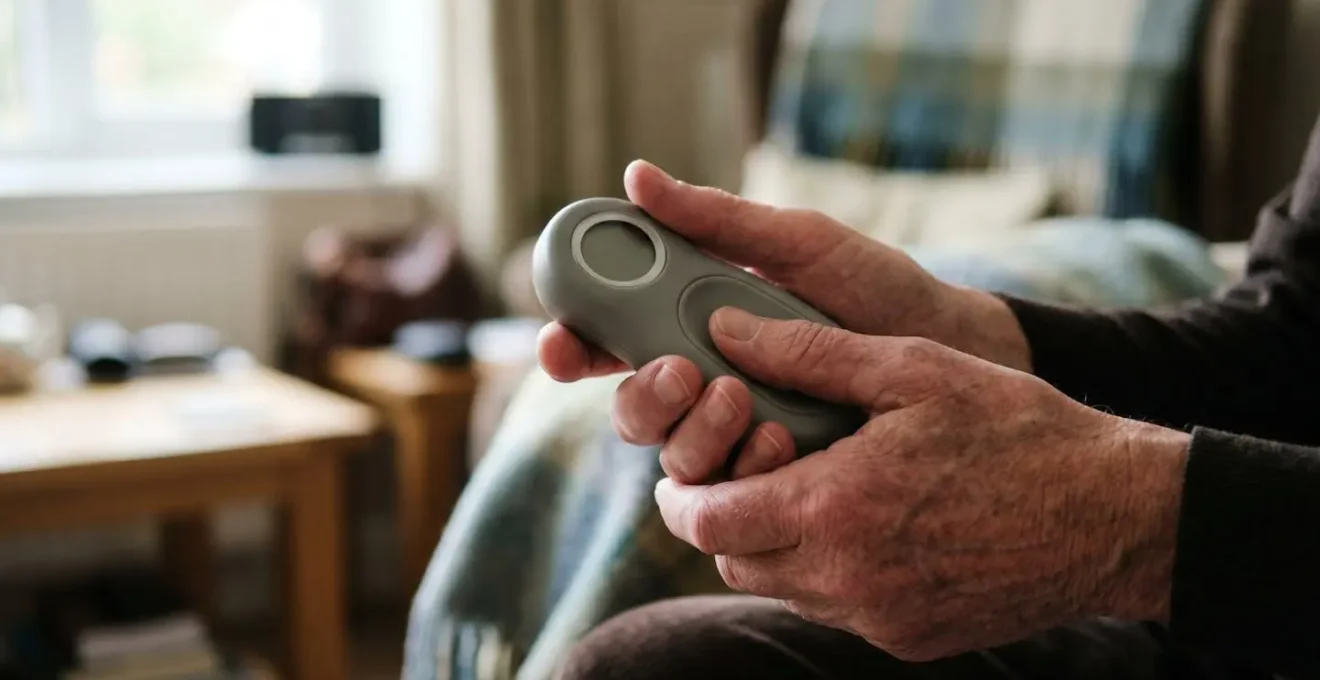
For UK seniors, true health is measured not by weight but by functional capacity; unconventional metrics like grip strength are more predictive of future health and mortality than traditional signs like blood pressure.
- Muscle health (grip strength, rate of muscle loss) is a direct, measurable indicator of your body’s systemic resilience.
- Metabolic and cellular function (insulin sensitivity, blood oxygen) reveals how your body is performing and recovering internally, day-to-day.
Recommendation: Implement weekly tracking of these 5 functional vitals using the simple, at-home tests outlined in this guide to proactively manage your healthspan and inform conversations with your GP.
For many health-conscious seniors, the weekly health check-in revolves around a familiar ritual: stepping on the bathroom scale. While weight is a data point, it’s an incredibly blunt instrument. It tells you nothing about your strength, your mobility, your metabolic health, or your resilience. Many diligently monitor their blood pressure and resting heart rate, which are indeed crucial pieces of the puzzle. But these are often lagging indicators, revealing problems once they are already established.
What if the most important metrics were not the ones you’ve been told to watch? The true story of your health and longevity is written in a different set of numbers, what we in geriatric physiology call “functional vitals.” These are not measures of status, but of capability. They quantify your body’s ability to perform tasks, to resist stress, and to maintain its core systems. They are the leading indicators of frailty or robustness, and tracking them is one of the most powerful actions you can take for your long-term independence.
This guide moves beyond the platitudes of standard health advice. We will decode five of these critical functional vitals, explaining not just what to measure, but *why* it matters on a cellular level. We will provide metric-focused, UK-specific protocols for you to begin tracking your true health baseline, week by week.
This article provides a structured approach to understanding and monitoring these critical health indicators. Below is a summary of the key functional benchmarks we will explore, designed to empower you with actionable knowledge.
Summary: Decoding Your Functional Health Metrics
- Why Is Your Grip Strength a Better Predictor of Death Than Blood Pressure?
- How to Use a Pulse Oximeter Correctly When You Have Cold Hands?
- Breathlessness: When Is It “Just Age” and When Is It Heart Failure?
- The Chair Danger: How 4 Hours of TV Changes Your Insulin Sensitivity
- How to Reset Your Body Clock to Stop Waking Up at 4 AM?
- Trouble Opening Jars: Is It Arthritis or Sarcopenia?
- The “Get Up and Go” Test: How to Time Your Own Frailty Risk?
- How to Stop Your Muscles from Turning to Marbling in Your 70s?
Why Is Your Grip Strength a Better Predictor of Death Than Blood Pressure?
While blood pressure is a vital sign for cardiovascular health, grip strength acts as a proxy for your entire body’s functional status and muscular integrity. It is one of the most powerful, yet overlooked, predictors of future health. Poor grip strength is not just about weak hands; it’s a clear signal of systemic muscle loss (sarcopenia) and reduced physiological resilience. It reflects overall body strength, nutritional status, and even cognitive health. A decline in grip strength often precedes a decline in mobility and independence.
The data is stark and compelling. A large-scale prospective study of the UK Biobank population found a 31% increased all-cause mortality risk for every one standard deviation decrease in grip strength. This makes it a more potent marker than systolic blood pressure in many predictive models. To measure this functional vital, a handheld dynamometer is the gold-standard tool, providing a precise kilogram force reading.
As you can see, the test is simple to perform. The goal is not to compete with others, but to establish your own baseline and monitor it weekly. A consistent downward trend is a critical data point to discuss with your GP, as it may signal a need to intervene with targeted resistance training and a review of your protein intake. It is an early warning system that your body’s “scaffolding” is weakening.
How to Use a Pulse Oximeter Correctly When You Have Cold Hands?
A pulse oximeter, a small device that clips onto your finger, measures your blood oxygen saturation (SpO2). This is a critical functional vital because it reflects how efficiently your heart and lungs are delivering oxygen to your body’s tissues—a direct measure of your cellular health. For a healthy individual, a normal reading is typically between 95% and 100%. A sustained reading below 95% warrants medical advice. However, for many seniors, getting an accurate reading is a challenge, especially in the UK’s colder climate.
Cold hands are the primary cause of inaccurate or failed readings. When your fingers are cold, blood vessels constrict (vasoconstriction), reducing blood flow to the fingertip. Since the oximeter works by shining light through your tissue to detect oxygenated blood, poor circulation will result in a weak or unreliable signal. Nail varnish or false nails can also physically block the light, leading to errors. Therefore, following a strict protocol is not just recommended; it is essential for the data to be meaningful.
The following checklist provides a clear, repeatable process to ensure you get a clinically accurate reading every time, even if you suffer from poor circulation or cold extremities.
Your Action Plan: Accurate Pulse Oximetry with Cold Hands
- Preparation: Remove any nail varnish or false nails. If your hands feel cold, warm them by rubbing them together or holding a warm mug for a few minutes.
- Resting Period: Rest in a seated position for at least 5 minutes before taking your reading. This allows your heart rate and circulation to stabilize.
- Positioning: Place your hand on your chest at heart level and keep your fingers relaxed. Do not move or talk during the measurement.
- Device Placement: Insert the tip of your index or middle finger fully into the oximeter until it touches the end. Ensure the device covers the nail bed.
- Stable Reading: Wait for at least 60 seconds. The reading may fluctuate initially; wait until the number on the screen remains steady before recording it.
Breathlessness: When Is It “Just Age” and When Is It Heart Failure?
Feeling breathless after climbing a steep hill or several flights of stairs is a common experience that increases with age. This is typically due to a gradual, predictable decline in lung capacity and cardiovascular fitness. However, it is a critical mistake to dismiss all forms of breathlessness as “just getting older.” Certain patterns of breathlessness are red flags for serious conditions, most notably congestive heart failure, where the heart muscle doesn’t pump blood as well as it should.
The key to differentiating benign, age-related breathlessness from a pathological sign is context. When does it happen? In what position? Does it wake you up at night? Answering these questions can provide crucial diagnostic clues. For instance, breathlessness that is significantly worse when you lie flat and is relieved by propping yourself up with multiple pillows is a classic sign known as orthopnea, a hallmark of heart failure.
Case Study: NHS Red Flags for Heart Failure
NHS clinical guidance identifies two specific breathlessness patterns that distinguish heart failure from age-related decline. The first is Orthopnea, or breathlessness that worsens when lying down, often requiring two or three pillows to sleep. The second is Paroxysmal Nocturnal Dyspnea (PND), a more alarming symptom where a person wakes up suddenly at night, gasping for air. According to the NHS, when these symptoms are combined with persistent fatigue and swelling in the ankles (edema), an immediate GP consultation is warranted for further assessment, including a pro-BNP blood test and an ECG.
Understanding these distinctions is vital for early detection. The table below, based on guidance from leading heart charities, provides a clear comparison to help you identify concerning patterns.
| Characteristic | Age-Related Breathlessness | Heart Failure Breathlessness |
|---|---|---|
| Onset Pattern | Gradual over years, stable | Worsening over weeks/months |
| Position Dependency | Similar lying or standing | Worse lying flat (orthopnea) |
| Night-time Symptoms | Occasional, related to congestion | Wakes you gasping (PND) |
| Associated Symptoms | General fatigue only | Ankle swelling, weight gain, persistent cough |
| Recovery Pattern | Quick recovery after exertion | Prolonged breathlessness, fatigue |
The Chair Danger: How 4 Hours of TV Changes Your Insulin Sensitivity
One of the most insidious threats to a senior’s health isn’t found in the kitchen, but in the living room chair. Prolonged sedentary behaviour, independent of how much exercise you do, has a profound and negative impact on your metabolic health. The specific danger lies in its effect on insulin sensitivity. Insulin is the hormone that tells your cells to absorb glucose from the blood for energy. When you are insulin sensitive, your body needs only a small amount of insulin to do this job efficiently. When you become insulin resistant, your cells ignore the signal, forcing your pancreas to pump out more and more insulin, eventually leading to high blood sugar, pre-diabetes, and type 2 diabetes.
Sitting for extended periods, such as watching television for several hours, effectively switches off the large muscles in your legs and glutes. These muscles are major consumers of blood glucose. When they are inactive, glucose has nowhere to go, contributing to rising blood sugar levels and a decreased response to insulin. A systematic review by UK Health Security Agency researchers found that sedentary behaviour showed detrimental associations with fasting insulin and insulin sensitivity across numerous studies.
The vital sign to track here is not a number on a device, but a measure of time: your daily unbroken sedentary hours. Aim to break up any period of sitting every 30-60 minutes with a short walk, some stretches, or even just standing up. This simple act re-engages your muscles and helps maintain your body’s sensitivity to insulin, forming a crucial defence against metabolic decline.
How to Reset Your Body Clock to Stop Waking Up at 4 AM?
Waking up in the very early hours of the morning and being unable to fall back asleep is a common and frustrating complaint among seniors. This is often not a sign of insomnia, but a physiological phenomenon known as circadian phase advance. Your circadian rhythm is your body’s internal 24-hour clock, which regulates your sleep-wake cycle. With age, this clock can shift forward, causing you to feel sleepy earlier in the evening and, consequently, wake up earlier in the morning.
Resetting this clock doesn’t require medication but a strategic manipulation of your exposure to light and your daily routines. Light is the most powerful signal for synchronizing your circadian rhythm. Exposure to bright light in the morning reinforces wakefulness and helps anchor your body clock, while reducing light exposure in the evening signals to your brain that it’s time to prepare for sleep. Similarly, meal timing and temperature can act as secondary cues. According to NHS guidance, the body’s core temperature needs to drop slightly to initiate and maintain sleep, meaning a cool bedroom (around 16-18°C) is essential, even if the rest of the house is warm.
Implementing a consistent routine based on these principles can help to gradually shift your body clock back to a more desirable schedule. Here are five actionable steps tailored for the UK environment:
- Morning Sunlight Prescription: Aim for 20 minutes of direct outdoor sunlight exposure before 10 AM. Even on a cloudy day in Manchester or Glasgow, the outdoor light is powerful enough to signal your brain.
- Daytime Light Maximisation: Keep your curtains and blinds fully open during the day to allow as much natural light into your home as possible. This reinforces the “daytime” signal to your brain.
- Evening Light Dimming: After 9 PM, dim household lights. More importantly, activate the “night mode” or blue-light filter on all screens (phones, tablets, TVs) as blue light is particularly disruptive to melatonin production.
- Strategic Pre-Bed Snack: A small, slow-release carbohydrate snack like a single porridge oatcake about an hour before bed can help regulate blood sugar and cortisol levels overnight, preventing hunger- or stress-related waking.
- Cool Bedroom Environment: Set your central heating timer to lower the temperature in your bedroom to the recommended 16-18°C overnight, as advised by UK sleep charities.
Trouble Opening Jars: Is It Arthritis or Sarcopenia?
The inability to open a tight jar lid is a classic functional complaint among seniors. It’s often immediately attributed to arthritis, and while that is a common cause, it’s not the only one. Another, more systemic condition could be the culprit: sarcopenia, the progressive loss of muscle mass, strength, and function that occurs with aging. Differentiating between the two is critical because their management strategies are entirely different. Arthritis is primarily about managing joint pain and inflammation, whereas sarcopenia is about rebuilding muscle tissue.
The primary symptom of arthritis is pain and stiffness located *in the joint* itself, particularly the small joints of the fingers and the base of the thumb. This pain is often worse in the morning and may improve with gentle movement. Sarcopenia, on the other hand, presents as a more generalised weakness and a rapid sense of fatigue in the hand and forearm muscles. You might be able to muster one strong twist, but find you have no strength left for a second attempt. The pain is not localised to a joint but feels more like muscular exhaustion.
The following table provides a clear differential diagnostic framework to help distinguish between these two common conditions.
| Clinical Feature | Arthritis (Joint-Specific) | Sarcopenia (Muscle Weakness) |
|---|---|---|
| Primary Symptom | Pain and stiffness in specific joints | Generalized weakness and fatigability |
| Morning Pattern | Pain worse in morning, improves with gentle movement | Consistent weakness throughout day |
| Location Test | Pain in finger joints and base of thumb (CMC joint) | Diffuse hand weakness, no specific joint pain |
| Repetition Test | Can repeat task but with increasing pain | Cannot repeat task due to rapid muscle exhaustion |
| Management Approach | Anti-inflammatory medication, heat therapy, adaptive tools | Protein supplementation (1.2-1.5g/kg), resistance training, grip exercises |
Case Study: UK Protein Guidelines for Combating Sarcopenia
To combat sarcopenia, dietary intervention is key. Older adults experience “anabolic resistance,” meaning their muscles are less responsive to protein. To overcome this, guidelines from the British Dietetic Association recommend a higher intake of 1.2 to 1.5 grams of protein per kilogram of body weight daily. As noted in analyses of UK population data, this is crucial for maintaining muscle mass. For a 70kg UK senior, this translates to a target of 84-105g of protein per day, ideally spread out with 25-30g per meal to maximise muscle protein synthesis and preserve functional strength.
The “Get Up and Go” Test: How to Time Your Own Frailty Risk?
Frailty is not an inevitable part of aging, but a medical syndrome characterized by a decline in function across multiple physiological systems. It leaves a person vulnerable to falls, hospitalisation, and loss of independence. One of the simplest, yet most effective, ways to quantify your own frailty risk is the Timed Up and Go (TUG) test. This test measures dynamic balance, walking speed, and functional mobility—all key components of your ability to live independently. It is used extensively by geriatricians and physiotherapists in the UK as a quick and reliable screening tool.
The test is easy to perform at home with a chair, a measuring tape, and a stopwatch (the one on your mobile phone is perfect). The time it takes you to complete the test is a powerful predictor of your future fall risk. According to UK geriatric medicine clinical thresholds, a time of over 12 seconds indicates an increased risk of falling and should be discussed with your GP. It can be a catalyst for starting a balance and strength training programme.
To ensure your result is accurate and comparable, it is essential to follow the standardized protocol precisely. The details matter, from the height of the chair to the exact distance walked. Here is the official protocol used in UK clinical settings:
- Equipment Setup: Use a standard dining chair (seat height approx. 46cm), not a low or deep sofa. Ensure it has arms, as you would use them in a real-life situation.
- Course Marking: Use masking tape to mark a clear line on the floor exactly 3 metres (about 10 feet) away from the front of the chair.
- Start Signal: Sit comfortably in the chair with your back against the chair back. The timing begins on the word “Go”.
- Test Action: On “Go”, stand up from the chair, walk at your normal, safe pace to the 3-metre line, turn around, walk back to the chair, and sit down completely.
- Timing: Stop the stopwatch the moment your back makes contact with the chair again. Record this time in seconds.
Key Takeaways
- Your body’s functional capacity (strength, mobility) is a more powerful health indicator than static numbers like weight.
- Age-related muscle loss (sarcopenia) is not inevitable but requires targeted protein intake (1.2-1.5g/kg of body weight) and resistance exercise.
- Simple, timed at-home assessments like the “Timed Up and Go” test can quantify your frailty and fall risk, providing an objective early warning system.
How to Stop Your Muscles from Turning to Marbling in Your 70s?
As we age, a process called myosteatosis occurs, where fat begins to infiltrate the muscle tissue itself. This is akin to the marbling you see in a cut of beef, and it severely degrades the quality and contractile power of the muscle. This process, along with the loss of muscle mass (sarcopenia), is a primary driver of functional decline, weakness, and metabolic dysfunction in your 70s and beyond. The good news is that this is not an uncontrollable fate; it is a process that can be significantly slowed, or even partially reversed, with the right nutritional strategy.
The core of this strategy is combating the “anabolic resistance” mentioned earlier. Your muscles become less sensitive to the growth signals from protein. This means the 20g of protein that stimulated robust muscle growth in your 40s is no longer sufficient. To trigger muscle protein synthesis in your 70s, you need a higher dose per meal.
As we age, our muscles become less responsive to the stimulus of protein. Therefore, seniors need more protein per meal to trigger muscle building, not less. Suggest a target of 25-30g of protein per meal.
– British Dietetic Association, Guidance on protein requirements for older adults
Achieving this 25-30g target per meal requires a conscious effort. It’s about making protein the centrepiece of every meal—breakfast, lunch, and dinner. Here are some practical, UK-centric examples of how to build a high-protein meal:
- Breakfast Boost: A 170g pot of Fage Total Greek yogurt (18g protein) mixed with 30g of almonds (6g protein) for a total of 24g.
- Lunch Power-Up: A small 100g grilled chicken breast (approx. 31g protein) with a large side salad.
- Quick Dinner: Two large British eggs scrambled (12g protein) on two slices of wholemeal toast (8g protein) with a side of 200g of baked beans (10g protein) for a total of 30g.
- Convenient Option: A single tin of John West tuna in spring water (approx. 25g protein) mixed into a pasta dish or salad.
Begin tracking these five functional vitals this week to build a precise, personal baseline of your health. This data is not just for you; it is the most valuable information you can bring to your next GP appointment, enabling a proactive and data-driven conversation about preserving your strength, mobility, and independence for years to come.