In summary:
- Managing blood pressure doesn’t mean abandoning traditional British meals; it means making smart, flavour-focused adaptations.
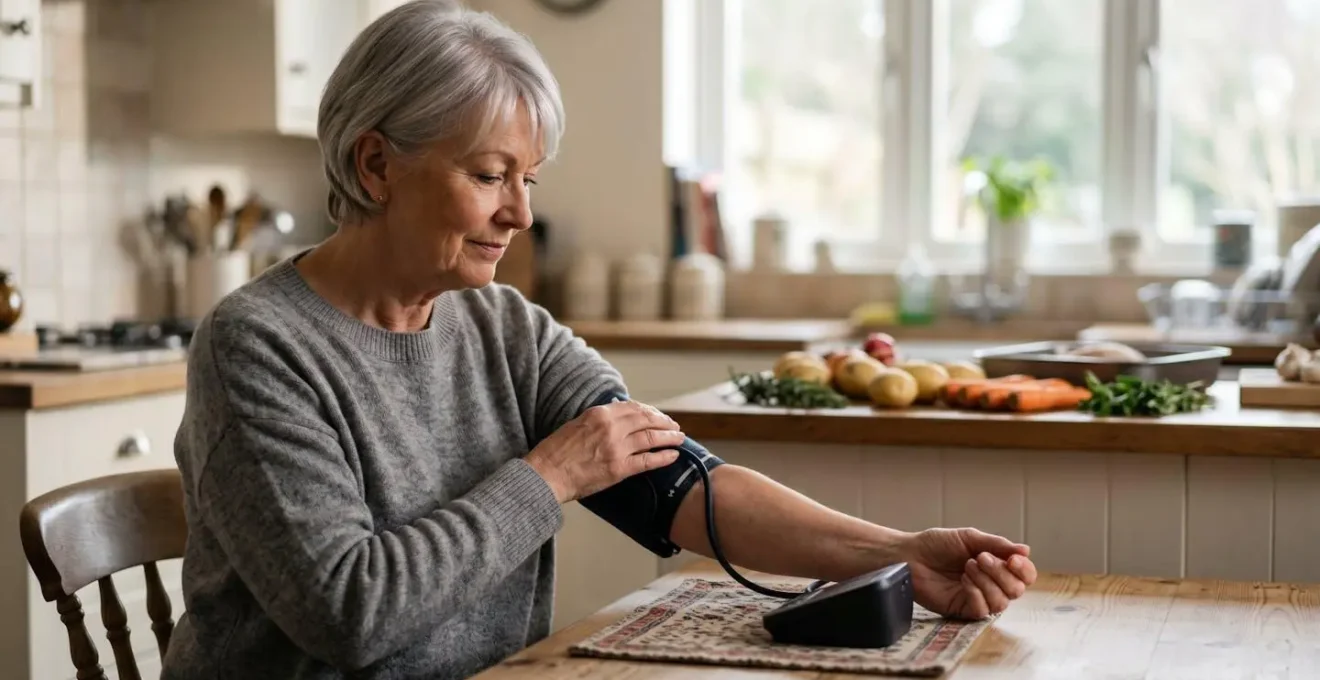
- Home blood pressure monitoring is more reliable than you think and is crucial for avoiding the “white coat” effect at the GP.
- The real danger often lies not in your home-cooked roast but in the surprisingly high salt content of supermarket ready meals.
- Understanding the timing of BP spikes and the science of food order can significantly reduce your risk without changing your menu.
The Sunday roast. It’s more than just a meal; it’s a cornerstone of the British week. The aroma of roasting meat, the crisp of the potatoes, the rich, dark gravy—it’s a tradition steeped in comfort and family. Then comes the GP appointment, the word “hypertension,” and the dreaded advice that sounds like a life sentence: cut out the salt, avoid red meat, change everything you enjoy. It can feel like your choice is between your health and your heritage.
The common wisdom often presents a bleak, all-or-nothing picture. But as a cardiac nurse, I’ve seen that this approach rarely works. It leads to frustration, a sense of loss, and often, giving up entirely. But what if the solution isn’t about deprivation, but about clever adaptation? What if you could keep your Sunday roast, but make it work for your heart, not against it? This isn’t about bland food and sacrifice; it’s about embracing a “smarter tradition.”
This guide is designed for the man who enjoys his food but has been given a serious warning. We’ll move beyond the generic advice and look at the practical realities of managing blood pressure within a British cultural context. We will explore how to supercharge flavour without salt, understand what your blood pressure readings are really telling you, uncover the hidden traps in your weekly shop, and even learn which new technologies are genuinely helpful—and which are not.
To navigate this journey effectively, it helps to have a clear map. The following sections break down the key areas where you can make small changes for a big impact on your health, without saying goodbye to the food you love. Let’s explore how to take control, one delicious, heart-smart roast at a time.
Contents: A Practical Guide to a Healthier British Diet
- Why Do 5 Million People in the UK Have Undiagnosed Hypertension?
- How to Reduce Salt in British Comfort Food Without Losing Flavour?
- Home Monitoring vs GP Readings: Which One Is Telling the Truth?
- The Supermarket Ready Meal Trap That Spikes BP in 30 Minutes
- Morning or Evening: When Is the Most Dangerous Time for a BP Spike?
- Why Is Atrial Fibrillation the Leading Cause of Severe Strokes in Over-75s?
- Vegetables First: The Simple Trick to Cut Glucose Spikes by 30%
- Which Smartwatch Can Accurately Detect Atrial Fibrillation in Seniors?
Why Do 5 Million People in the UK Have Undiagnosed Hypertension?
One of the greatest dangers of high blood pressure is its silence. You can’t feel it, there are often no obvious symptoms, and yet it quietly puts a strain on your heart and arteries. In England alone, an estimated 4.2 million adults are walking around with undiagnosed hypertension, completely unaware of the risk they face. This is why it’s often called “the silent killer.” Many men assume that if they feel fine, they must be fine. Unfortunately, with blood pressure, this is a dangerous assumption.
The lack of symptoms means people don’t seek help until a related, often serious, event occurs, such as a heart attack or stroke. The good news is that awareness is growing, and access to checks is improving. The NHS has ramped up efforts, with community pharmacies delivering over a million blood pressure checks in a single year, catching thousands of people who might not have otherwise visited their GP. These quick, free checks are invaluable.
However, the core issue remains: a cultural tendency to wait until something is clearly wrong before seeking medical advice. For a condition with no early warning signs, this can be a fatal mistake. The only way to know your numbers is to get them checked. Whether at your GP, a local pharmacy, or with a reliable home monitor, regular measurement is non-negotiable. Thinking “it won’t happen to me” or “I’d feel it if something were wrong” is a gamble with the highest possible stakes.
How to Reduce Salt in British Comfort Food Without Losing Flavour?
When the GP says “cut down on salt,” the immediate fear is a future of bland, tasteless food. For lovers of savoury British classics like shepherd’s pie, stews, and the Sunday roast, this can feel like a culinary death sentence. But this is where the “smarter tradition” comes in. The goal isn’t to remove flavour, but to swap the source of that flavour from sodium to something more beneficial.
Instead of reaching for the salt shaker, think about building layers of taste with other ingredients. Aromatic herbs are your greatest allies. A leg of lamb is transformed by rosemary and garlic; chicken sings with thyme and lemon; roast beef is deepened by black pepper and horseradish. Don’t salt your vegetables or potato water during boiling; instead, toss them with herbs and a little olive oil before roasting to concentrate their natural sweetness.
As the image above suggests, the world of flavour is vast and textured. Explore smoked paprika to add a deep, smoky dimension to stews. A pinch of chilli flakes can lift a gravy from good to great. Umami, the fifth taste, provides a savoury depth that often satisfies a salt craving. You can find it in mushrooms, a tiny bit of Marmite in a stew, or tomato purée. By focusing on adding these complex, delicious elements, you’ll find you don’t even miss the excessive salt.
Home Monitoring vs GP Readings: Which One Is Telling the Truth?
It’s a common scenario: you diligently take your blood pressure at home and get a reading of 135/85 mmHg. You go to the GP, and suddenly it’s 150/95 mmHg. Which one is correct? The stress and anxiety of a clinical setting can be enough to temporarily raise your blood pressure, a phenomenon known as “White Coat Hypertension.” For this reason, a series of readings taken in the comfort of your own home, when you are relaxed, often gives a more accurate picture of your true day-to-day blood pressure.
The NHS actively encourages home monitoring for this very reason. It’s not just about convenience; it’s about better data leading to better outcomes. In fact, analysis from the Blood Pressure @home programme shows that effective home monitoring can lead to up to 500 heart attacks and 745 strokes prevented for every 50,000 patients over five years. This is a powerful testament to taking control of your own health data. A log of your home readings provides your GP with a much richer, more reliable dataset to make treatment decisions than a single, potentially inflated, in-clinic reading.
However, this is only true if you’re using a reliable, validated machine and the correct technique. Not all monitors are created equal, and using an unvalidated device or the wrong cuff size can give you dangerously inaccurate information. It is absolutely essential to choose a device that has been clinically validated by a trusted body.
Your action plan: Choosing an accurate home BP monitor
- Choose only monitors listed on the British and Irish Hypertension Society (BIHS) validated list—these meet rigorous accuracy standards and are recommended by NHS and NICE.
- Verify your arm cuff size before purchase: measure the circumference of your upper arm and select a monitor with an appropriate range (most fit 22-32cm, but cuffs up to 42cm are available).
- Look for upper arm monitors rather than wrist monitors—upper arm devices are more accurate for seniors and those with cardiovascular conditions.
- Check for a memory function that stores at least 30-60 readings to track trends over time for your GP review.
- Budget for replacement after a maximum of 4 years of use, or sooner if the cuff shows damage, as accuracy degrades over time.
The Supermarket Ready Meal Trap That Spikes BP in 30 Minutes
While the Sunday roast gets a lot of scrutiny, a far greater and more insidious threat to your blood pressure may be lurking in your fridge: the supermarket ready meal. It’s seen as the convenient option for a quick midweek dinner. However, these meals are often packed with shocking amounts of hidden salt to improve flavour and shelf life. According to a major investigation, the scale of the problem is vast; a 2025 survey by Action on Salt found that a staggering 56% of 1,511 ready meals surveyed were high in salt.
This means that more than half the time you pick up a ready meal, you are likely consuming a significant portion of your recommended 6g daily maximum in a single sitting. Some meals are even worse, containing almost the entire day’s limit. Your home-cooked roast, where you control the salt, is almost certainly a healthier option from a sodium perspective. The convenience of a ready meal comes at a very high price for your cardiovascular health.
The differences between retailers and brands can be stark, highlighting the importance of reading the label. As a comprehensive analysis of UK supermarket offerings reveals, some brands are far more culpable than others, with certain ranges having 100% of their products trigger red “high salt” warnings.
| Retailer / Brand | % of Ready Meals High in Salt | Worst Offender Example | Salt Content (per serving) |
|---|---|---|---|
| Iceland Own Brand | 86% | Luxury Butter Chicken & Bombay Potatoes 400g | 5.3g (88% of daily limit) |
| Aldi Own Brand | 70% | Various products | Data varies |
| Lidl Own Brand | 64% | Various products | Data varies |
| Wasabi (Brand) | 100% | All products triggered red salt labels | Data varies |
| Jamie Oliver (Brand) | 100% | All products triggered red salt labels | Data varies |
| WeightWatchers | 0% | N/A – None high in salt | Below threshold |
| The Gym Kitchen | 0% | N/A – None high in salt | Below threshold |
| Source: Action on Salt survey of 1,511 ready meals across 11 UK retailers (May 2025). UK daily salt limit recommendation: 6g maximum. | |||
Morning or Evening: When Is the Most Dangerous Time for a BP Spike?
Your blood pressure isn’t a static number; it follows a natural daily rhythm, typically being lowest during sleep and rising upon waking. For many people with hypertension, the most dangerous period is the early morning, between 6 am and noon. This “morning surge” is driven by a release of hormones like adrenaline and cortisol that prepare your body for the day. In someone with high blood pressure, this natural surge can be exaggerated, putting significant stress on the heart and arteries.
This early morning window is when the risk of heart attack and stroke is statistically at its highest. It’s a quiet, often overlooked period of vulnerability. This is why the timing of your medication is so critical. Many blood pressure medications are prescribed to be taken in the morning to provide maximum coverage during this high-risk period, blunting the surge before it becomes dangerous.
Establishing a consistent morning routine is therefore a powerful, protective health behaviour. As the image suggests, this daily ritual—taking your medication with a glass of water at the same time each day—is one of the most important things you can do. Never skip a dose, and if your doctor has advised you to take it in the morning, do so without fail. Understanding this rhythm of risk allows you to work with your body’s natural cycles, using medication as a shield during the hours you need it most.
Why Is Atrial Fibrillation the Leading Cause of Severe Strokes in Over-75s?
While the focus is often on the direct damage high blood pressure can cause to arteries, one of its most dangerous consequences is its role in triggering other conditions. Chief among these is Atrial Fibrillation (AFib), an irregular and often very rapid heart rhythm. When you have long-term hypertension, the heart has to work harder, which can cause the upper chambers (the atria) to stretch and become damaged. This damage can disrupt the heart’s electrical signals, leading to the chaotic rhythm of AFib.
Why is this so dangerous? In AFib, the atria don’t contract properly; they quiver or “fibrillate.” This allows blood to pool and form clots. If a piece of a clot breaks off, it can travel to the brain and cause a severe, often debilitating stroke. In fact, AFib-related strokes are known to be more deadly and disabling than strokes from other causes. This is the stark reality connecting the dots between a high number on a BP monitor and a life-altering event.
The link is frighteningly direct and mathematical. Uncontrolled blood pressure dramatically increases your odds of developing complications like AFib. Research shows the risk of cardiovascular events doubles for every 20 mmHg increase in systolic blood pressure (the top number). This isn’t a vague risk; it’s a measurable, escalating danger. Getting your blood pressure under control is therefore the single most important thing you can do to reduce your risk of developing AFib and the devastating strokes it can cause.
Vegetables First: The Simple Trick to Cut Glucose Spikes by 30%
We’ve talked a lot about salt, but another key aspect of a heart-healthy diet is managing blood sugar. The starches in a Sunday roast—crispy roast potatoes, fluffy Yorkshire puddings, parsnips—are delicious, but they can cause a rapid spike in blood glucose. These spikes can contribute to inflammation and arterial stiffness over time, which isn’t good for blood pressure. But there’s a remarkably simple, scientifically-backed trick to manage this, and it doesn’t involve giving up your favourite parts of the meal.
The solution is food sequencing. It’s not about changing *what* you eat, but *the order* in which you eat it. Studies have shown that eating vegetables and protein before carbohydrates can significantly blunt the subsequent glucose spike, by as much as 30%. The fibre in the vegetables acts like a net in your digestive system, slowing down the absorption of the sugars from the starches you eat afterwards.
So, how do you apply this to a Sunday roast? It’s incredibly simple. Start your meal with the non-starchy vegetables on your plate. Enjoy the cabbage, the broccoli, the carrots, and the sprouts first, along with a few bites of your roast meat or other protein source. Only after you’ve eaten most of your greens should you move on to the potatoes and Yorkshire pudding. This small change in habit costs nothing and requires no change to the menu, but it has a measurable, positive effect on your body’s response to the meal. It is the very essence of a “smarter tradition.”
Key takeaways
- Smarter Tradition is Key: You don’t have to give up British comfort food. Focus on adapting recipes with herbs and spices instead of salt.
- Trust, But Verify: Home blood pressure monitoring provides a more accurate picture than one-off GP readings. Use a BIHS-validated, upper-arm monitor.
- The Hidden Enemy: Supermarket ready meals often contain more salt than a home-cooked roast. Always read the label.
Which Smartwatch Can Accurately Detect Atrial Fibrillation in Seniors?
In the age of technology, it’s tempting to look for a simple, wearable solution to monitor our health. Modern smartwatches from brands like Apple, Samsung, and Google come equipped with impressive ECG (electrocardiogram) features. These can be genuinely useful tools for detecting the irregular heart rhythms characteristic of Atrial Fibrillation (AFib). If you feel palpitations or an unusual heartbeat, taking an on-the-spot ECG with your watch can provide valuable data to show your doctor. For many, it has been the first warning sign that led to a diagnosis.
However, it is critically important to understand the current limitations of this technology, especially when it comes to blood pressure. While many apps and devices claim to measure BP, as of now, these are not considered medically accurate or reliable for managing hypertension. They do not use the standard, validated cuff-based method. Putting your faith in an unvalidated watch reading for your blood pressure could be dangerously misleading.
The leading medical bodies in the UK are very clear on this distinction. They endorse the use of validated, cuff-based monitors for BP management and urge caution regarding unvalidated wearable technology. In a definitive statement on the matter, the British and Irish Hypertension Society makes their position clear:
Until these processes are in place, BIHS cannot endorse or approve any wearable blood pressure devices. Patients, clinicians, and organisations are advised to continue using devices listed on the BIHS validated monitor list which remains the gold standard for accuracy and reliability.
– British and Irish Hypertension Society (BIHS), BIHS Official Statement on Wearable Blood Pressure Monitoring Devices
So, the answer is nuanced. A smartwatch can be a valuable tool for AFib detection. But for blood pressure, the “gold standard” remains a traditional, validated, upper-arm cuff monitor. Use the technology for what it’s good at, but don’t discard the proven methods for the most critical measurements.
Now that you are armed with this practical knowledge, the next step is to put it into action. This isn’t about a complete overhaul overnight, but about making small, sustainable changes. Take this information, have an informed conversation with your GP, and start taking control of your health, without sacrificing the traditions that bring you joy.