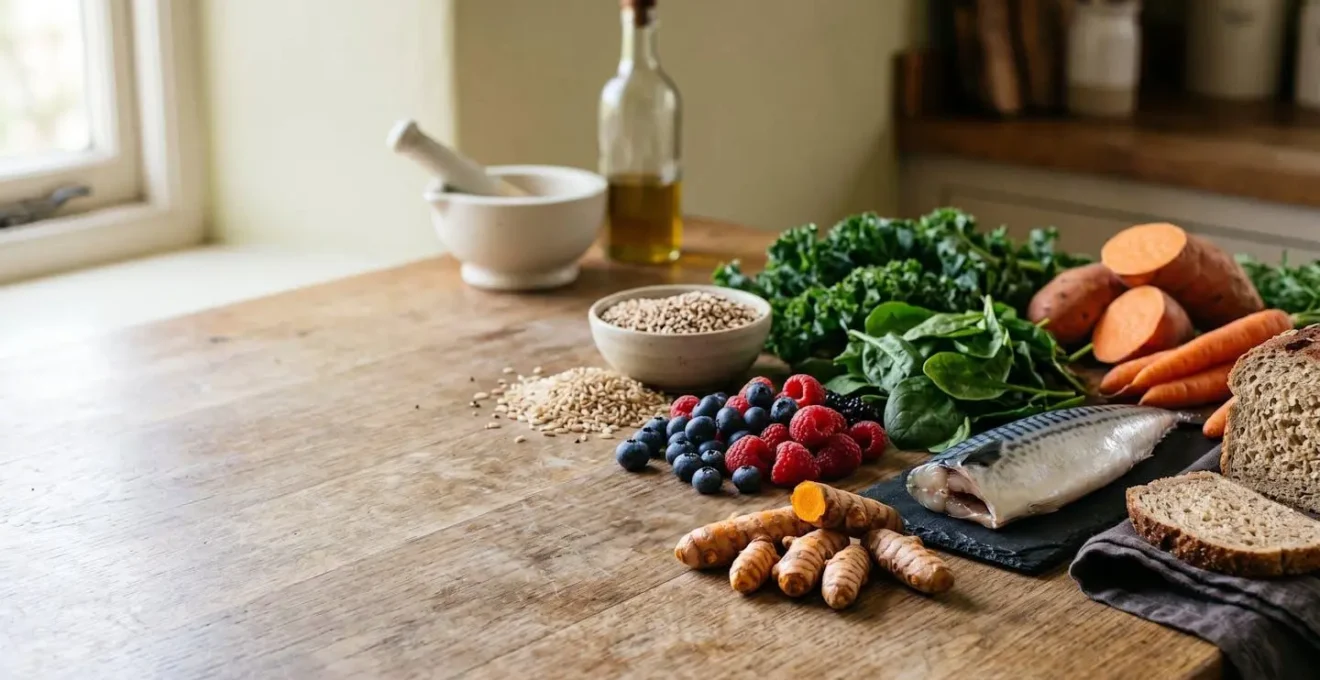
High inflammation isn’t a life sentence—it’s a signal that your diet needs a simple, British-supermarket-friendly upgrade.
- Long-term use of common painkillers like ibuprofen carries significant risks for kidney health in seniors.
- Essential nutrients for bone health, like calcium, are ineffective without their partners, vitamins K2 and D3, found in everyday foods.
Recommendation: Focus on making small, nutrient-dense swaps in your weekly shop rather than attempting a radical, restrictive diet. The most powerful ingredients are already on your local supermarket shelves.
Living with the daily grind of joint pain, fatigue, and brain fog can be draining. When your doctor mentions “high CRP” or “chronic inflammation,” it often feels like just another complicated medical term to worry about. You might be told to “eat better,” leading you down a rabbit hole of expensive, exotic “superfoods” that seem completely disconnected from your life and your weekly shop at Tesco or Sainsbury’s. The advice to follow a sun-drenched Mediterranean diet can feel absurd during a long, grey British winter.
The common solutions often feel like a choice between two extremes: relying on a daily ibuprofen that you know isn’t a long-term answer, or attempting a diet that feels unsustainable and foreign. Many seniors fall into the trap of the “Beige Diet”—a comforting but nutritionally-poor cycle of tea, toast, and biscuits that inadvertently fuels the very inflammation causing the problem.
But what if the key to managing your inflammation wasn’t about radical change or expensive imports? What if the most powerful anti-inflammatory toolkit was already sitting on the shelves of your local supermarket? This guide is different. We are not going to ask you to find goji berries. Instead, we’ll act as your nutritional therapist, walking you through the aisles of a typical British supermarket to show you the simple, affordable supermarket swaps that can have a profound impact on your CRP levels and overall well-being.
This article will provide a practical, recipe-focused roadmap. We will explore why inflammation is the root cause of your symptoms, compare common painkillers to natural alternatives, and provide actionable strategies to transform your everyday meals into a powerful force for good health, from adapting the Mediterranean diet for a Scottish winter to upgrading your humble slice of toast.
Summary: A Practical Guide to Lowering Inflammation with UK Supermarket Foods
- Why Is Inflammation the Hidden Driver Behind Your Joint Pain and Fatigue?
- Turmeric or Ibuprofen: Which Is Safer for Long-Term Inflammation Control?
- What Does a High ESR Result Mean for Your Daily Energy Levels?
- The “Beige Diet” Mistake That Spikes Inflammation in Seniors
- How to Adapt the Mediterranean Diet to a Winter in Scotland?
- The “Tea and Toast” Syndrome: Signs You Are Malnourished
- Why Your Calcium Supplement Is Useless Without Vitamin K2 and D3?
- How to Eat Nutrient-Dense Meals When Your Appetite Is Shrinking?
Why Is Inflammation the Hidden Driver Behind Your Joint Pain and Fatigue?
Inflammation is the body’s natural and necessary response to injury or infection. It’s the reason a cut becomes red and swollen—it’s your immune system rushing to the scene to heal. This is acute, or short-term, inflammation. The problem for many seniors arises when this response doesn’t switch off. This is known as chronic, low-grade inflammation, a constant, simmering state of alert that can persist for months or years, often without obvious symptoms at first.
Think of it like a car alarm that never stops blaring. Eventually, it doesn’t just annoy the neighbours; it drains the car’s battery and causes wear and tear on the system. In your body, this constant state of alarm contributes directly to the persistent joint pain of arthritis, the bone-deep fatigue that won’t go away with a good night’s sleep, and a general feeling of being “unwell.” This process is so common in ageing that scientists have given it a specific name: “inflammaging.”
This isn’t just a vague theory; it’s a measurable process. As one major review in a leading medical journal notes:
Chronic low-grade inflammation (inflammaging) in the elder population is considered a risk factor for the development of aging-related diseases and frailty.
– PMC Research Team, C-Reactive Protein and Frailty in the Elderly: A Literature Review
When your GP orders a blood test and finds elevated C-Reactive Protein (CRP) or Erythrocyte Sedimentation Rate (ESR), they are seeing the biochemical smoke from this smouldering fire. The good news is that by addressing the fuel for this fire—often found in our diet—we can begin to dampen the flames and reclaim our energy and comfort.
Turmeric or Ibuprofen: Which Is Safer for Long-Term Inflammation Control?
When faced with the daily reality of stiff, aching joints, reaching for an over-the-counter painkiller like ibuprofen is an understandable reflex. It provides fast, effective relief. However, for chronic inflammation, this short-term fix can come with a significant long-term cost, particularly for seniors. Non-steroidal anti-inflammatory drugs (NSAIDs) like ibuprofen are not designed for continuous, daily use over many years.
The risks are not trivial, especially concerning kidney health. Our kidneys work harder as we age, and the constant processing of these drugs can place an immense strain on them. This isn’t just a hypothetical risk; it’s a documented clinical concern.
Case Study: The Hidden Risks of Long-Term NSAID Use
A recent study analysing thousands of cases of NSAID-related kidney damage delivered a stark warning for older adults. The analysis found that elderly patients were at a significantly increased risk of acute kidney injury (AKI). Ibuprofen was the leading culprit, implicated in 46.7% of the cases. The risk was even higher for those with pre-existing conditions, as individuals with chronic kidney disease had a 67% higher risk of further kidney damage from NSAID use.
This data forces a critical question: what are the safer alternatives for managing long-term inflammation? This is where understanding food as medicine becomes crucial. Turmeric, the golden spice central to curries, contains a powerful anti-inflammatory compound called curcumin. Its effects may not be as immediate as a pill, but they work with your body, not against it. For curcumin to be effective, it needs a partner: piperine, found in black pepper, which can increase its absorption by up to 2,000%. This natural synergy is a perfect example of how simple food combinations can provide a powerful therapeutic effect without the side effects of pharmaceuticals.
Choosing to add a quarter teaspoon of turmeric and a pinch of black pepper to your daily soup, stew, or scrambled eggs is not just a flavour enhancer; it is a conscious, safe, and sustainable strategy for managing inflammation from the inside out. It’s about shifting from short-term symptom relief to long-term health support.
What Does a High ESR Result Mean for Your Daily Energy Levels?
If you’ve had a blood test that came back with a high Erythrocyte Sedimentation Rate (ESR), you might have been left wondering what it actually means for your day-to-day life. In simple terms, the ESR test measures how quickly your red blood cells settle at the bottom of a test tube. When there’s inflammation in the body, certain proteins cause these cells to clump together, become heavier, and fall faster. A high ESR is a non-specific but reliable indicator of this underlying inflammatory activity.
While C-Reactive Protein (CRP) levels can rise and fall very quickly in response to inflammation, clinical evidence shows ESR rises more slowly, often over 24-48 hours, and it stays elevated for longer. This “slow-moving” nature of the ESR marker often mirrors the persistent, dragging fatigue that accompanies chronic conditions like arthritis. That feeling of waking up tired, of your energy “battery” being stuck at 30%, is a direct consequence of your body spending its resources fighting this low-grade, internal battle.
Regaining control over your morning energy levels is about more than just a cup of coffee. It requires a gentle, strategic approach to cool the inflammation and support your body from the moment you wake up. Instead of pushing through the fatigue, you can adopt a simple routine to work with your body’s needs.
Your High ESR Morning Action Plan
- Start with Hydration: Drink 500ml of water, perhaps with a squeeze of fresh lemon, within 30 minutes of waking. This helps to combat the dehydration that often accompanies inflammation.
- Protein-Rich Anti-Inflammatory Breakfast: Opt for full-fat Greek yogurt with mixed berries (like blueberries and strawberries) and a sprinkle of ground flaxseed. This provides protein, healthy fats, and antioxidants to start your day on a stable footing.
- Gentle Movement: Perform 5 minutes of simple, chair-based stretching. Focus on major joints with neck rolls, shoulder circles, ankle rotations, and gentle spinal twists to ease stiffness.
- Energy Pacing: Identify your peak energy window (often mid-morning) and plan your most important task for that time. Schedule a mandatory rest break every 90 minutes.
- Anti-Inflammatory Spice Addition: Add 1/4 teaspoon of turmeric and a pinch of black pepper to your morning porridge or a smoothie to incorporate a natural anti-inflammatory boost.
This routine isn’t about a dramatic overhaul but about making small, consistent changes that send a clear signal to your body that you are supporting its healing process, helping to gradually lower that ESR reading and restore your vitality.
The “Beige Diet” Mistake That Spikes Inflammation in Seniors
One of the most common and unintentional mistakes that can fuel chronic inflammation is falling into the “Beige Diet.” It’s a pattern of eating that prioritises convenience and soft textures, often revolving around a limited palette of foods: white bread toast, plain biscuits, potatoes (often fried), processed sausages, and pasta. While comforting, these foods share two problematic characteristics: they are low in nutrients and high in refined carbohydrates and fats that the body quickly converts to sugar.
This pattern of eating creates a pro-inflammatory cycle. The rapid spike in blood sugar from a meal of white toast or a bowl of sugary cereal triggers an inflammatory response. When this happens meal after meal, day after day, it contributes to the constant, low-grade inflammation that drives joint pain and fatigue. You might not be eating “junk food” in the traditional sense, but a diet lacking in colour is often a diet lacking in the protective compounds our bodies desperately need.
The antidote to the Beige Diet is not complicated or expensive. It’s about consciously making “Colour Swaps” in your weekly shop. It’s about recognising a beige staple on your plate and asking, “How can I add colour here?” Colour in fruits and vegetables is not just for decoration; it signals the presence of powerful antioxidants and polyphenols—natural plant compounds that are the sworn enemy of inflammation. Swapping your standard white bread for a seedy wholemeal loaf or your fried chips for baked sweet potato wedges is a simple but profound act of self-care.
The following table provides simple, affordable swaps for common British favourites, available in any supermarket, to help you transition from a pro-inflammatory to an anti-inflammatory plate.
| Beige Food (Pro-Inflammatory) | Colourful Swap (Anti-Inflammatory) | Key Benefit |
|---|---|---|
| White toast | Wholemeal seeded bread | 3x more fiber, B vitamins, reduced blood sugar spike |
| Standard chips | Baked sweet potato wedges | High in beta-carotene, vitamin A, lower glycemic index |
| Fried sausages | Hearty bean and lentil stew | Plant protein, resistant starch, polyphenols |
| White rice | Quinoa or bulgur wheat | Complete protein, magnesium, sustained energy release |
| Cheese toastie (processed cheese) | Grilled vegetables on wholegrain with feta | Antioxidants from vegetables, less saturated fat |
How to Adapt the Mediterranean Diet to a Winter in Scotland?
The Mediterranean diet is consistently praised as the gold standard for heart health and fighting inflammation, but for someone living through a dark, cold winter in Scotland, its principles can seem distant. Images of sun-ripened tomatoes, fresh sea bass, and glistening olive groves feel like a world away when you’re looking out at a grey sky and the local supermarket is filled with root vegetables.
The secret is to stop thinking of it as a rigid set of ingredients and start embracing its core principles, adapting them to what is local, seasonal, and affordable right here in the UK. A “Winter Mediterranean” diet is not only possible but can be incredibly powerful and comforting. The key is to focus on the *types* of food: oily fish, healthy fats, whole grains, and a wealth of vegetables, and then find the British equivalents.
Instead of expensive imported olive oil, we have fantastic British cold-pressed rapeseed oil, which has an excellent omega-3 profile. Instead of sea bass, we have affordable, sustainable, and intensely flavourful Scottish mackerel, herring (the famous “silver darlings”), and kippers. And our winter larder is an anti-inflammatory powerhouse: dark green kale, vibrant beetroot, purple-tinged swede, and hardy carrots are packed with the very nutrients we need to get through the darker months. This is about being smart and resourceful, not about trying to replicate a holiday meal from Greece.
Your Scottish Winter Mediterranean Shopping List
- Oil Swap: Replace imported olive oil with cold-pressed British rapeseed oil. It’s high in omega-3, locally produced, and more affordable.
- Fish Strategy: Choose Scottish oily fish. Mackerel, herring, kippers, or even tinned sardines in oil are excellent, budget-friendly choices (£2-£4 per serving).
- Winter Vegetable Base: Build meals around root vegetables like carrots, parsnips, swede, and beetroot, alongside brassicas such as kale, cabbage, and Brussels sprouts.
- Legume Foundation: Create hearty winter stews using red lentils, butter beans, and chickpeas for excellent plant-based protein and fibre.
- Porridge Revolution: Start your day with Scottish oats topped with frozen berries (just as nutritious as fresh), ground flaxseed, and walnuts.
- Vitamin D Supplementation: From October to March, take a daily Vitamin D supplement (1,000-2,000 IU) to compensate for the lack of sunshine and support your immune system.
The “Tea and Toast” Syndrome: Signs You Are Malnourished
The “Tea and Toast” syndrome is a quiet form of malnutrition that is incredibly common among seniors in the UK. It doesn’t necessarily mean you’re underweight; you can be a normal weight or even overweight and still be malnourished. It describes a diet that, while easy and comforting, is critically lacking in essential nutrients like protein, healthy fats, vitamins, and minerals. It’s a diet that provides calories but little else, slowly starving your body of the building blocks it needs to repair itself, maintain muscle mass, and fight inflammation.
Signs you might be falling into this pattern include increasing fatigue, muscle weakness (e.g., finding it harder to open a jar), slow-healing wounds, and getting ill more frequently. While it may seem harmless, this gradual nutritional decline has severe long-term consequences. It weakens the immune system and fuels “inflammaging,” a state of chronic inflammation that accelerates the ageing process and significantly increases the risk of age-related diseases.
The link between poor nutrition, inflammation, and serious illness is a major concern for health experts. As the Association of Community Cancer Centers highlights, this is a critical issue for the ageing population:
By 2030, an estimated 70% of all cancer cases will present in individuals 65 years or older. Inflammaging acts as a double-edged sword: it accelerates the normal biological aging process while also amplifying the risk of diseases linked to advanced age.
– Association of Community Cancer Centers, Cancer Inflammaging: Understanding the Role of Aging and Inflammation in Cancer
Breaking free from the Tea and Toast syndrome doesn’t mean giving up your comforting slice of toast. It means upgrading it. The goal is to transform it from a low-nutrient snack into a mini-meal packed with the protein and healthy fats your body is crying out for. This is a practical, achievable first step to boosting your nutrient intake.
Your Toast Topper Upgrade Strategy
- Mashed Avocado: Add a pinch of sea salt and cracked black pepper. This provides healthy fats, vitamin E, and potassium with no cooking required.
- Tinned Sardines: Choose sardines in olive oil and add a squeeze of lemon. You get a dose of omega-3s, calcium (from the tiny bones), vitamin D, and protein.
- Mashed Boiled Egg: Mix with fresh chives or parsley. This offers complete protein, B vitamins, and choline for brain health. You can boil eggs ahead of time.
- Full-Fat Cottage Cheese: Top with halved cherry tomatoes. This combination gives you protein, probiotics, and lycopene with minimal effort.
- Nut Butter and Banana: Spread almond or peanut butter on your toast and top with banana slices for healthy fats, protein, potassium, and magnesium.
Key Takeaways
- Chronic inflammation is not a life sentence; it is a manageable condition that responds directly to dietary changes.
- Focus on nutrient density. When appetite is small, every mouthful must be packed with protein, healthy fats, vitamins, and minerals.
- Smart, affordable swaps in your local British supermarket are far more effective than chasing expensive, exotic health trends.
Why Your Calcium Supplement Is Useless Without Vitamin K2 and D3?
For decades, seniors, especially women, have been advised to take calcium supplements to protect against osteoporosis and maintain bone health. While well-intentioned, this advice is dangerously incomplete. Taking calcium on its own is like having a lorry full of bricks delivered to a building site with no workers to tell the driver where to put them. The bricks get dumped in the road, causing traffic jams and never becoming part of the building.
In your body, Vitamin D3 and Vitamin K2 are the “workers.” Vitamin D3 acts as the site foreman, telling your intestines to absorb the calcium from your food and supplements into your bloodstream. Without enough D3, the calcium passes straight through you. But this is only half the job. Once calcium is in the blood, it needs to be directed to the right places (your bones and teeth) and kept out of the wrong places (your arteries and soft tissues).
This is the crucial, and often overlooked, role of Vitamin K2. It acts as the “traffic cop,” activating proteins that bind the calcium and deposit it into your bone matrix. Without K2, the free-floating calcium in your blood can end up being deposited in your arteries, leading to calcification—a dangerous stiffening of the blood vessels that increases the risk of heart disease. Therefore, a calcium supplement taken without its D3 and K2 partners can be not just useless, but potentially harmful.
While Vitamin D often requires supplementation in the UK, Vitamin K2 can be found in a surprising range of foods available in any British supermarket. Incorporating these into your diet is a vital strategy for ensuring your calcium intake is helping, not hurting, your long-term health.
Your Vitamin K2 Supermarket Shopping List
- Aged Hard Cheeses: Gouda has the highest K2 content, but aged Cheddar and Edam are also excellent sources. A single 30g serving (the size of a small matchbox) provides a good dose.
- Free-Range Egg Yolks: The K2 is found in the yolk, not the white. Choosing organic or free-range eggs often means a higher nutrient content. Two eggs provide a significant amount.
- Chicken Liver Pâté: A small pot of this supermarket staple is a K2 powerhouse. A 50g serving is also rich in vitamin A and iron.
- Grass-Fed Butter: Butter from grass-fed cows (often from Ireland or clearly labelled British brands) contains more K2 than butter from grain-fed animals. Spread it on your wholegrain toast.
- Fermented Foods: Traditional sauerkraut (the type found in the chilled section) contains K2 produced during the fermentation process.
How to Eat Nutrient-Dense Meals When Your Appetite Is Shrinking?
One of the most frustrating challenges of ageing can be a shrinking appetite. This can be caused by many factors, including changes in taste and smell, medication side effects, or the very inflammation we are trying to fight. It creates a difficult paradox: the time when your body needs nutrients the most is often when you feel least like eating. Forcing yourself to eat large meals can be unpleasant and counterproductive. The solution is not to eat more, but to eat smarter by focusing on nutrient density.
Nutrient density means making every single mouthful count. It’s about packing the maximum amount of vitamins, minerals, protein, and healthy fats into a small, manageable volume of food. This is where the concept of “stealth nutrition” comes in—finding easy ways to enrich the foods you already enjoy without adding bulk. A smoothie or a fortified soup can be an ideal vehicle for this, allowing you to sip on a powerhouse of nutrition over an hour or two, rather than facing a daunting plate of food.
Forget the thin, sugary “health” drinks. A nutrient-dense shake should be built on a base of protein and healthy fats, which are essential for maintaining muscle mass and providing sustained energy. Full-fat Greek yogurt, whole milk, a spoonful of nut butter, or ground flaxseed can turn a simple fruit smoothie into a complete, satisfying mini-meal. This approach respects your body’s signals while ensuring it gets the fuel it needs to function and heal.
The following formula is a template you can adapt based on what you have in the fridge or freezer. It’s designed to be simple, quick, and highly effective for delivering concentrated nutrition in a gentle, easy-to-digest format.
The Stealth Nutrition Shake Formula
- Base (250ml): Start with full-fat Greek yogurt or whole milk. This provides 10-15g of protein, healthy fats, and calcium.
- Greens (1 handful): Add fresh spinach or kale. They are rich in iron, folate, and magnesium, and their taste will completely disappear in the blend.
- Fruit (80g): Use frozen berries like blueberries, strawberries, or raspberries for antioxidants, vitamin C, and a low sugar content.
- Healthy Fat (1 tablespoon): Include a spoonful of almond butter, peanut butter, or ground flaxseed for omega-3s, vitamin E, and an extra 90-100 calories.
- Optional Boost: Add 1/4 teaspoon of turmeric with a pinch of black pepper for an anti-inflammatory kick, or a scoop of unflavored protein powder if you need an extra protein boost.
- Sipping Strategy: Pour the shake into an insulated flask and sip it slowly over 2-3 hours. This is much more manageable than trying to drink it all at once.
Your journey to lower inflammation starts not with a radical diet, but with your next shopping list. It begins with the decision to swap white bread for wholemeal, to try mackerel instead of cod, or to add a spoonful of Greek yogurt to your breakfast. Choose one swap from this guide and begin today. You have the power to turn your kitchen into your greatest ally for a healthier, more comfortable life.