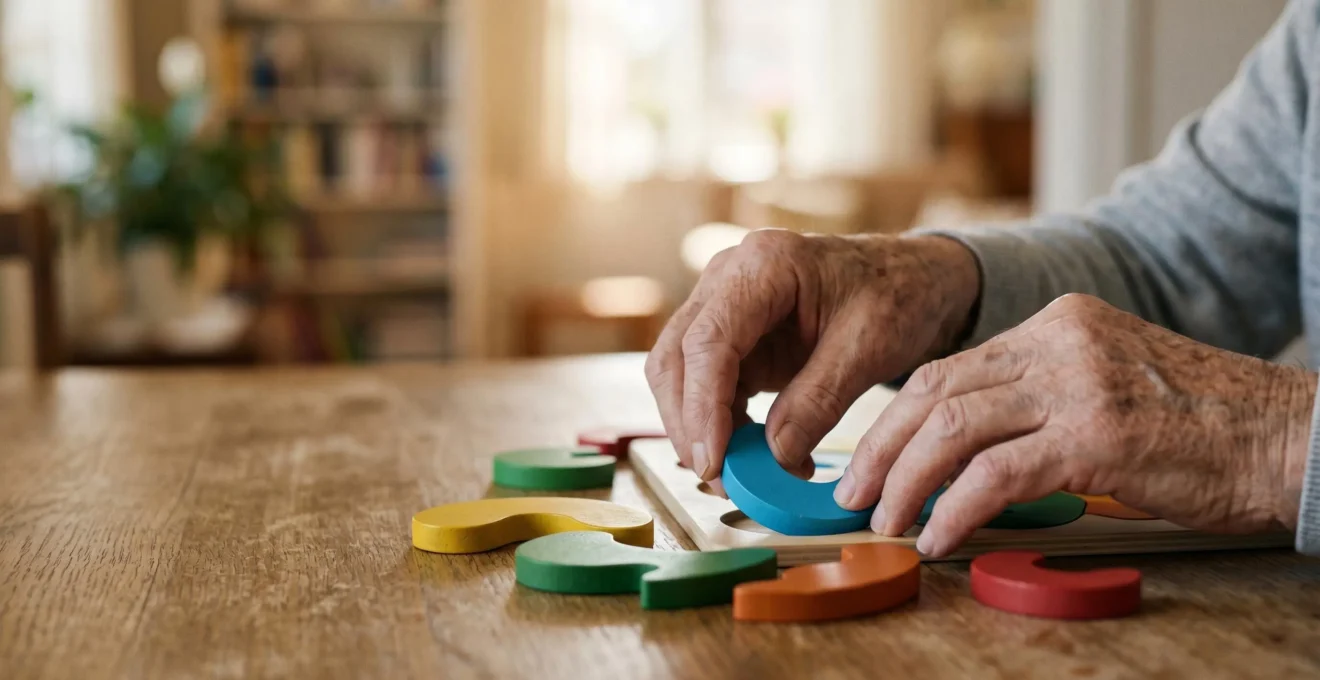
The belief that passively watching quiz shows like “Countdown” keeps your brain sharp is a dangerous misconception; true cognitive health requires active, effortful mental engagement.
- Passive consumption (like watching TV) allows the brain to be a spectator, which can correlate with cognitive decline.
- Active challenges (like debating, playing strategy games, or volunteering) force the brain to be an athlete, building new neural pathways and strengthening cognitive reserve.
Recommendation: Swap one hour of passive screen time this week for an hour of an active, hands-on mental challenge to start training your brain, not just entertaining it.
You settle into your favourite armchair, ready for your daily mental “workout.” The “Countdown” clock music starts, and you diligently try to solve the anagrams and number puzzles from your sofa. It feels productive, like you’re doing your part to keep the cogs turning. This routine is common, born from a correct desire to stay mentally agile. Many believe that as long as the content is educational or puzzle-based, it’s effective brain training.
This leads to a focus on familiar, comfortable mental pastimes: the daily crossword, a quiz show, or a simple game of chance. While these activities are certainly better than staring at a blank wall, they often fall short of providing the rigorous exercise your brain truly needs to build resilience. The market is flooded with “brain games” and apps, but the fundamental principle of what makes an activity effective is frequently misunderstood.
But what if the most crucial factor wasn’t the *subject* of the activity, but the *nature* of your engagement with it? This article challenges the passive approach to brain health. We will argue that the key to a sharp, resilient mind lies not in being a cognitive spectator, but in becoming a cognitive athlete. It’s about moving from passively receiving information to actively constructing, debating, and creating it. The difference is not just semantic; it’s neurological.
We will explore the stark neurological differences between passive and active engagement, investigate how real-world activities provide superior cognitive benefits, and outline what it truly takes to create lasting change in your brain’s structure and function. This guide will provide a clear framework for understanding which activities build mental muscle and which are merely empty calories for the mind.
Summary: A Guide to Becoming a Cognitive Athlete, Not a Spectator
- Reading vs TV: What Is the Neurological Difference?
- The Charity Shop Role: How Handling Money and Chatting Boosts Cognition?
- The 3-Month Rule: How Long Must You Persist for Brain Changes?
- Why Arguing Politics (Politely) Is Good for Your Synapses?
- Painting by Numbers or Freestyle: Which Engages More Brain Areas?
- Why Chess Beats Ludo for Frontal Lobe Activation?
- Memorising the “Form”: Why Tai Chi Is Also Brain Training?
- Bridge or Bingo: Which Game Actually Prevents Cognitive Decline?
Reading vs TV: What Is the Neurological Difference?
The distinction between watching a television programme and reading a book is the perfect illustration of passive consumption versus active construction. When you watch TV, even a quiz show, your brain is largely in a receptive state. It processes a rapid-fire sequence of images and sounds, but the cognitive heavy lifting—pacing, world-building, and interpretation—is done for you. This passive state can be detrimental over time. In fact, research from the English Longitudinal Study of Ageing shows that watching TV for more than 3.5 hours per day is associated with a decline in verbal memory.
This is because the brain is acting as a spectator, watching the game from the sidelines. The information flows in one direction, requiring minimal effort to follow along. There is little room for imagination or deep, multi-layered thinking. Your brain simply consumes the finished product.
Reading, by contrast, forces your brain to become an active participant. When you read, you are not given images; you must create them. You control the pace, allowing you to pause, reflect, and make connections. Your brain works to decode symbols (letters), construct meaning, visualise scenes, and infer characters’ emotions and motivations. This process engages multiple cognitive domains simultaneously: memory, imagination, and critical analysis. It’s a full-body workout for the mind, where you are not just a consumer of a story, but its co-creator. This active construction is what strengthens neural pathways and builds cognitive reserve.
The Charity Shop Role: How Handling Money and Chatting Boosts Cognition?
Staying mentally sharp is not confined to activities labelled as “brain training.” Everyday roles, particularly those involving social interaction and problem-solving, can be far more potent. Consider volunteering at a charity shop. This environment provides a rich, multi-faceted cognitive workout that a solitary puzzle can rarely match. It combines several key elements of brain health into one dynamic activity.
Firstly, it demands social cognition. Engaging in conversation with customers and colleagues requires you to interpret social cues, retrieve words, formulate responses, and exercise empathy. As expert Stukas et al. noted in a study published in PMC, this type of engagement is crucial:
Promoting volunteerism encourages individuals to engage in meaningful social interactions, fostering both a sense of purpose and opportunities for mental stimulation, which can contribute to cognitive health.
– Stukas et al., Study published in PMC on Boosting Cognitive Training through Social Engagement
Secondly, it involves practical, real-time problem-solving. Handling money requires mental arithmetic. Sorting donations involves categorization and memory. Answering customer queries draws on your knowledge base and communication skills. These are not abstract exercises; they are goal-oriented tasks with immediate feedback. The power of this approach is supported by large-scale research. For example, a Health and Retirement Survey study tracking over 11,000 participants aged 51+ found that formal volunteer work significantly slows the rate of cognitive decline. This isn’t just about “staying busy”; it’s about engaging in a role that demands complex, integrated cognitive functioning in a social context.
The 3-Month Rule: How Long Must You Persist for Brain Changes?
The desire for a quick fix is human, but the brain does not operate like a software update. Building cognitive reserve through neuroplasticity—the brain’s ability to reorganise itself by forming new neural connections—is a biological process that requires time and consistency. You cannot expect to play a new game for a week and see lasting structural changes. The “use it or lose it” principle is true, but the “use it consistently over time” addendum is where the magic happens.
So, how long is long enough? While every individual is different, neuroscience gives us a clear window. Research into brain rewiring indicates that while you might feel sharper or more focused within a few weeks, significant structural changes take longer. Generally, neuroscience research indicates it takes anywhere from 3 to 9 months of consistent, effortful practice to create and solidify new, efficient neural pathways. This is the “3-Month Rule”: you must commit to a new cognitive challenge for at least 90 days to give your brain a fair chance to adapt and grow.
Case Study: The POINTER Study’s Blueprint for a Younger Brain
The Alzheimer’s Association’s landmark POINTER study provides compelling evidence. This two-year program put over 2,100 sedentary older adults through an intensive regimen of aerobic exercise, a healthy diet, online cognitive training, and mandatory social activities. The results were astounding: participants showed cognitive function scores equivalent to individuals 1-2 years younger than their actual age. The key takeaway was that each 30-90 day phase built upon the last, with measurable brain changes accumulating over the full timeline. It proves that a multi-faceted, persistent effort pays real, measurable dividends in brain health.
Your 90-Day Brain-Building Kickstart Plan
- Week 1: Identify Your “Passive Hour” – Pinpoint one hour of your day typically spent on a passive activity (e.g., watching a repeat, scrolling social media) and commit to replacing it.
- Weeks 2-4: Introduce a “Low-Friction” Active Task – Start with something challenging but manageable. This could be learning the rules of a new card game, trying a freestyle drawing, or starting a non-fiction book on a new topic.
- Weeks 5-8: Increase the “Cognitive Load” – Move from the basics to strategy. If you learned a card game, now focus on tactics. If you were drawing, try a new medium. If you were reading, start writing a summary of each chapter.
- Weeks 9-12: Add a Social & Unpredictable Element – Join a club for your new activity, teach it to someone else, or find a way to apply it in a real-world setting. This forces your brain to adapt and flex.
- Day 90: Assess and Plan the Next 90 Days – Reflect on your progress. What was most challenging? Most enjoyable? Use this insight to select your next 90-day challenge, ensuring you continue to build on your gains.
Why Arguing Politics (Politely) Is Good for Your Synapses?
The idea of arguing about politics might seem stressful, but when conducted respectfully, a robust debate is a high-intensity workout for the brain’s executive functions. Unlike passively absorbing a news report, engaging in a debate forces your brain to perform multiple complex operations simultaneously. You must listen carefully to another’s point (working memory), formulate a counter-argument (critical thinking), retrieve supporting facts (long-term memory), and adjust your strategy based on the flow of conversation (cognitive flexibility).
This type of intellectually demanding discussion provides a significant neural boost. In particular, research published in Frontiers in Psychology confirms that activities like debate enhance connectivity in the prefrontal cortex, the brain’s command centre for planning, decision-making, and moderating social behaviour. It’s the neurological equivalent of a full-body workout, engaging multiple systems at once.
The key ingredient here is cognitive flexibility. A political discussion, or any deep debate, challenges you to see an issue from multiple perspectives and adapt your position in real-time. This is not about winning; it’s about the mental gymnastics involved in the process. As explained by Dr. Conor Liston, an expert on the subject, this ability is fundamental to learning.
Cognitive flexibility, the ability to alter strategy according to changing stimulus-response-reward relationships, is critical for updating learned behavior.
– Conor Liston, PhD, MD, Prefrontal deep projection neurons enable cognitive flexibility via persistent feedback monitoring
By stepping into the “arena” of polite debate, you are training your brain to remain agile, to update its models of the world, and to strengthen the very synaptic connections that underpin sharp, fluid intelligence. It’s the ultimate move from being a passive information consumer to an active and engaged thinker.
Painting by Numbers or Freestyle: Which Engages More Brain Areas?
The art store shelf presents a clear choice, a perfect metaphor for the passive versus active brain engagement debate: a “painting by numbers” kit versus a blank canvas and a set of paints. Both can result in a beautiful picture, but neurologically, they are worlds apart. One is a task of execution, while the other is an act of creation.
Painting by numbers is a highly structured, low-friction activity. It primarily engages fine motor skills and the ability to follow instructions. You match number to colour, and fill in the blanks. The cognitive load is minimal because all the key decisions—composition, colour palette, subject matter—have been made for you. It’s a relaxing, meditative process, but it is not a robust cognitive workout. It’s the equivalent of tracing letters rather than learning to write poetry.
Freestyle painting, on the other hand, is a cognitive triathlon. Faced with a blank canvas, your brain must engage in a cascade of high-level processes. Your frontal lobe works to plan the composition. Your memory is accessed for visual references. Your parietal lobe processes spatial relationships. Your motor cortex controls the delicate movements of your hand. Crucially, you are constantly making decisions, solving problems (How do I mix this shade? How do I create depth?), and expressing something unique. This process of translating an internal idea into an external reality involves a vast network of brain regions working in concert. It’s this coordinated, effortful engagement that forges new and stronger neural connections, far surpassing the simple execution of a pre-determined plan.
Why Chess Beats Ludo for Frontal Lobe Activation?
Not all board games are created equal when it comes to brain health. The difference between a game of chance like Ludo and a game of strategy like Chess is a powerful lesson in cognitive engagement. Ludo is primarily a passive experience, dictated by the roll of a die. Your decisions are limited and straightforward. It’s a social and enjoyable pastime, but its demands on your brain are minimal.
Chess, in stark contrast, is a pure exercise of the prefrontal cortex (PFC), the region responsible for executive functions like planning, strategic thinking, and impulse control. In a single game of chess, you must:
- Plan Ahead: You don’t just think about your next move, but your opponent’s potential responses, and your subsequent counters. This requires forward-thinking and scenario-planning.
- Utilise Working Memory: You have to hold multiple possible move sequences in your mind at once to evaluate them.
- Inhibit Impulses: You must resist the urge to make a tempting but flawed move, training your brain to prioritise long-term strategy over short-term gratification.
- Adapt Your Strategy: As the game evolves, you must constantly reassess the board and adjust your plan, demonstrating cognitive flexibility.
This intense mental activity is precisely what activates and strengthens the frontal lobe. As research highlights, the PFC is the core of our higher-order thinking. As one study in the journal *PMC* notes, the PFC is a hub for flexible thinking:
The prefrontal cortex (PFC) is generally considered a hub for cognitive flexibility and related behaviors with activation extend to the ventral and lateral PFC.
– Research team, Irritability Moderates the Association between Cognitive Flexibility Task Performance
While Ludo has you hoping for a lucky roll, chess has you building complex mental models. One is a ride in the passenger seat; the other puts you firmly in the driver’s seat of your own cognitive engine, demanding constant attention and effort. This is why for genuine brain training, strategy always beats pure luck.
Memorising the “Form”: Why Tai Chi Is Also Brain Training?
At first glance, Tai Chi appears to be a gentle, physical exercise—a series of slow, flowing movements. However, hidden within this graceful practice is a powerful cognitive training regimen that engages the brain as much as the body. The mental effort required to learn and perform the “form,” the sequence of movements, makes it a potent tool for enhancing brain health.
The primary cognitive challenge in Tai Chi is spatial memory and sequencing. Learning the form involves memorising dozens of distinct, intricate movements in a precise order. This is not a simple A-to-B-to-C sequence; it involves complex transitions, changes in direction, and coordination of the entire body. Recalling and executing this sequence is a significant workout for the hippocampus and prefrontal cortex, areas of the brain crucial for memory and planning.
Furthermore, Tai Chi intensely trains proprioception—the mind’s awareness of the body’s position in space. Each slow, deliberate movement requires immense focus and concentration on balance, weight distribution, and posture. This constant feedback loop between the body and brain strengthens the neural pathways responsible for motor control and spatial awareness. You are not just moving; you are consciously inhabiting and directing your body through a complex, three-dimensional space. This integration of mind and body, of memorisation and physical execution, makes Tai Chi a holistic brain-training exercise that far surpasses its reputation as mere physical activity.
Key Takeaways
- True brain health comes from being an active “cognitive athlete,” not a passive “cognitive spectator.”
- Activities that require effort, strategy, and active creation (like chess or freestyle painting) build more neural pathways than passive or instruction-based tasks (like Ludo or painting-by-numbers).
- Real-world, social activities like volunteering or polite debate provide a richer, more integrated cognitive workout than most solitary puzzles.
Bridge or Bingo: Which Game Actually Prevents Cognitive Decline?
The community hall offers two competing activities: Bingo in one room, Bridge in the other. Both promise a social afternoon, but only one offers a significant defence against cognitive decline. This choice perfectly encapsulates the core theme of our discussion: the difference between passive participation and active, strategic engagement.
Bingo is a game of passive pattern recognition. You listen for a number and check your card. The cognitive load is extremely low. While the social setting is beneficial, the game itself is little more than a lottery. There is no strategy to develop, no memory to tax, no complex decisions to make. Your brain is a simple receiver waiting for a signal.
Bridge, by contrast, is a demanding strategic partnership. A single hand requires you to engage multiple, high-level cognitive functions. You must use working memory to track the cards that have been played. You use inference and probability to deduce what cards your opponents and partner hold. You engage in strategic planning during the bidding process and adapt that plan as the hand unfolds. Most importantly, it is intensely social in a cognitively demanding way; you must communicate with your partner through a codified language of bids, creating a shared mental model of the game.
This combination of complex mental processing and social engagement is a potent cocktail for cognitive health. The social aspect is not just a pleasant side effect; it’s a core mechanism for brain strengthening. As experts from Alzheimer’s New Jersey point out, engaging with others is a neural workout. As they state in their guidance on cognitive health:
Social isolation and loneliness double the risk for Alzheimer’s disease. Speaking with people involves nerve activity that helps strengthen the brain.
– Alzheimer’s New Jersey, Cognitive Health and Older Adults guidance
Choosing Bridge over Bingo is choosing to be a cognitive athlete. It’s choosing a game that forces your brain to build, strategise, and connect, rather than one that simply lets it coast. This choice, repeated over time, is what builds the cognitive reserve needed to keep your mind sharp and resilient for years to come.
Now that you understand the crucial difference between passive entertainment and active brain training, the path forward is clear. It’s time to audit your daily routine and consciously swap a spectator activity for an athletic one. Your brain’s future fitness depends on the challenges you give it today.