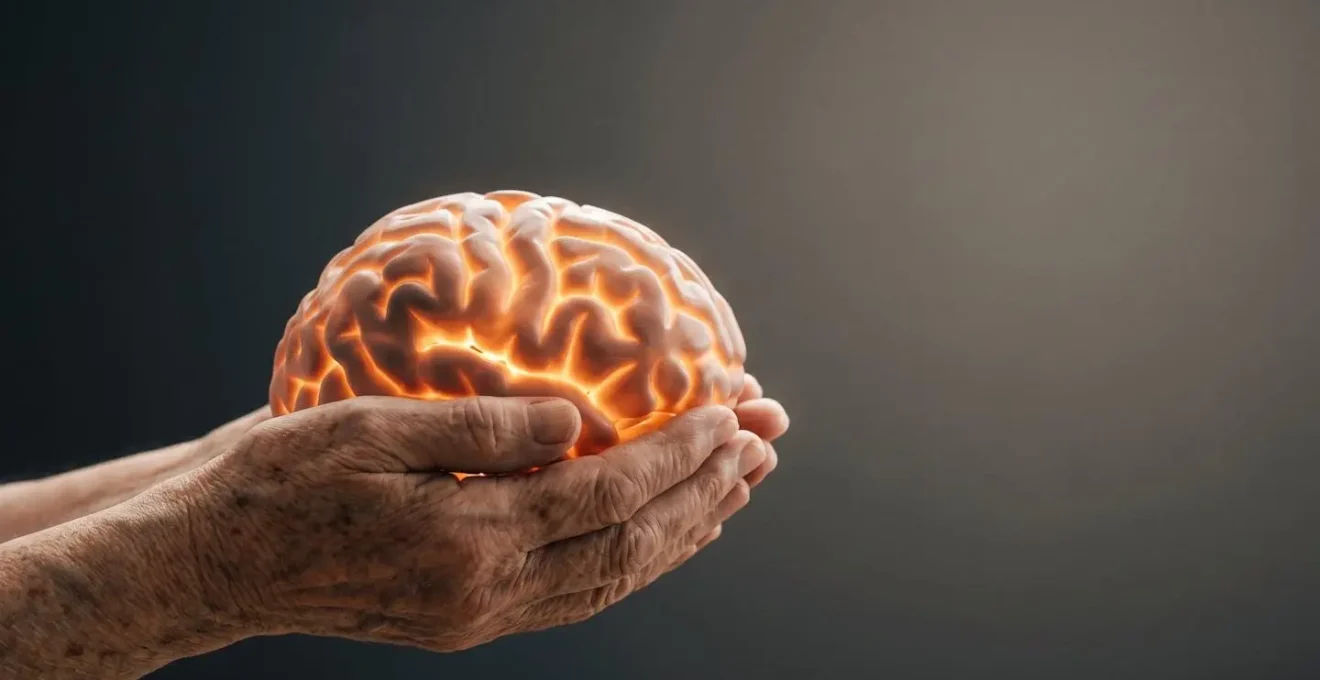
The presence of Alzheimer’s plaques does not automatically lead to dementia; a concept called “cognitive reserve” acts as a functional buffer, allowing the brain to operate normally despite underlying pathology.
- This resilience isn’t just about “staying busy” but about building complex neural networks through novel, challenging activities.
- Factors like learning new skills, occupational complexity, and even managing hearing loss contribute more significantly than repetitive puzzles.
Recommendation: Shift your focus from simple mental exercise to activities that create “cognitive friction”—the deliberate and rewarding struggle of learning something genuinely new—to actively build your brain’s resilience.
It is one of the most profound paradoxes in neuroscience. An individual lives a long, mentally sharp life, only for a post-mortem examination to reveal a brain riddled with the plaques and tangles characteristic of advanced Alzheimer’s disease. Yet, they showed no clinical symptoms of dementia. This isn’t a rare anomaly; it’s a window into a remarkable capacity of the human brain: resilience. For decades, the prevailing wisdom has been to “stay mentally active” with puzzles or games. While well-intentioned, this advice often misses the crucial mechanism at play.
The key is not merely exercising the brain, but building what neuroscientists call cognitive reserve. Imagine it not as a finite tank of brainpower, but as a dense, intricate network of roads. When one road is blocked by Alzheimer’s pathology, a brain with high reserve has countless alternative routes—functional bypasses—to get to the same destination. This “active scaffolding” allows it to maintain function despite significant damage. Building this scaffold is a lifelong process, but the strategies to do so are often surprising and go far beyond conventional brain games.
This article will deconstruct the science behind this resilience. We will explore the specific, evidence-based, and sometimes counter-intuitive pillars that contribute to building a brain that can withstand the biological onslaught of dementia. From the type of learning you pursue to the complexity of your career and the integrity of your sensory systems, you will discover how to strategically invest in your own cognitive future.
In the following sections, we will delve into the distinct and powerful ways you can fortify your cognitive reserve. This summary provides a roadmap to understanding these interconnected strategies for building a more resilient brain.
Summary: Unlocking the Secrets of Brain Resilience
- Is It Too Late to Build Cognitive Reserve If You Left School at 15?
- Why Learning “Holiday Spanish” Protects Your Frontal Lobe?
- Did Your Stressful Job Actually Save Your Brain?
- The “Honeymoon Phase” Drop: Why Brains Shrink 6 Months After Retiring?
- Sudoku vs Learning Piano: Why You Must Step Out of Your Comfort Zone?
- The Biological Link Between Untreated Hearing Loss and Alzheimer’s
- Memorising the “Form”: Why Tai Chi Is Also Brain Training?
- Why Is Tai Chi Recommended by the NHS for Arthritis Management?
Is It Too Late to Build Cognitive Reserve If You Left School at 15?
A common misconception is that cognitive reserve is a fixed asset, determined solely by the number of years spent in formal education. While early education provides a strong foundation, it is by no means the final word. The brain’s capacity for neuroplasticity—its ability to reorganize and form new connections—persists throughout life. This means the construction of your cognitive scaffolding is an ongoing project, and the work you do in your 50s, 60s, and beyond is profoundly impactful.
Research consistently shows that engaging in cognitively stimulating activities later in life builds reserve, regardless of one’s educational background. A groundbreaking 2024 study confirms that cognitive and physical activity were positively associated with cognitive reserve, even in individuals with six or fewer years of formal education. This demonstrates that the brain responds to current stimulation, not just its starting point. Think of it as renovating and extending a house; the original foundation matters, but the extensions you add later create new, valuable living space.
Furthermore, the protective effects of this reserve are measurable over time. Better cognitive reserve was associated with better cognitive function over a nearly seven-year follow-up period in a major study. Crucially, the study found that this reserve mediated a significant portion (15%) of the cognitive benefits traditionally attributed to education alone. This is powerful evidence that what you do now—the books you read, the skills you learn, the discussions you have—actively contributes to your brain’s resilience. It is never too late to pick up the tools and start building.
Why Learning “Holiday Spanish” Protects Your Frontal Lobe?
The effort of learning a new language, even to a basic conversational level for a holiday, is a superlative workout for the brain’s executive functions. Unlike a familiar puzzle that follows set rules, language acquisition forces your brain to juggle multiple systems simultaneously: new vocabulary (memory), grammatical rules (logic), and pronunciation (motor skills). This intense, multi-domain stimulation is particularly beneficial for the frontal lobes, the brain’s command centre responsible for planning, problem-solving, and flexible thinking.
When you speak a second language, your brain isn’t just switching one language off and the other on. It’s actively managing and inhibiting the non-target language, a constant mental juggling act that strengthens the neural circuits involved. This process builds denser, more efficient neural networks. As a research team led by Jubin Abutalebi highlighted in a PNAS study:
Bilingual speakers have increased white matter density in the frontal lobes, in the ACC, the inferior parietal lobules, and the temporal pole areas.
– Research team led by Jubin Abutalebi, PNAS study on bilingualism and Alzheimer’s dementia
This increased density is physical evidence of cognitive reserve. It represents the “active scaffolding” that provides the brain with more resources to draw upon. Strikingly, multilinguals with early-stage AD have a thicker cortex than monolinguals in these critical frontal areas. This structural advantage allows them to compensate for the underlying pathology for longer, effectively delaying the onset of clinical symptoms.
As the illustration suggests, these are not just abstract benefits. Learning a new language physically enhances the brain’s wiring, creating new functional bypasses. So, that “holiday Spanish” is more than a travel convenience; it’s a direct investment in the structural integrity of your frontal lobe and your long-term cognitive health.
Did Your Stressful Job Actually Save Your Brain?
While chronic, unmanageable stress is detrimental to brain health, a career characterized by high levels of mental engagement and problem-solving—what researchers call occupational complexity—is one of the most powerful contributors to cognitive reserve. A mentally demanding job acts as a decades-long cognitive training program, often without us even realizing it. This is the principle of “incidental complexity”: building resilience not through a designated hobby, but as a byproduct of one’s daily work.
Occupational complexity is typically measured across three domains: working with data (synthesizing information), working with people (negotiating, managing, teaching), and working with things (precision work, operating complex machinery). Jobs that are high in complexity, particularly with data and people, force the brain to constantly adapt, strategize, and develop flexible problem-solving frameworks. This sustained engagement builds robust and efficient neural networks, the very essence of cognitive reserve.
This isn’t just a theoretical concept; it’s backed by substantial research. The findings provide a compelling narrative for the long-term benefits of a challenging career.
Case Study: The KHANDLE Study on Occupational Complexity
Researchers at Kaiser Permanente conducted a large-scale study (KHANDLE) examining the link between work complexity and cognitive outcomes in a diverse population. They found that individuals with higher occupational complexity involving data showed superior executive function and semantic memory at the study’s baseline. Even more importantly, this group experienced a significantly slower rate of decline in executive function over time. This suggests that a complex job doesn’t just give you a better starting point; it actively protects against age-related cognitive decline by building a more resilient brain structure.
So, if you look back on a career filled with challenging projects, difficult negotiations, or complex data analysis, you may not have just been earning a living. You were inadvertently engaging in one of the most effective long-term strategies for building a brain capable of withstanding the challenges of aging. That “stressful” job might just have been a key investment in your cognitive future.
The “Honeymoon Phase” Drop: Why Brains Shrink 6 Months After Retiring?
Retirement is often envisioned as a well-deserved rest, a “honeymoon phase” of relaxation after a lifetime of work. While rest is important, a sudden and sustained drop in cognitive engagement can have a surprisingly rapid and detrimental effect on the brain. The principle of “use it or lose it” applies with stark reality to our neural networks. The intricate cognitive scaffolding built over a complex career requires regular maintenance; without the daily demands of work, it can begin to weaken.
This is not just a feeling of being less sharp; it’s a measurable physiological change. When the brain is no longer consistently challenged, it begins to optimize for efficiency by pruning underused connections, which can lead to a reduction in brain volume, or atrophy. A landmark Johns Hopkins study revealed that while engaged adults could see brain volume *increase*, the typical annual rates of atrophy in adults over 65 can be significant. This process can be accelerated by the abrupt cessation of complex mental activity that retirement can represent.
The cognitive consequences are just as real. Research from Binghamton University, which studied a large-scale early retirement program, found a significant and negative impact on cognitive performance. Their analysis demonstrated that cognitive performance decline by as high as almost a fifth of a standard deviation on memory tests following retirement. This highlights a critical warning: the “honeymoon phase” of complete disengagement can be a period of passive neurological decline. The key is not to avoid retirement, but to consciously replace the incidental complexity of work with new, purposeful, and equally engaging challenges.
Sudoku vs Learning Piano: Why You Must Step Out of Your Comfort Zone?
The advice to “do puzzles” to keep your brain sharp is pervasive, but it often misses a critical distinction: the difference between practice and learning. Engaging in an activity you’ve already mastered, like completing a Sudoku puzzle if you’re an avid fan, is largely an act of retrieving and applying existing knowledge. It’s comfortable and efficient, but it does little to build new neural pathways. To construct new cognitive scaffolding, the brain requires novelty and challenge—what can be called “cognitive friction.”
Learning to play the piano, in contrast, is a prime example of high cognitive friction. It demands the simultaneous integration of multiple, unfamiliar skills: reading music (symbolic translation), coordinating both hands independently (fine motor control), understanding harmony and rhythm (abstract reasoning), and listening critically (auditory processing). This struggle to master something genuinely new is what forces the brain to forge new connections and strengthen existing ones in novel ways. As one expert notes, repetition of the familiar is not the path to resilience.
People who constantly learn new information are able to build more complex ‘cognitive scaffolding,’ which provides more cognitive flexibility and resiliency. Those who instead engage in the same kinds of activities over and over, or do not challenge their brains, are less likely to develop protective cognitive networks.
– Dawn Carr, Associate Professor of Sociology, Florida State University research
This doesn’t mean you should abandon enjoyable pastimes. The key is to ensure your “cognitive diet” includes a regular intake of true novelty. It’s the feeling of being a beginner, of struggling and making slow, incremental progress, that signals to your brain that it’s time to build. This is where real neuroplasticity happens.
The goal is to find activities that push you just beyond your current abilities. This deliberate stepping out of your comfort zone is the most potent stimulus for building the rich, complex, and resilient brain network that defines a high cognitive reserve.
Your Cognitive Friction Audit: 5 Steps to Assess Your Activities
- Identify Activities: List your top 3-5 regular mental activities (e.g., crosswords, reading history, watching documentaries, gardening).
- Rate the Comfort Level: For each activity, rate on a scale of 1-5 how “automatic” or “easy” it feels (1 = a major struggle, 5 = completely effortless).
- Pinpoint the Novelty: Does the activity require you to learn new rules, new movements, or a new way of thinking? Or does it primarily use skills you already possess?
- Check for Multi-Domain Integration: Does the activity involve combining different types of brain function (e.g., logic + motor skills, or spatial reasoning + memory)?
- Plan Your Next Challenge: Based on your audit, identify one activity where you can introduce genuine novelty. If you read history, try reading theoretical physics. If you do Sudoku, try learning a musical instrument.
The Biological Link Between Untreated Hearing Loss and Alzheimer’s
The health of our sensory systems is not separate from the health of our brain; they are intrinsically linked. Among these, hearing plays a particularly crucial role in cognitive vitality. A growing body of evidence reveals a strong, direct biological link between untreated, age-related hearing loss and an increased risk of developing dementia, including Alzheimer’s disease. This connection operates through three primary, interconnected mechanisms.
First is the theory of cognitive load. When hearing is impaired, the brain has to work significantly harder to decode the degraded auditory signals it receives. It’s constantly straining to fill in the blanks and make sense of speech and environmental sounds. This immense effort diverts critical neural resources away from other important cognitive functions, such as memory and executive function. Over years, this chronic cognitive overload can exhaust the brain’s processing capacity and accelerate cognitive decline.
Second, hearing loss is a major driver of social isolation. Difficulty in following conversations in noisy environments, a hallmark of age-related hearing loss, often leads individuals to withdraw from social gatherings. This reduction in social engagement is a well-established risk factor for dementia. Social interaction is a complex cognitive workout, requiring listening, processing, empathizing, and responding. Losing that regular stimulation starves the brain of one of its most important sources of engagement.
Finally, there may be direct structural changes in the brain. The principle of “use it or lose it” applies here as well. A chronic lack of high-quality auditory stimulation can lead to accelerated rates of atrophy in brain regions responsible for processing sound, such as the temporal lobes. These same regions are also deeply involved in memory and other cognitive processes, and their degradation can contribute to the broader pathology seen in Alzheimer’s disease. Therefore, treating hearing loss is not just about hearing better; it’s a critical intervention for maintaining brain health and integrity.
Memorising the “Form”: Why Tai Chi Is Also Brain Training?
Tai Chi is often perceived primarily as a form of gentle physical exercise, valued for its benefits to balance and flexibility. However, this view overlooks its profound nature as a sophisticated cognitive training tool. The practice is, at its core, a mind-body discipline that places significant demands on memory, spatial awareness, and executive function. The act of learning and memorizing the “form”—a specific sequence of slow, deliberate movements—is a powerful workout for the brain.
Unlike repetitive exercises like walking on a treadmill, performing a Tai Chi form requires constant, focused attention. You must remember the precise order of dozens of movements, each with a unique name and physical execution. This is a significant sequential memory task, akin to memorizing a long poem or a piece of music. It strengthens the neural circuits that support both short-term working memory (holding the next move in your mind) and long-term memory (recalling the entire sequence).
Furthermore, Tai Chi is an intensive exercise in proprioception and spatial navigation. Proprioception is the brain’s sense of where the body is in space, a complex function that requires integrating signals from muscles and joints. As you move through the form, you must maintain an internal map of your body’s position while coordinating smooth transitions between postures. This continuous monitoring and adjustment engages brain regions critical for spatial reasoning, such as the parietal lobe and cerebellum.
Finally, the practice demands a high degree of executive control. You must inhibit distracting thoughts to maintain focus, shift your attention between different aspects of the movement, and self-monitor your posture and breathing. This combination of physical precision and mental concentration makes learning Tai Chi a holistic brain training exercise, building cognitive reserve in a way that is both integrated and dynamic.
Key Takeaways
- Cognitive reserve is not fixed; it can be actively built throughout life with targeted activities, regardless of formal education.
- True brain-building comes from “cognitive friction”—embracing novel, challenging skills (like learning an instrument) over comfortable, repetitive tasks (like familiar puzzles).
- Factors outside of direct “brain games,” such as occupational complexity and treating sensory issues like hearing loss, are powerful, often overlooked, contributors to resilience.
Why Is Tai Chi Recommended by the NHS for Arthritis Management?
The endorsement of Tai Chi by health bodies like the UK’s National Health Service (NHS) for managing conditions such as arthritis provides the final piece of our resilience puzzle. While we’ve established its direct cognitive benefits, its physiological effects are equally crucial for creating a healthier environment in which the brain can thrive. A brain housed in a healthier body is a more resilient brain. The physical benefits of Tai Chi directly combat several factors that can negatively impact cognitive function.
First, Tai Chi is a low-impact activity that improves joint health, reduces pain, and increases flexibility. Chronic pain, a common symptom of arthritis, is a significant physiological stressor. It can disrupt sleep, increase inflammation, and elevate stress hormones like cortisol, all of which are detrimental to brain health. By effectively managing pain, Tai Chi reduces this chronic stress load, freeing up cognitive resources and creating a more favorable biochemical environment for the brain.
Second, the practice is a proven method for improving balance and reducing the risk of falls. A fall can be a catastrophic event for an older adult, often leading to injury, hospitalization, reduced mobility, and a subsequent spiral of cognitive decline. The confidence that comes from better balance encourages more physical activity and social engagement, counteracting the isolation that can accelerate cognitive aging. This preventative aspect is a key reason for its recommendation.
Finally, the slow, deep breathing and mindful movements of Tai Chi have a powerful effect on the autonomic nervous system, promoting a state of calm and reducing systemic inflammation. Chronic inflammation is a known contributor to neurodegenerative processes, including Alzheimer’s disease. By improving circulation and lowering inflammatory markers, Tai Chi helps maintain the health of the brain’s intricate vascular network, ensuring it receives the oxygen and nutrients it needs to function optimally. In this way, managing a physical condition like arthritis with Tai Chi becomes an indirect but powerful strategy for supporting long-term brain resilience.
The journey to building a more resilient brain is not about finding a single magic bullet, but about weaving a diverse tapestry of enriching activities into the fabric of your life. Start today by choosing one new challenge, one novel skill to learn, and take the first step in actively constructing your own cognitive reserve.