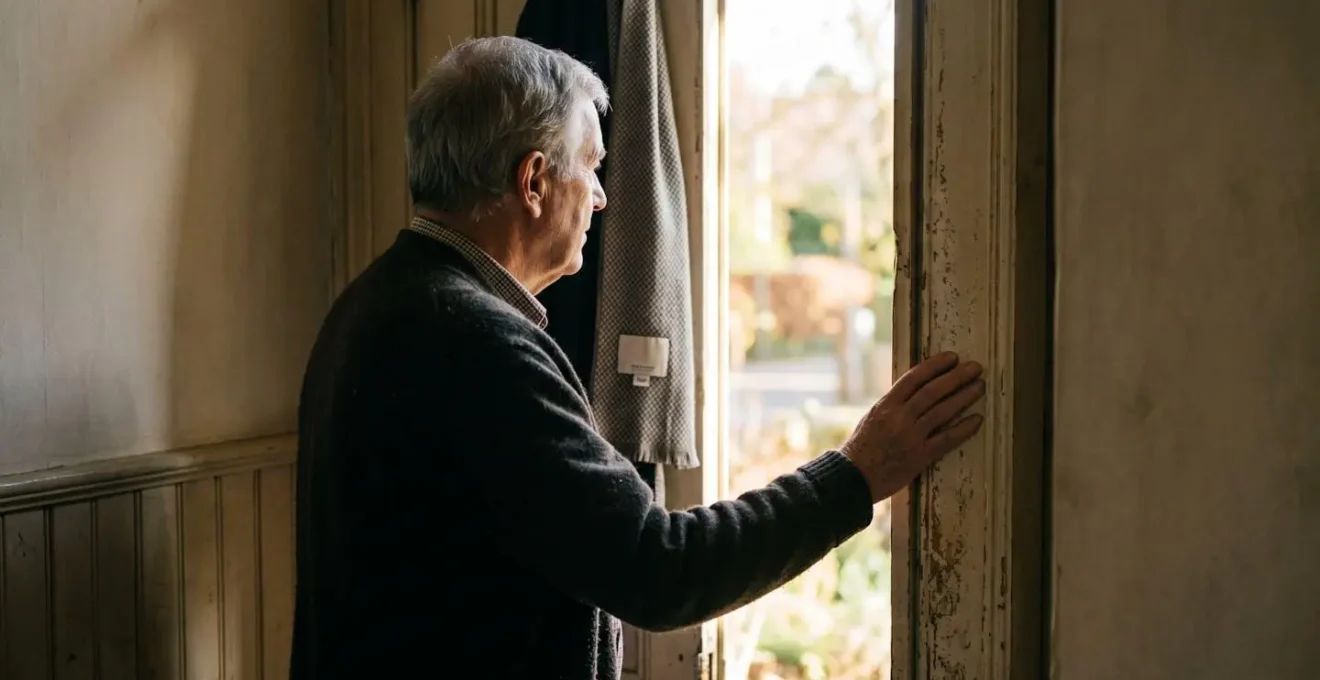
The common advice to ‘just join a club’ often fails because it ignores the first, most difficult step: overcoming the shame and fear of re-entry.
- This guide focuses on rebuilding ‘social muscle’ through private, low-pressure rehearsals.
- It provides a ladder of micro-actions, from simply observing in a café to using scripts in conversation.
Recommendation: Start with the ‘Observer Role’—visit a public space with the sole purpose of watching, not participating, to reclaim public spaces on your own terms.
The silence in the house can become a presence all its own. The phone doesn’t ring, the calendar pages remain blank, and the excuses to decline the rare invitation become quicker to the tongue. For many proud and independent seniors, a creeping loneliness isn’t a dramatic event, but a slow, quiet tide of cancelled plans, lost routines, and a world that seems to shrink by the day. There’s a profound shame that can accompany this feeling—a sense that admitting to loneliness is an admission of failure, of being unwanted.
Well-meaning advice often misses the point entirely. Friends and family might say, “You should join a club!” or “Why don’t you volunteer?” They see a simple problem with a simple solution. But they don’t see the chasm that has opened up between your front door and the outside world. They don’t understand that the issue isn’t a lack of options, but a loss of social confidence—an atrophy of the very ‘social muscle’ needed to engage with them. The fear of entering a crowded room, of not knowing what to say, of feeling invisible or like a burden, is the real barrier.
This article is different. It is not about those big, daunting leaps. It is about the small, dignified, and often private steps that come first. It’s a guide to rebuilding your social confidence from the ground up, at your own pace, and on your own terms. We will explore why this feeling is not a personal failing but a biological signal, how to distinguish healthy solitude from harmful isolation, and provide a concrete, step-by-step ladder for your re-entry into the world. It’s time to reclaim your space, one quiet, brave step at a time.
This comprehensive guide will walk you through the psychological and practical steps to navigate loneliness. We will break down the problem and provide actionable strategies for every stage of your journey back to connection.
Summary: How to Admit You Are Lonely and Take the First Step Back to Society?
- Why Is Loneliness As Dangerous As Smoking 15 Cigarettes a Day?
- Cancelling Plans: When Does “Preferring Quiet” Become Isolation?
- The Confidence Gap: How to Overcome the Fear of Entering a Crowded Room?
- Widowhood: How to Rebuild a Social Life When You Were a “We”?
- No Car, No Bus: How to Stay Connected in the British Countryside?
- The “Dinner Party Syndrome”: How Hearing Loss Leads to Depression
- The Loss of Driving: How to Maintain Autonomy Without a Car?
- Why You Need a “Third Place” That Isn’t Home or the Doctor’s?
Why Is Loneliness As Dangerous As Smoking 15 Cigarettes a Day?
The comparison of loneliness to smoking 15 cigarettes a day isn’t a metaphor; it’s a stark reflection of its physiological impact. For decades, we’ve understood the physical risks of smoking, but only now is science catching up to the profound and measurable dangers of social isolation. This isn’t about feeling sad; it’s about a chronic state that triggers a cascade of harmful biological responses. When you are persistently lonely, your body enters a state of high alert, producing stress hormones like cortisol that, over time, lead to inflammation and damage cells throughout the body.
The data is alarming and unequivocal. The U.S. Surgeon General’s 2023 advisory on the epidemic of loneliness revealed that prolonged social isolation is associated with a 26% increased risk of premature death. The impact on cardiovascular health is particularly severe. More recent research demonstrates that individuals experiencing social isolation have a 32% increased risk of stroke and a 29% increased risk of heart disease. These are not abstract numbers; they represent real, life-threatening consequences that place chronic loneliness firmly in the category of a major public health crisis, on par with obesity and physical inactivity.
Understanding this biological reality is the first step in removing the shame associated with loneliness. It is not a character flaw or a sign of weakness. As U.S. Surgeon General Dr. Vivek Murthy explains, it’s a fundamental human signal. He eloquently reframes the experience in an interview with PBS NewsHour:
Loneliness is like hunger or thirst. It’s a feeling the body sends us when something we need for survival is missing.
– Dr. Vivek Murthy, PBS NewsHour Interview on Loneliness Epidemic
Viewing loneliness through this lens changes everything. It transforms it from a source of shame into a simple, biological call to action—a sign that a core human need for connection is unmet and requires attention, just as you would seek water when thirsty. Acknowledging this danger is the first, most powerful step toward addressing it.
Cancelling Plans: When Does “Preferring Quiet” Become Isolation?
There is a profound difference between restorative solitude and corrosive isolation, but the line between them can be blurry. Enjoying your own company is a sign of a healthy relationship with yourself. However, when the quiet you “prefer” starts to feel less like a choice and more like a default setting driven by anxiety or apathy, it’s time for a moment of honest self-reflection. This isn’t about judging yourself, but about gently examining the patterns that have taken root. Has the effort of socializing begun to feel monumental? Does the thought of making small talk feel exhausting before you’ve even begun?
The slide from solitude to isolation often happens so gradually that we don’t notice it. It starts with cancelling one plan because you’re “just not feeling it,” then another, and another. Soon, the invitations slow down, and the quiet house becomes a fortress. This is what experts call ‘social muscle atrophy’—the less you use your skills for social interaction, the weaker and more difficult they become to use. It’s not a permanent change in your personality; it’s a treatable condition that responds to gentle, consistent exercise. The key is to first identify whether your quiet time is truly recharging you or simply draining you of future motivation to connect.
Your Isolation Checklist: From Restorative Quiet to Unhealthy Withdrawal
- Does the quiet feel restorative or empty? Assess whether your alone time rejuvenates you or leaves you feeling drained and unfulfilled.
- Is the reason for cancelling a genuine need for rest or fear-based avoidance? Distinguish between healthy self-care and anxiety-driven withdrawal.
- How do you feel an hour after you’ve cancelled? Notice if you experience relief, regret, loneliness, or a sense of missing out.
- Are you maintaining any regular social contacts? Evaluate whether you have consistent connections with at least one or two people beyond transactional interactions.
- Do social situations feel more exhausting now than they used to? Recognize if this reflects ‘social muscle atrophy’ from lack of practice.
Using this checklist as a private audit can provide the clarity needed to take the next step. It helps separate the genuine need for rest from the creeping habit of avoidance. If you find yourself leaning more towards the latter, it doesn’t mean you must suddenly become a social butterfly. It simply means it’s time to consider a very small, manageable step in the other direction.
The Confidence Gap: How to Overcome the Fear of Entering a Crowded Room?
For someone who has become isolated, a crowded room can feel like an unclimbable mountain. The ambient noise, the clusters of conversation, the sea of unknown faces—it can all trigger a profound sense of anxiety and inadequacy. The core challenge is not the room itself, but the ‘confidence gap’. The solution is not to force yourself to the summit, but to build a gentle, stable ramp of small successes. This begins by reframing the goal. Your mission is not to “be social.” Your mission is to practice being in a social space. This is the essence of the ‘Observer Role.’
As an ‘Observer,’ you give yourself permission to be present without the pressure to perform. You are not a lonely person in a cafe; you are an anthropologist, a novelist, a quiet critic, taking in the world. This simple mental shift transforms a terrifying ordeal into a manageable, even interesting, task. The empty chair in the quiet corner is not a symbol of loneliness, but your strategic command post for a mission of dignified re-entry. From here, you can begin the gentle work of rebuilding your social muscle with a structured, step-by-step plan.
This plan, often called a ‘Social Exposure Ladder,’ breaks down the overwhelming task into tiny, achievable actions. Each step is a small victory that builds momentum for the next.
- Step 1: The Transaction. Walk into a coffee shop, order a drink, and leave immediately. Your only goal is the successful transaction.
- Step 2: The 5-Minute Sit. Order your drink and sit for just five minutes. Observe your surroundings. Notice the light, the sounds. Then leave.
- Step 3: The 10-Minute Acknowledgment. Stay for ten minutes. Make brief eye contact and offer a small smile or nod to the barista or another customer as you leave.
- Step 4: The ‘Regular’ Routine. Visit the same place at the same time weekly. Familiarity breeds comfort and reduces anxiety. You are now becoming a ‘regular.’
- Step 5: The One-Sentence Opener. Initiate a brief, low-stakes comment to a staff member: “It’s finally warming up outside.” Accept any response gracefully. The goal is the attempt, not the outcome.
- Step 6: The Structured Setting. Attend a book club or exercise class where interaction is structured around an activity, removing the pressure of generating small talk.
This ladder approach systematically desensitizes you to the anxiety of social settings, proving to yourself, one step at a time, that you are capable and that the world can be a safe place to inhabit once more.
Widowhood: How to Rebuild a Social Life When You Were a “We”?
Losing a spouse is more than losing a person; it’s the loss of a shared identity. For years, you were a “we.” You moved through the world as a pair, with shared friends, routines, and a social shorthand that only you two understood. In the aftermath of that loss, the silence is deafening, and the world can feel hostile to a single person. This is not just a feeling; it is a documented health risk. The ‘widowhood effect’ is a stark reality, where the bereaved spouse faces a significantly higher mortality risk, particularly in the first year. Research on this phenomenon reveals that men face a 70% higher mortality risk, and women a 27% higher risk, underscoring how deeply intertwined our social and physical health are.
The path forward is not about “getting over it” or replacing what was lost. It is about the slow, painful, but ultimately necessary work of rebuilding a new identity as an “I.” It involves discovering who you are outside of the partnership and finding new sources of meaning and connection. This process is deeply personal and cannot be rushed, but research shows that certain activities can serve as powerful catalysts for this transformation.
Case Study: How Social Leisure Helps Rebuild Identity
A study on widowed women in the United States, investigating the cognitive health of widows, found that Social Leisure Activities (SLAs) were critical tools for identity reconstruction. These activities, from church groups to fitness classes, provided safe spaces for women to explore their new reality. Crucially, they offered a form of peer-mentorship. By interacting with other women who were further along in their journey, recently widowed individuals found hope. They saw living proof that a meaningful and pleasurable life was possible, helping them build a sense of community and selfhood separate from their former identity as part of a couple.
The key takeaway from this is the power of shared experience. Finding spaces where others understand the unspoken context of your grief removes the burden of explanation. It’s not just about the activity itself—it’s about finding a tribe that can witness and validate your journey of becoming “I” again, all while creating new routines and joys that belong solely to you.
No Car, No Bus: How to Stay Connected in the British Countryside?
For seniors in rural areas, especially in parts of the British countryside with dwindling public transport, the loss of a car can feel like a house arrest sentence. When the nearest shop, GP, or community centre is miles away, isolation isn’t just a feeling; it’s a logistical reality. The traditional advice of “joining groups” becomes meaningless when you physically cannot get to them. In this situation, the strategy must shift from seeking out distant communities to cultivating a ‘hyper-local’ connection network. This means focusing on the people and opportunities that exist within walking distance, or even just within earshot.
This approach is built on the power of ‘weak ties’—the casual, low-stakes relationships with people you see regularly, like the postal worker, a delivery driver, or the neighbour over the fence. These interactions may seem insignificant, but sociologists have found they are a vital component of a healthy social ecosystem. They provide daily points of human contact, a sense of being seen, and a safety net of familiarity. The goal is to transform these fleeting encounters into consistent, positive ‘micro-rituals’ that anchor your day and affirm your place in the local tapestry.
Building this hyper-local network is a proactive and dignified process. It’s not about asking for help; it’s about being a known and valued member of your immediate environment. Here are practical steps to build that network:
- Create micro-rituals with service providers: Offer your postal carrier a cold drink on a hot day. Learn and use their names. These brief, friendly exchanges build a foundation of daily contact.
- Develop ‘weak ties’ with immediate neighbors: A consistent daily wave, a comment on their garden, or offering to take in their bins builds a low-pressure safety net.
- Establish a weekly phone call schedule: Designate specific times to call different friends or family. This creates structure, anticipation, and a reliable rhythm of connection.
- Contribute to local bulletins: Share a recipe, a gardening tip, or a local memory in a parish newsletter. It maintains a connection to the community’s story, even from home.
- Initiate a ‘Reciprocity Bank’: Offer what you have—baking, mending skills, a listening ear—in exchange for what you need, like an occasional ride. This creates balanced relationships, not a sense of being a burden.
By focusing on these hyper-local strategies, you can weave a strong, resilient web of connection right where you are, proving that community is not just a place you go to, but something you can build from your own front door.
The “Dinner Party Syndrome”: How Hearing Loss Leads to Depression
One of the most insidious and under-discussed drivers of loneliness in seniors is hearing loss. The problem is perfectly encapsulated by the ‘Dinner Party Syndrome.’ You’re at a table with friends or family, laughter and stories are flying back and forth, but you can only catch fragments of the conversation. You smile and nod, trying to keep up, but the effort is immense. After a while, the mental strain of trying to decipher the conversational chaos becomes so exhausting that you simply withdraw into yourself. You’re physically present, but socially, you’ve already left the room. This experience is not just frustrating; it’s a direct pathway to isolation and depression.
The intense concentration required to process sound with a compromised auditory system creates a massive ‘cognitive load.’ This isn’t laziness or a lack of interest; it’s neurological fatigue. Your brain is working overtime just to keep up, leaving no resources for the actual joy of social interaction. This is why many with hearing loss report feeling utterly drained after social events. When this happens repeatedly, the natural response is avoidance. It simply becomes easier to decline invitations than to face the exhaustion and embarrassment of not being able to participate fully.
This cycle of effort, frustration, and avoidance has a measurable psychological toll. A large-scale study confirmed this link, finding that hearing loss was associated with a 47% higher likelihood of experiencing depression symptoms. The key to breaking this cycle is not to “try harder” to hear, but to proactively manage your environment and advocate for your needs with simple, clear communication. The following scripts are not apologies; they are tools of empowerment that put you back in control.
- ‘It would help me a lot if you could face me when you speak.’ This polite request makes it easier to read lips and visual cues.
- ‘I’m enjoying this chat, could we move to a quieter corner?’ This reframes the request as wanting to engage more, not as a deficit.
- ‘I have some hearing loss, so I might ask you to repeat things—please don’t take it personally.’ Proactively disclosing this prevents misunderstandings and the need to ‘bluff.’
- ‘Could you rephrase that instead of just repeating it? Sometimes different words are clearer.’ This educates others on how to communicate effectively with you.
- ‘I’m going to step away for a moment—group conversations can be tiring for me.’ This validates your need for a break from the cognitive load.
The Loss of Driving: How to Maintain Autonomy Without a Car?
For many, handing over the car keys feels like the final surrender of independence. A driving license represents freedom, spontaneity, and the ability to function as a self-sufficient adult. Its loss, whether due to health, cost, or confidence, can trigger a genuine grieving process and be a major catalyst for social isolation. The thought of having to rely on others for basic errands like grocery shopping or doctor’s appointments can feel deeply humiliating for a proud individual. The world suddenly seems to shrink to the size of what is reachable on foot.
However, it is crucial to reframe this moment. The goal is not ‘driving’; the goal is autonomy and access. The car was simply one tool to achieve that goal, and in the 21st century, there are now more tools in the toolbox than ever before. Maintaining autonomy without a car is not about finding a replacement for driving; it’s about building a new, multi-faceted system for mobility. This requires a shift in mindset from reactive dependence to proactive planning.
Your new mobility strategy might involve a combination of several elements. First, explore modern services. Ride-sharing apps like Uber and Lyft are no longer just for young city-dwellers; they can be booked by phone and provide a direct, on-demand service that is often cheaper and more convenient than running a car. Many areas now have dedicated senior transport services or volunteer driver schemes that offer low-cost rides to appointments. Secondly, leverage the digital world. Online grocery delivery from supermarkets like Tesco, Sainsbury’s, or Ocado can eliminate one of the most stressful and physically demanding weekly errands. Prescriptions can often be delivered directly from the pharmacy.
Finally, this is the perfect opportunity to activate the ‘Reciprocity Bank’ we discussed earlier. Perhaps you can’t offer a ride, but you can offer to pet-sit for a neighbour, bake a cake for a friend who drives you to an appointment, or provide a knowledgeable ear for someone’s troubles. This turns a transaction into a relationship, preserving dignity and strengthening community bonds. By embracing these alternatives, you are not losing independence; you are simply upgrading your method of navigating the world.
Key Takeaways
- Loneliness is a serious health risk, not a personal failing. It’s a biological signal, like hunger or thirst, that a fundamental need is unmet.
- Reconnecting starts with small, private ‘rehearsals’—like adopting the ‘Observer Role’ in a public space—not giant, intimidating leaps into social events.
- You have the right and the tools to advocate for your needs, whether it’s asking someone to speak clearly or proactively finding your own ‘Third Place’.
Why You Need a “Third Place” That Isn’t Home or the Doctor’s?
As we age, our worlds can shrink to two primary locations: the ‘first place’ (our home) and the ‘second place’ (places of obligation, like the doctor’s office or the supermarket). While home is a place of comfort and appointments are necessary, neither provides the key ingredient for spontaneous social connection and a sense of belonging. This is where the crucial role of the ‘Third Place’ comes in. Coined by sociologist Ray Oldenburg, a third place is a neutral, public space where people can gather, interact, and build community informally. Think of the classic pub, the local library, a bustling town square, or a welcoming coffee shop.
These places are the bedrock of a healthy social life. They are levelers, where your background or status doesn’t matter. The main activity is conversation, and the atmosphere is relaxed and welcoming. It’s a space where you can go alone without feeling lonely, where you might see familiar faces, and where the possibility of a casual, low-stakes interaction always exists. For a senior battling isolation, establishing a personal third place is not a luxury; it is an essential part of a mental health and social wellness strategy. It’s your personal stage for re-engaging with the world.
Finding or creating your third place shouldn’t be another source of pressure. It should be a gentle, experimental process. The goal is to find a spot that feels right for you—a place where you feel comfortable simply being. This process of ‘auditioning’ potential spots can, in itself, be a positive step towards re-engagement.
- Identify 3-5 potential places: Look around your local area. Consider libraries, community centers, cafes, parks with benches, or even a farmers’ market with a seating area.
- Visit at different times: The energy of a space can change dramatically from a Tuesday morning to a Saturday afternoon. Observe the different crowds and vibes.
- Apply the ‘Three Visit Rule’: Don’t judge a space on a single visit. Commit to trying your top candidates at least three times to see if you start to feel a sense of familiarity or recognize other ‘regulars.’
- Observe the space’s characteristics: Is it accessible? Is conversation the main activity? Do people from different backgrounds mix comfortably? These are hallmarks of a great third place.
- Start a low-pressure routine: Choose one place and one time (e.g., ‘Every Thursday at 10 am, I’ll read the paper at the library corner’) and commit for a month. Consistency is what builds connection.
- If none exist, create one: Invite just one other person to meet you at a specific park bench at the same time each week. A ‘Tuesday Morning Park Bench Club’ for two can become the seed of a new community.
Your journey back to connection does not require a grand, dramatic gesture. It begins not with a leap, but with a single, quiet step. It might be looking up those advocacy scripts, taking a 5-minute sit in a local cafe, or simply acknowledging the truth to yourself without shame. Choose one small action from this guide and make it your own. That is your victory for today.